
Guide to Cleaning, Care, and Maintenance of Window Blinds & Shades
Written by: Armi Avila
Cleaning and maintaining blinds and shades starts with identifying the material, since each call for a different approach. Regular dusting removes surface buildup, spot and deep cleaning handle stains and grime, and professional cleaning extends the life of delicate fabrics like honeycomb and sheer shades. Done consistently, this routine keeps blinds and shades looking new and helps maintain healthy indoor air quality year-round.
In this guide, we cover:
- How to Clean Different Types of Blinds and Shades
- How to Spot-Clean Stains Without Damaging the Material
- Cleaning Methods to Use Carefully or Avoid
- How Often Should Blinds and Shades Be Cleaned?
- Routine Maintenance Beyond Cleaning
- Maintenance Tips
- Preventing Mold and Mildew on Blinds and Shades
- When Should Blinds and Shades Be Professionally Cleaned?
- Frequently Asked Questions About Cleaning and Maintaining Blinds
- Final Thoughts
How to Clean Different Types of Blinds and Shades
The appropriate cleaning method depends more on the material than the window covering style. The following are general care methods. Before applying water or a cleaning product, review the care instructions for the specific material or fabric.
Shutters, Wood and Faux Wood Blinds
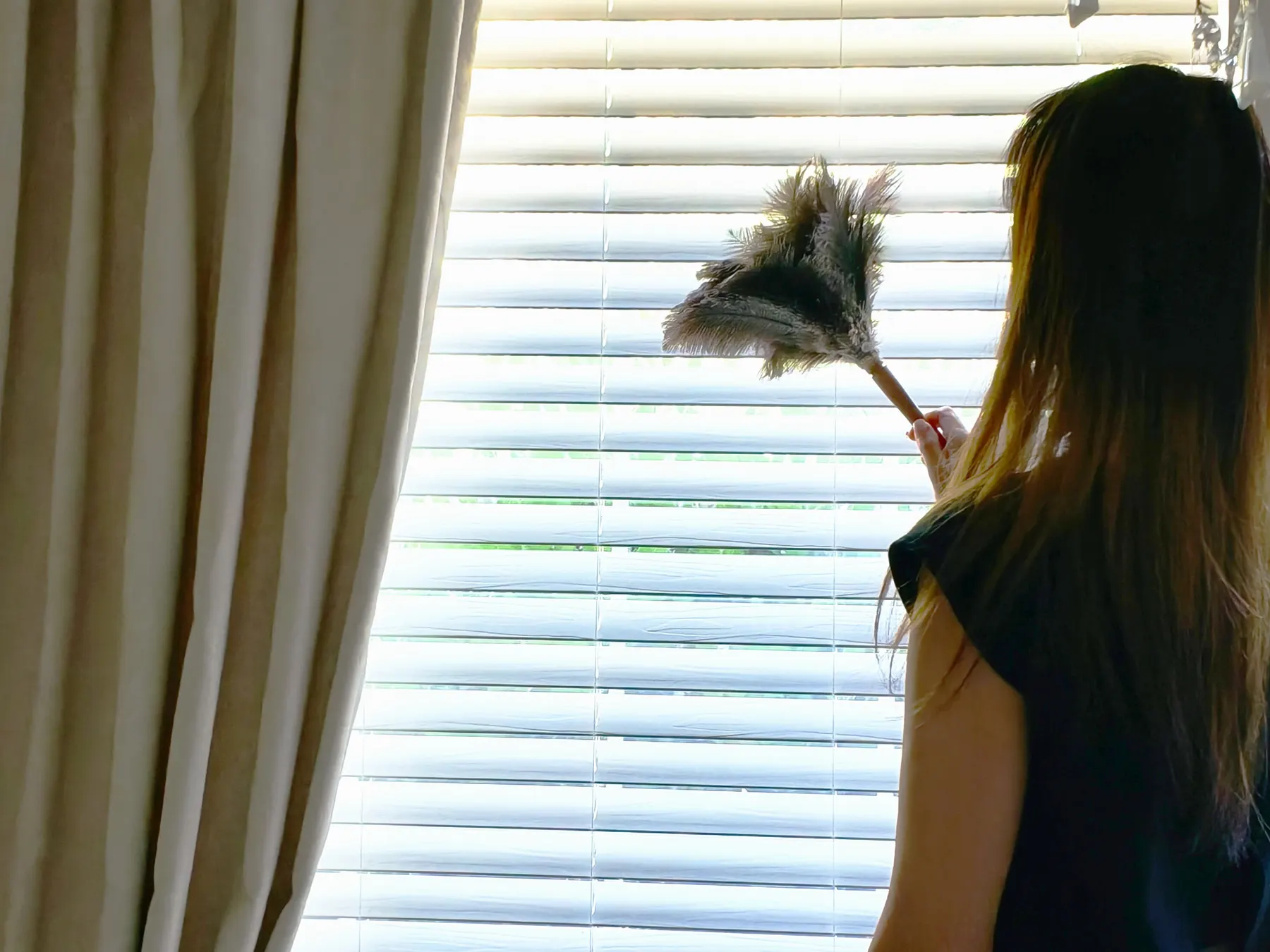
Dust shutters, wood and faux wood blinds with a soft cloth, duster, or low-suction vacuum with a brush attachment. Clean in the direction of the louvers or slats and support them when necessary to avoid bending them or pulling on the ladder cords.
Real wood blinds or shutters should generally be kept dry because excessive moisture can damage the wood or finish. A wood conditioner, preservative, or polish may be used if it is approved for that particular finish.
Faux wood and composite blinds or shutters are more resistant to moisture and can typically be wiped with a damp cloth or mild soap-and-water solution. See the manufacturer guidance from Hunter Douglas and Graber.
Fabric Shades: Cellular, Roller, Roman, and Sheer Shades
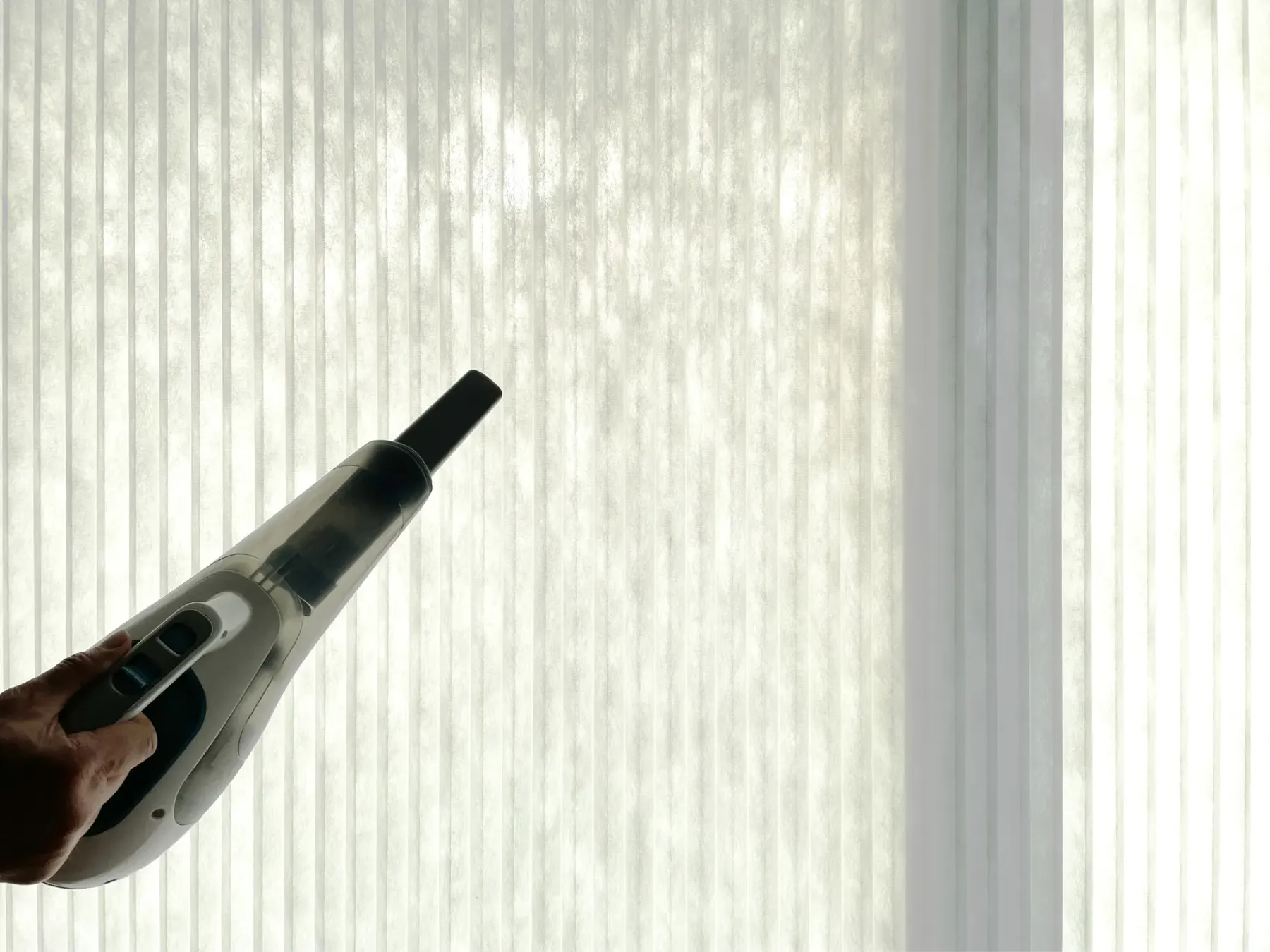
Hunter Douglas cleaning guidance recommends dusting, gentle vacuuming, and cool forced air for many cellular, Roman, roller, and sheer shades. Use low suction to avoid stretching, creasing, or pulling the fabric. Lower shades fully before cleaning and use light pressure on sheer fabrics and vanes.
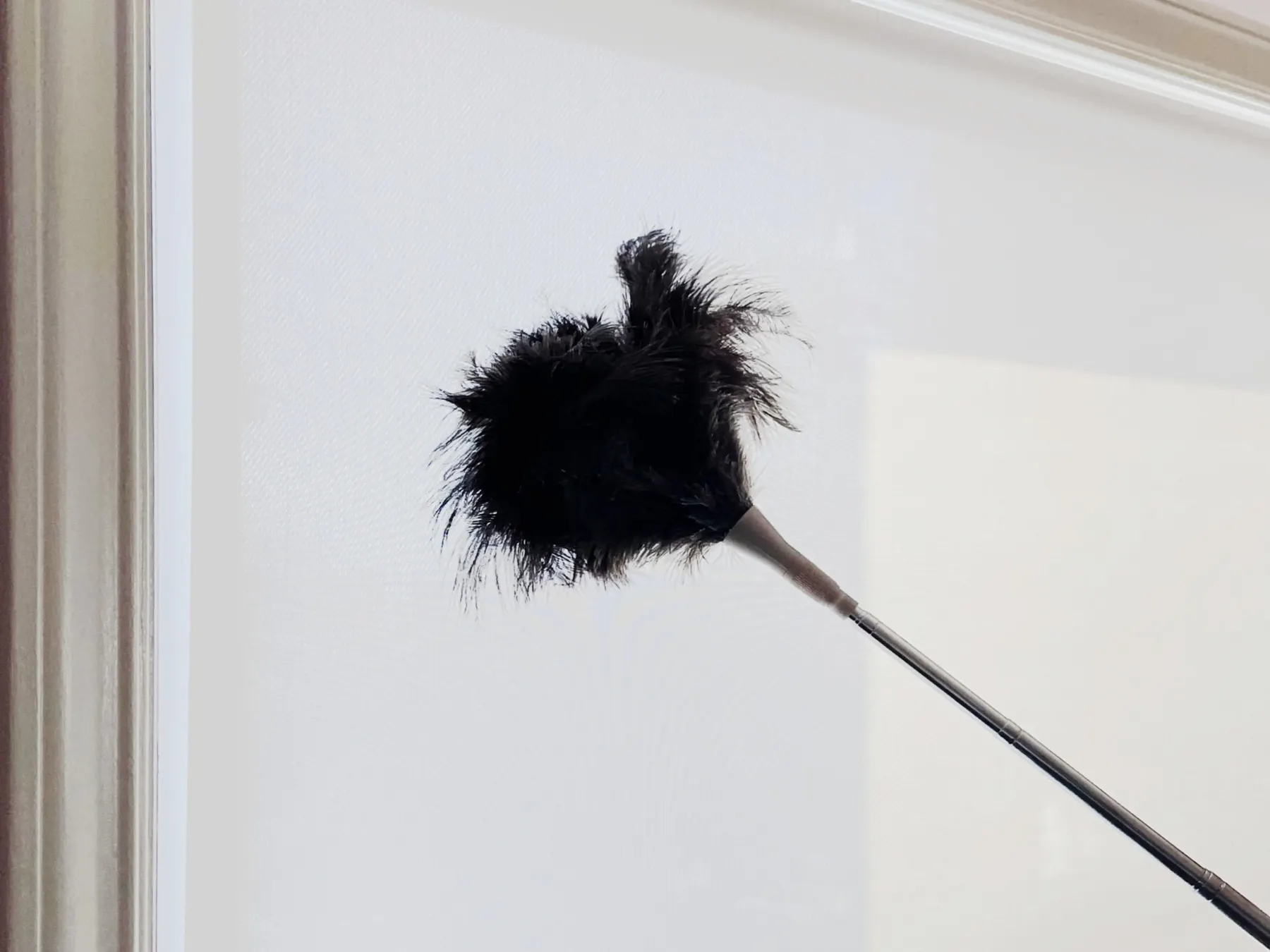
For cellular shades and sheer shades, compressed air or a handheld hair dryer set to cool can remove dust from pleats, cells, and layered fabrics. If insects or debris become trapped inside a cellular or sheer shade, use cool forced air to move them toward the opening rather than inserting a tool into the cells.
Solar Shades
Solar shades are among the easiest fabric window coverings to maintain because they typically use durable screen materials.
Hunter Douglas solar shade care guidance recommends a vacuum brush attachment for routine cleaning and a soft cloth with mild dish soap and water for heavier dirt. Graber also states that solar shades can be wiped with a damp cloth and mild soap but should not be soaked. Phifer confirms that its SheerWeave solar-screen fabrics can be cleaned with soap and water.
Woven Wood and Natural Shades
Woven wood and natural shades are made from materials such as grasses, reeds, bamboo, and wood. Both Hunter Douglas and Graber recommend dry cleaning methods for woven wood and natural shades.
Remove dust with a soft cloth, duster, or low-suction vacuum with a brush attachment.
Avoid water, liquid cleaners, and steam on the woven face material. Natural fibers can swell, warp, fade, or develop uneven watermarks when exposed to moisture.
How to Spot-Clean Stains Without Damaging the Material
Not every material can be spot-cleaned the same way, and the wrong method can set a stain or damage the finish.
- Confirm the material and check the manufacturer's care instructions for that specific fabric or finish.
- Test any cleaning solution on a small, hidden area first.
- A mild soap diluted in warm water is generally safe for water-resistant materials like vinyl or aluminum, but not all fabrics tolerate this so make sure to check first.
- Avoid harsh chemicals or abrasive cleaners, which can damage the surface.
- Blot rather than rub to avoid spreading the stain or creasing the material, and let it air dry fully before closing or raising.
Cleaning Methods to Use Carefully or Avoid
Not every common household cleaning method is appropriate for blinds and shades.
- Steam cleaning: Use steam only when the manufacturer approves it for the exact fabric. Do not steam woven wood materials, motorized headrails, or fabric-covered components unless specifically permitted.
- Harsh chemicals and abrasives: Avoid bleach, chemical solvents, abrasive cleansers, and rough scrubbing unless the manufacturer recommends a particular product.
- Warm or hot forced air: Use only cool air when removing dust or debris. Heat can damage adhesives and affect the shape of some fabrics.
- Directly spraying cleaners: Apply an approved cleaner to the cloth rather than spraying the window covering. This provides better control and helps keep moisture away from the operating system.
- Magnetic dusting mitts: Some room-darkening fabrics have backing that may be damaged by magnetic cleaning products.
- Protective coatings: Do not apply fabric protector, anti-static spray, furniture polish, or another coating unless it is approved for the exact product.
- Ultrasonic and injection/extraction: Effective for some window treatments, not universally safe. Confirm compatibility with the manufacturer before scheduling.
- Bathtub immersion: Appropriate only for select products. Per Hunter Douglas's guidance, this typically excludes the headrail, control mechanisms, and decorative tapes, which should stay dry.
How Often Should Blinds and Shades Be Cleaned?
The appropriate schedule depends on the material, amount of buildup, location, manufacturer’s instructions.
- Dust weekly or as needed, more often in kitchens, high-traffic rooms, homes with pets, or rooms where windows are frequently opened.
- Vacuum gently as needed, using the attachment approved for your material.
- Spot-clean stains as they occur, using a method confirmed safe for the material.
- Schedule deep or professional cleaning as needed, based on visible buildup or manufacturer recommendation.
Routine Maintenance Beyond Cleaning
Regular maintenance helps blinds and shades continue to operate properly.
- Periodically operate each covering through its full range of motion and check for uneven movement, damaged slats, loose brackets, frayed components, or fabric rubbing against the window frame. Properly aligned blinds and shades not only look better, they also deliver more consistent light control and privacy. Never force a shade that is binding or operating unevenly.
- Remove loose debris from tracks and around operating components using a soft brush or cool forced air. If a blind or shade requires adjustment or repair, contact the manufacturer, dealer, or a qualified window covering professional.
- For motorized blinds and shades, keep water and cleaning products away from motors, charging connections, and battery compartments. Battery requirements vary by product, so follow the instructions for your specific operating system when replacing or charging batteries — Hunter Douglas, for example, provides separate battery guidance for its PowerView and PowerRise systems.
Maintenance Tips
- Dust regularly with a microfiber cloth or feather duster.
- Vacuum gently as needed, using the approved attachment.
- After cleaning, allow shades to dry completely before raising.
- Avoid keeping shades fully closed for extended periods.
- Avoid harsh chemicals or abrasive cleaners.
- Check periodically for wear — broken slats, frayed cords — and address promptly.
- For motorized blinds and shades, follow the motor manufacturer's instructions for charging or battery replacement, since requirements vary by product.
Preventing Mold and Mildew on Blinds and Shades
Blinds and shades that stay closed for long periods or collect trapped moisture can develop mold and mildew, particularly in bathrooms, kitchens, and other humid rooms.
- Allow airflow and light by periodically opening blinds rather than keeping them fully closed.
- Wipe away visible moisture promptly, especially near windows with condensation.
- Dust and clean regularly, since dirt and moisture together create conditions where mold can develop.
- If mold appears, follow the manufacturer's guidance for that material rather than scrubbing with unapproved products.
When Should Blinds and Shades Be Professionally Cleaned?
The Hunter Douglas professional-cleaning guide recommends professional assistance for deep stains, embedded debris, or situations in which specialized cleaning is preferred, while also emphasizing the importance of product-specific restrictions.
Professional help may also be appropriate for delicate materials that cannot be safely cleaned at home, when the manufacturer prohibits spot-cleaning, or when a large or difficult-to-reach window covering cannot be handled safely.
Professional cleaning methods may include:
- Ultrasonic cleaning, in which an approved window covering is removed and immersed in a specialized cleaning system.
- Injection/extraction cleaning, in which a cleaning solution is applied and extracted, often while the shade remains installed.
Neither method is suitable for every product. Certain delicate woven fabrics, sheer shades, Roman shades, fabric-covered headrails, valances, and motorized components may be excluded.
Frequently Asked Questions About Cleaning and Maintaining Blinds
Yes. Dusting, light vacuuming, and spot-cleaning can all be done while blinds and shades remain mounted. Removal is typically only needed for deep cleaning methods like bathtub immersion, and only for materials approved for that method.
It depends on the material and the manufacturer's guidance. Some water-resistant materials may tolerate cleaning that addresses mold, while others should not be treated without manufacturer approval. When in doubt, contact the manufacturer or a professional rather than scrubbing with an unapproved product.
In most cases, nothing should be applied to blinds or shades solely to repel dust unless the manufacturer approves it for that exact product. The safest approach is regular light dusting, gentle vacuuming, or cool forced air.
Final Thoughts
Cleaning and maintaining blinds and shades does not require aggressive chemicals or complicated methods. In most cases, regular dusting, gentle vacuuming, and prompt attention to approved spot-cleaning are enough to preserve their appearance and operation.
Remember to tailor your approach based on the specific type and material, follow the manufacturer’s recommendations, and seek professional assistance when needed. Using the correct cleaning methods can help keep your blinds and shades clean, functional, and stylish throughout the year.
For personalized advice on selecting and caring for custom window coverings, contact Amazing Blinds by Armi or give us a call at 206-801-6010. If you live in Seattle, Bellevue, or the surrounding areas, we can help you choose attractive, low-maintenance window treatments suited to your home and lifestyle.

Explore Custom Blinds, Shades, Shutters, and Automation
Every home has a unique style, story, and set of needs.
Whether the priority is design, smart-home integration, energy efficiency, privacy, room darkening, ease of operation, or long-term durability, we offer personalized recommendations from a broad selection of window treatments.
We help you explore custom blinds, shades, shutters, and automation to create window covering solutions that complement your home, address your priorities, and align with your investment range.