Window Coverings for Glass Doors, French Doors & Sidelights
Written by: Armi Avila
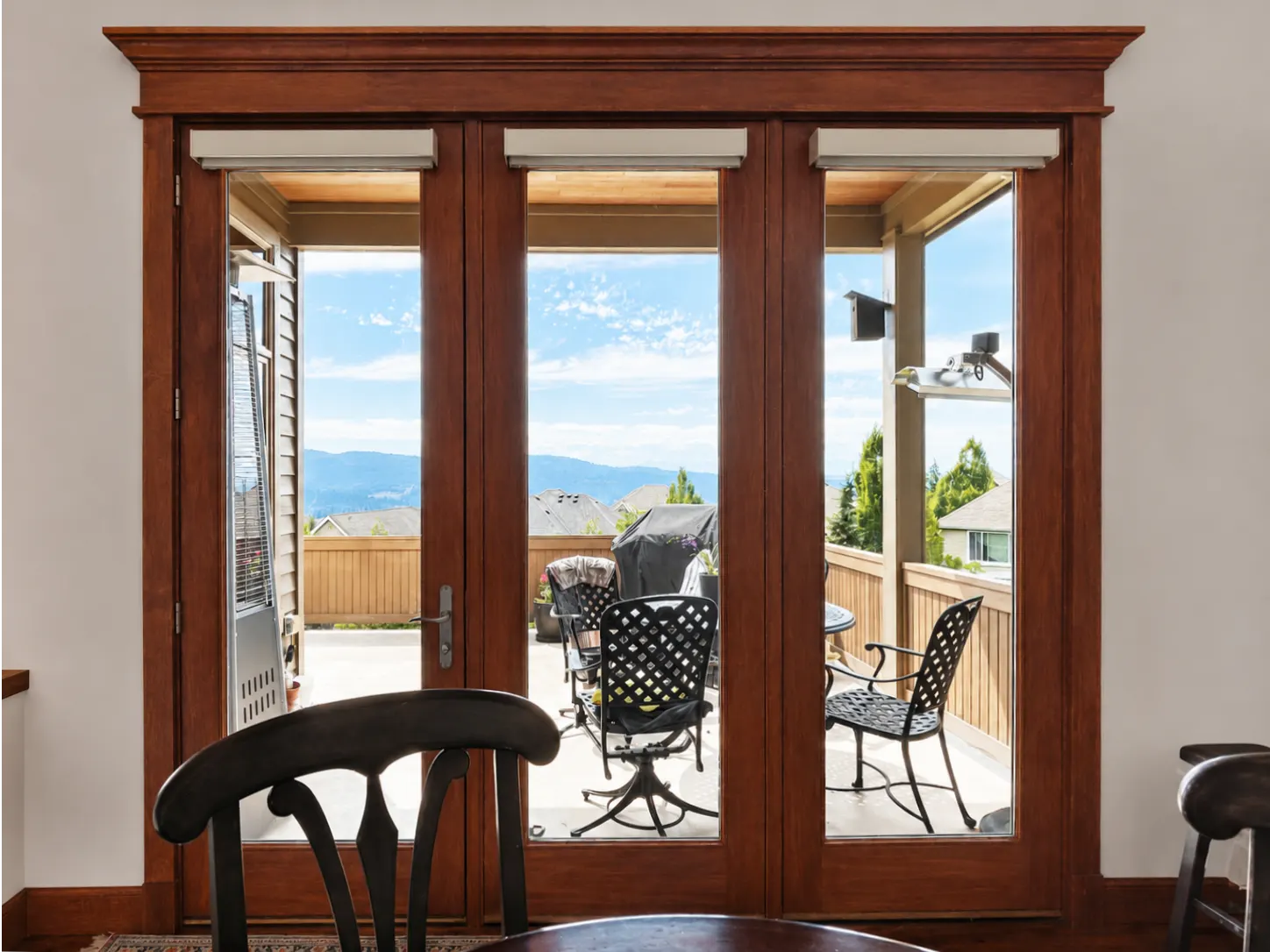
The best window coverings for glass doors, French doors, and sidelights are usually roller shades, honeycomb shades, or Roman shades, depending on how the door is used. Roller shades often work best for high-traffic doors, honeycomb shades work well for insulation and top-down/bottom-up privacy, and Roman shades are a strong choice for a softer, more elevated look.
However, the right solution depends on where the door is located, your priorities, the surrounding windows, and the way you live. After helping homeowners throughout Seattle and the Eastside select custom window coverings for nearly 20 years, I've found there isn't one product that's right for every glass door.
Instead of going straight to, "What's the best window covering for a glass door?" I start by asking a different question: What do you want the door cover to accomplish, and how do you use it every day? This is a good starting point that narrows down options and helps avoid choosing a product that will not work in the long run.
Inside this guide, we cover:
- Common Types of Glass Doors
- Why Glass Doors Require a Different Approach Than Standard Windows
- What to Consider for Glass Doors
- Choosing the Best Window Covering for Your Glass Door
- Products That Are Better Suited for Windows Than Doors
- Should Glass Doors Match the Windows?
- Common Mistakes When Choosing Window Coverings for Glass Doors
- Frequently Asked Questions About French Doors & Glass Doors
Common Types of Glass Doors
I regularly help homeowners with several types of glass doors, including:
- Single glass doors
- Doors with partial glass
- Double French doors
- Glass doors with sidelights
- Glass door with fixed glass panels that visually resemble doors
- Glass doors that are part of a larger wall of windows
Why Glass Doors Require a Different Approach Than Standard Windows
A standard window is stationary, whereas a door moves, sometimes several times a day. That creates additional considerations that don't exist with most windows.
Door Handle Clearance
Some window coverings have a deeper profile or project farther from the glass than others. If the shade interferes with the door handle, operation becomes inconvenient and may damage the shade in the long run.
Wall Clearance
Doors that open fully against an adjacent wall may not have enough space for products with thick headrails.
Frequency of Use
A French door in a bedroom may only be opened occasionally. A front entry door or kitchen door, on the other hand, may be used countless times a day.
Children and Pets
Glass doors are usually easier for children and pets to reach than standard windows. Fingerprints, nose prints, and constant operation become practical considerations that can influence product and fabric selection, operating system, and even whether motorization is worthwhile.
Maintaining a Clean Appearance
Many homeowners want a clean, uncluttered look on their doors. That often means avoiding visible cords, bulky stacks, and external battery packs when motorizing. Internal rechargeable batteries can help keep the finished look simple and clean.
What to Consider for Glass Doors
Before making a recommendation, I typically consider the following:
- How often is the door used
- Whether privacy is needed during the day, at night, or both
- The amount of glare, heat, and UV exposure
- Whether it’s for light filtering or room darkening
- If there are children or pets in the home
- Clearance of the door handle and the surrounding walls
- Whether the door should coordinate with nearby windows
- How the shade will be operated
In addition, having sidelights add to the challenge because their narrow width can limit which products and operating systems will work. When a sidelight is next to a glass door, consider whether the same product can be used on both or if coordinating products is a better solution.
Choosing the Best Window Covering for Your Glass Door
Quick Comparison:
| Window Covering | Best For | Considerations |
|---|---|---|
| Roller Shades | Entry doors, kitchen doors, high-traffic doors | Slim profile, easy to operate, easy to clean, but no top-down/bottom-up |
| Honeycomb Shades | Bedrooms, insulation, top-down/bottom-up privacy | Best for lower-use doors because they should be raised before opening |
| Roman Shades | Living rooms, dining rooms, formal spaces | Softer look, excellent light control, thicker stack when raised |
Roller Shades
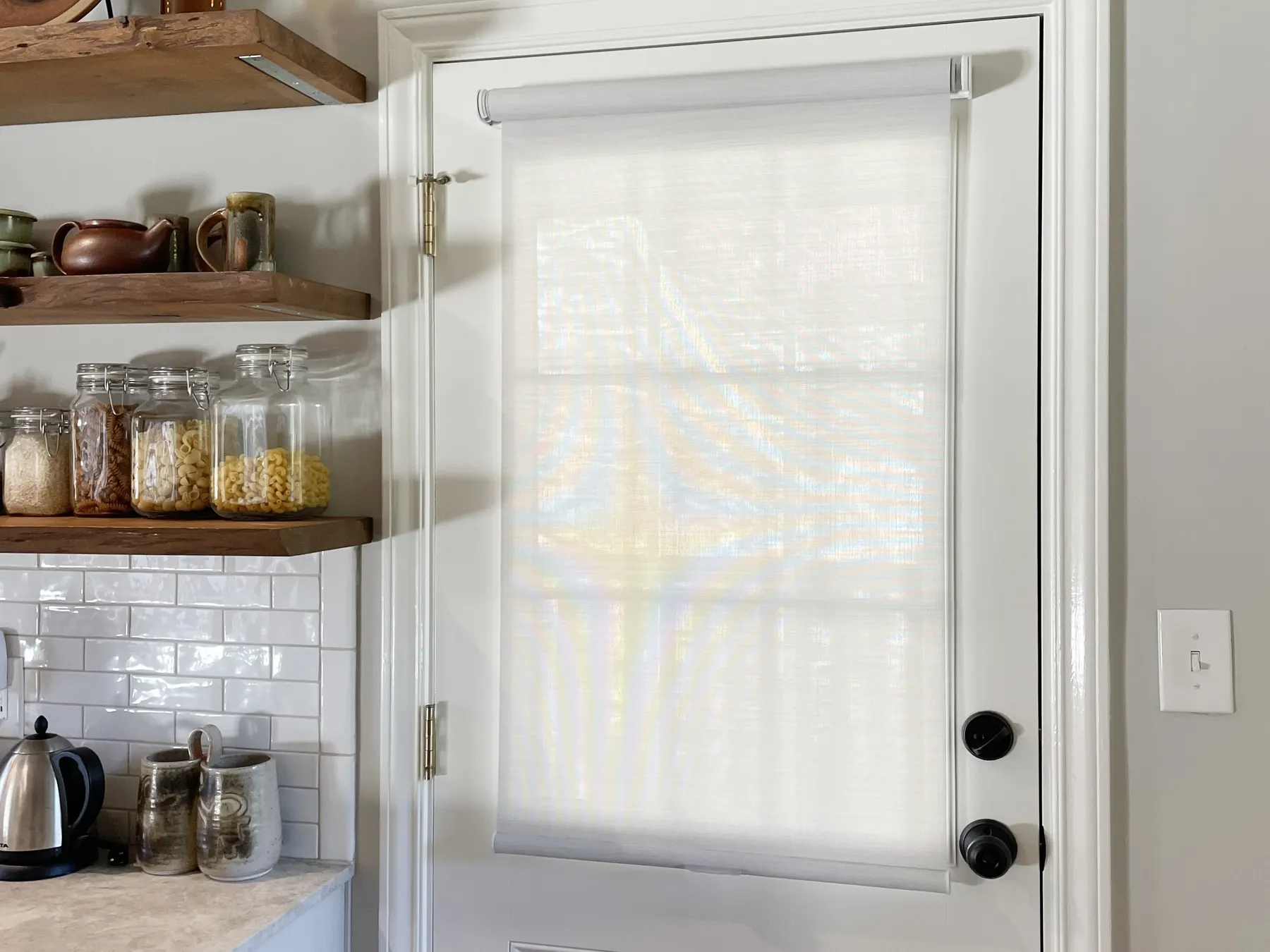
Roller shades have a slim profile, lightweight, and usually fit behind most door handles. They are an excellent option for frequently used and high traffic doors such as entry doors. Depending on the fabric selected, roller shades can provide excellent daytime privacy, nighttime privacy, or both. Easy-to-clean fabric options are available, making them great for homes with young children or pets, or on kitchen doors.
They provide a nearly unobstructed view when raised, work well on modern or contemporary interiors due to their clean appearance, and are available as cordless or internal rechargeable motorization.
The drawback is that roller shades do not offer intermediate viewing positions like top-down/bottom-up or tilting open or close. The fabric also protrudes further away from the glass door, making them less suitable when room darkening is the primary goal due to more light seepage.
Very narrow sidelights can also present minimum width challenges if you are trying to match the adjacent door, and narrow roller shades usually have more tendency to telescope and roll unevenly.
Case Study: Kirkland Glass Entry Door
In this Kirkland window covering project, the homeowners wanted more privacy at their front door while addressing several other priorities. The challenge was finding a product that could withstand daily use, coordinate with the nearby honeycomb shades, maintain a clean, modern appearance, and be easy to use and maintain with a young child and pet in the home.
Although matching the windows was an option, it was not the most practical choice for a high-traffic entry door. We selected a motorized roller shade with an internal rechargeable battery in an easy to clean and light-colored fabric that coordinated with the honeycomb shades. The result was a clean, uncluttered look, and convenient daily operation on a schedule.
Honeycomb Shades
Honeycomb shades are an excellent option when energy efficiency and insulation are important. They are also one of my favorite options if the homeowner wants top-down/bottom-up functionality or narrower doors because they have lower minimum width requirements than other products.
Honeycomb shades are also a good option for bedrooms , especially if the windows have honeycomb shades if the goal is to maintain consistency.
However, I generally don't recommend them for high traffic doors because the shade should be raised before opening the door to help protect the pleats from repeated contact to avoid deforming the cells. For doors that are opened less often, that tradeoff is often worth it because of the excellent insulation and flexibility they provide.
Case Study: Seattle Living Room French Doors
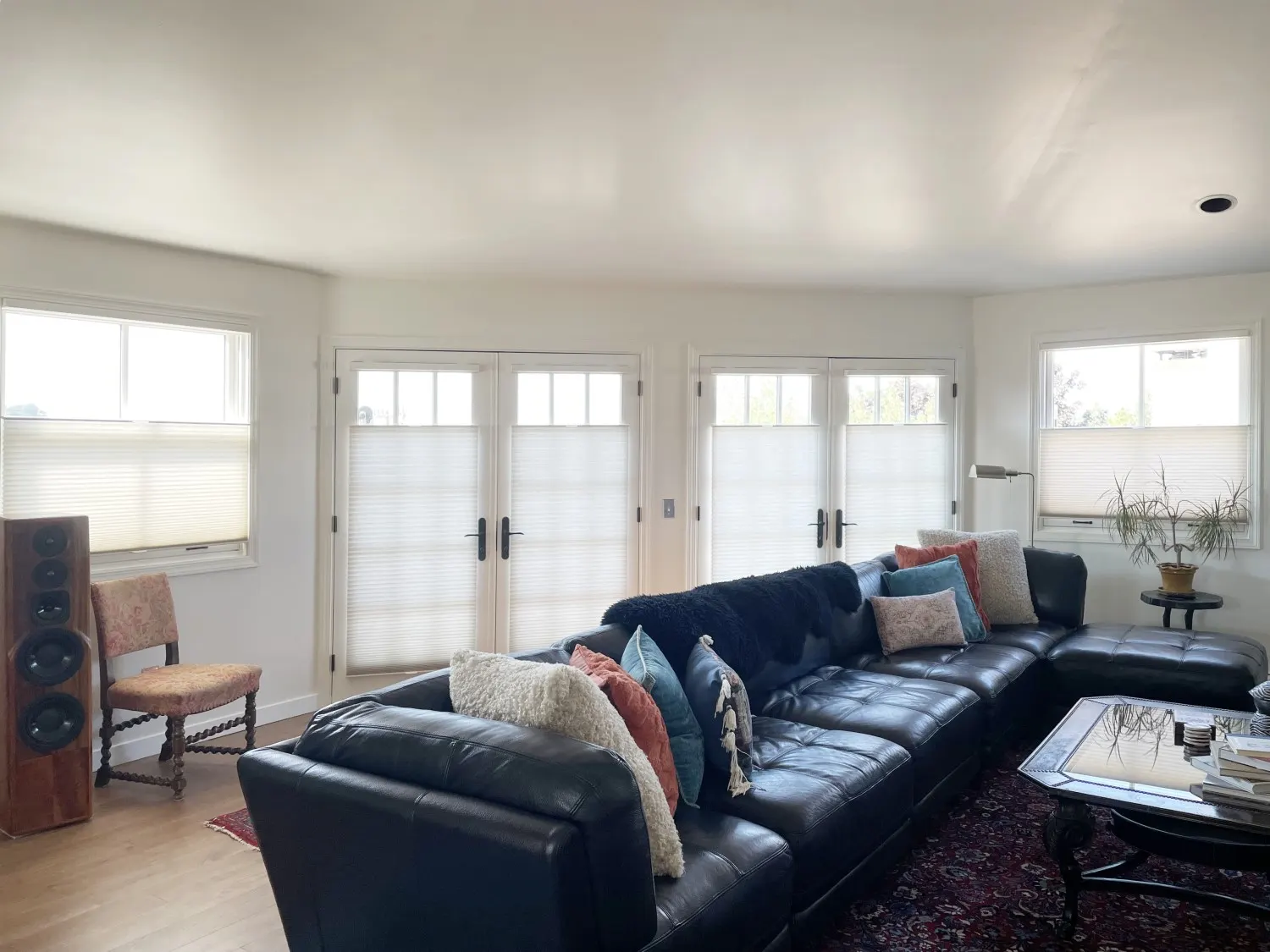
For a top-floor living room with four French doors in Seattle’s Eastlake neighborhood, my client wanted better insulation and heat control, privacy without losing natural light, Lake Union views, and a coordinated look across the doors and windows.
Because the French doors were not frequently used, I recommended Hunter Douglas Duette® Architella® honeycomb shades with Top-Down/Bottom-Up operation. The lower portion can remain covered for privacy while the upper portion stays open for daylight and views. The honeycomb construction also improves insulation, while using the same treatment throughout the room creates a consistent, finished appearance.
Roman Shades
Roman shades offer excellent light control while created a softer and more elegant look. They work well in living rooms, dining rooms, and other rooms where you want a more elevated look.
They also have smaller light gaps since the fabric is closer to the glass than a roller shade, which can be helpful when room darkening is important, such as bedrooms or media rooms. They also offer improved light control and privacy with the availability of top-down/bottom-up operation. They are also more forgiving when shade is down and door is opened than honeycomb shades.
The drawback to Roman shades is they have a thicker stack when raised, are not as easy to clean as many roller fabrics, and a higher investment.
Case Study: Shoreline Entry & French Doors
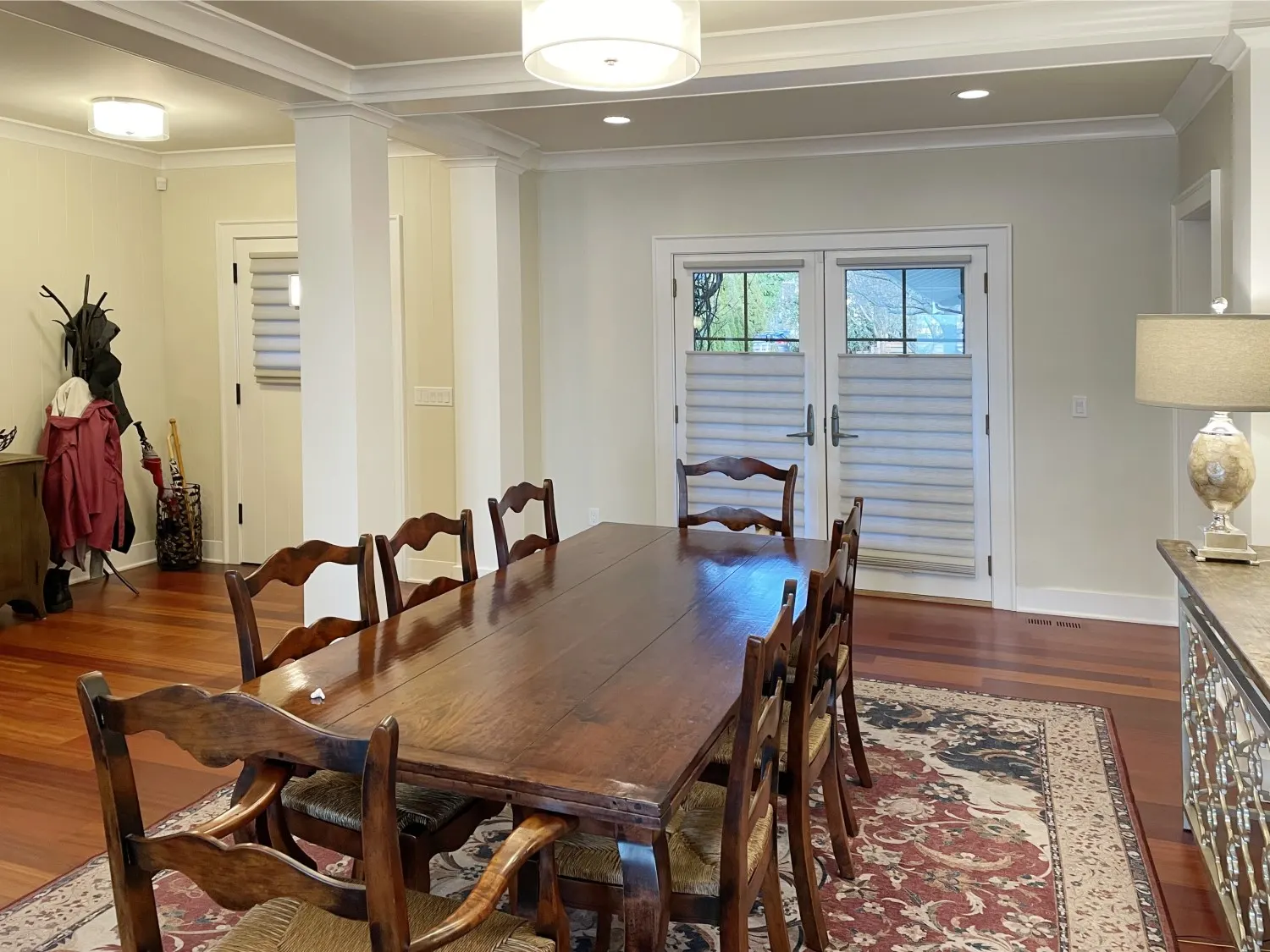
A Shoreline window covering project featured three glass doors within the same line of sight: a front entry door and two French doors in the dining room. The homeowners wanted an elevated, cohesive look while maintaining different levels of privacy for each location.
Hunter Douglas Vignette® Modern Roman Shades provided the right balance. A standard cordless shade was installed on the entry door, while top-down/bottom-up roman shades were used on the dining room French doors. The result was a coordinated, more formal design that maintained visual consistency.
Products That Are Better Suited for Windows Than Doors
Woven Wood Shades
Woven wood shades are beautiful for certain applications, but they are not my first option for doors because they are bulkier, heavier, harder to clean, and not ideal for repeated fabric contact.
Horizontal Blinds
Wood and faux wood blinds work well on many windows but are not ideal for doors. They swing every time the door opens, make noise, do not fit behind most door handles, and have a thicker stack when raised.
Silhouette Shades
Silhouette shades are one of my favorite products for windows, but they require special consideration on doors. While Hunter Douglas offers a tilt-only version designed for doors and sidelights, these cannot be fully raised. For homeowners who want the glass completely uncovered during the day, another product is often a better fit.
Should Glass Doors Match the Windows?
The answer is: usually, but not always. When the same product works well on both the windows and the doors, maintaining consistency often creates the cleanest look. However, there are many situations where using the same product on the door creates compromises in daily use.
For example, a honeycomb shade may be an excellent choice for windows because of its energy efficiency and top-down/bottom-up functionality. On a frequently used door, however, a roller shade may be more practical because it's lighter, fits behind the handle and less likely to be damaged with daily use when the shade is down.
A different product can still work by coordinating with color, texture, or tone. Alternatively, another approach is to intentionally make the shades for the doors different from the windows.
Case Study: Woodinville Kitchen French Doors
A window covering project in Woodinville is a great example. We installed Hunter Douglas Silhouette® shades throughout the main living areas, creating a soft, elegant look. There were French doors in the kitchen which were used frequently.
Although the Silhouette shades worked beautifully on the windows, they were not the most practical choice for the doors because Silhouette shades have a deep profile, making it challenging to fit behind the door handle. It’s also less forgiving for their dogs. We installed cordless roller shades in a decorative patterned fabric and color that is different from the Silhouette.
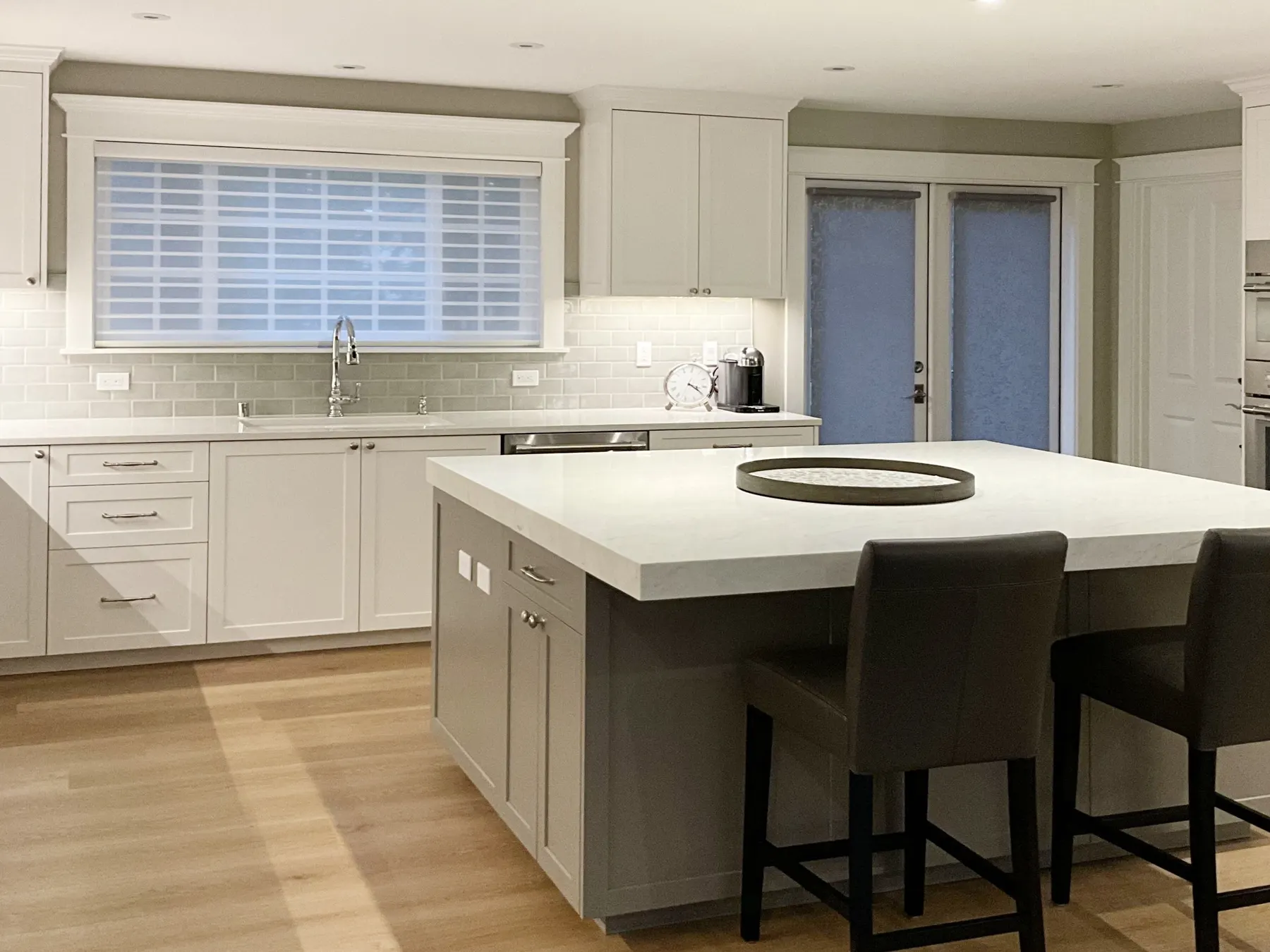
Rather than trying to duplicate the nearby window coverings, we treated the doors as an opportunity to introduce another design element into the room. The patterned fabric added personality, giving the homeowners a solution that looked intentional and functioned much better for everyday use.
Common Mistakes When Choosing Window Coverings for Glass Doors
One of the biggest mistakes is choosing a product based on cost and consistency. Homeowners sometimes sacrifice ease of operation due to cost, making it difficult to use, especially on tall and high use doors.
If matching nearby windows with the same product is not practical, coordinating by color, fabric, or tone can create a more functional solution while still looking intentional.
It’s also important to consider everyone who uses the space. Child safety, pets, durability, and easy-to-clean materials can all affect which window covering makes the most sense, especially on doors that get frequent use.
Finally, don’t overlook the door hardware and available clearance. Glass doors move and are handled more frequently than most windows, and the door handle can limit which products will fit properly. Wall clearance should also be considered when a hinged door opens against an adjacent wall.
Frequently Asked Questions About French Doors & Glass Doors
Yes. Custom drapery generally provides the best room darkening when space and budget allow. When drapery isn't practical, Roman shades, roller shades, and honeycomb shades are all available with room-darkening or blackout fabrics. Each product has tradeoffs in appearance, operation, and light control, but they are usually sufficient for reducing light in most cases.
Hold-down brackets help keep a shade in place as the door opens and closes, so they're most useful on frequently used doors. However, I rarely recommend them unless for a blind that will rarely be raised. Most clients prefer not to drill additional holes into the door, and the shade must be detached from the brackets each time it's raised. Choosing a lightweight product for doors is often enough.
Yes. Not every glass door needs window coverings. If privacy and sun control are not concerns, and leaving the glass uncovered complements the home's architecture and how the space is used, it may be best to leave it uncovered.
Need Help Choosing Glass Door Window Coverings?
Choosing the right window covering for a glass door is easier when you can compare options in your actual space. If you’re considering shades for French doors, glass doors, sidelights, or entry doors in the Greater Seattle area, schedule a consultation with Amazing Blinds by Armi. I will help you find a solution that fits your home, your goals, and the way you live.
Call (206) 801-6010 or contact us to schedule your in-home consultation.
Explore Custom Blinds, Shades, Shutters, and Automation
Every home has a unique style, story, and set of needs.
Whether the priority is design, smart-home integration, energy efficiency, privacy, room darkening, ease of operation, or long-term durability, we offer personalized recommendations from a broad selection of window treatments.
We help you explore custom blinds, shades, shutters, and automation to create window covering solutions that complement your home, address your priorities, and align with your investment range.