Best Window Coverings for Sliding Glass Doors in Seattle & Bellevue
Written by: Armi Avila
"I am not a fan of vertical blinds. What are my options?" This is a question I often hear from homeowners looking for window coverings for sliding glass doors in Seattle.
The best window coverings for sliding glass doors include vertical honeycomb shades, sliding panel tracks, roller and solar shades, rolling Roman shades, privacy sheers, shutters, and custom drapery. For a frequently used door, a side-to-side window covering such as a vertical honeycomb shade, sliding panel, or privacy sheers is usually the most practical because it opens in the same direction as the door. Horizontal shades provide a clean view without a side stack, but they generally must be raised before someone can use the door.
Should you put blinds or curtains on sliding doors? Selecting a window covering for sliding glass doors depends on the door's dimensions, frequency of use, available stacking space, light and privacy needs, sun exposure, insulation goals, and whether children or pets use the area.
In this guide, we cover:
- What to Consider Before Choosing Sliding Door Window Coverings
- Sliding Glass Door Window Coverings Compared
- Window Covering Options for Sliding Glass Doors and Patio Doors
- Motorized Blinds for Sliding Glass Doors
- Case Study: Sliding Panels for a West-Facing Patio Door
- Frequently Asked Questions About Window Coverings for Sliding Glass Doors
- Choosing the Right Sliding Door Window Covering
What to Consider Before Choosing Sliding Door Window Coverings
The window covering style I recommend for clients depends on a few factors:
- Frequency of use: How often the door is used and how frequently the covering will be adjusted for access, privacy, or light control affects shade orientation.
- Stacking space and clearance: The amount of glass that will be covered by a side stack, or whether there is enough height for a horizontal shade to clear the doorway fully when raised.
- Mounting conditions: Recess depth, handles, trim, ceiling height, and available wall space determine whether an inside or outside mount will work.
- Privacy and opacity: Level of daylight, views, and privacy impact fabric selection.
- Sun exposure: West-facing sliding doors may need stronger glare and solar heat control than shaded or north-facing doors.
- Children, pets, and traffic: Consider how easily the material can be cleaned and whether fabric, vanes, or panels will be exposed to daily contact. See our pet-friendly window coverings guide to learn more.
- Adjacent windows: Coordinating fabrics or complementary horizontal and vertical products can create consistency without requiring every opening to use the same operating style.
Sliding Glass Door Window Coverings Compared
No single window covering is best for every sliding glass or patio door. This comparison explains how each option functions and what Greater Seattle homeowners should consider before choosing.
| Window covering | Orientation | Best suited to | Features | Considerations |
|---|---|---|---|---|
| Vertical honeycomb shades | Side to side | Frequent door access, insulation, minimal stack | Multiple opacities; energy efficiency, insulation | More premium than horizontal honeycomb shades |
| Sliding panel tracks | Side to side | High-use doors, modern interiors, pets | Solar fabrics easier to clean | Thicker stack when open |
| Roller shades | Raise and lower | Minimal appearance; clear view when open | Various valance options | Must be raised for door access; multiple shades create gaps, limited insulation |
| Solar shades | Raise and lower | West/south-facing, glare reduction, view preservation | Various valance options; glare, UV protection; easier to clean | Must be raised for door access; multiple shades create gaps, limited insulation & privacy |
| Rolling Roman shades | Raise and lower | Tailored appearance | Less stack than traditional Roman | Must be raised for access; limited insulation |
| Vertical sheer shades | Side to side with tilting vanes | Softer appearance; flexible light control | Vanes tilt for filtered light or privacy | More premium; delicate around children & pets |
| Shutters | Bypass or bifold panels | Durability, architectural look | Louvers tilt for adjustable privacy or light control | Higher initial investment; bigger projection or coverage when open |
| Custom drapery | Side to side, one-way or split stack | Decorative impact, softer appearance | Various fabric and hardware options | Requires wall space for the stack; fabric may be exposed to children & pets |
| Traditional vertical blinds | Side to side with tilting vanes | Cost effective, wide openings | Vanes tilt for adjustable privacy or light control | Individual vanes can get disconnected from carriers |
Window Covering Options for Sliding Glass Doors and Patio Doors
Honeycomb Shades for Sliding Glass Doors
Cellular construction creates insulating air pockets, making vertical honeycomb shades particularly useful for large expanses of glass where heat transfer is a concern. Consider extending honeycomb or cellular shades to cover the sliding glass door if they are already installed on the windows within the same room to maintain consistency. There are two honeycomb orientations to consider, the traditional horizontal style and the vertical style.
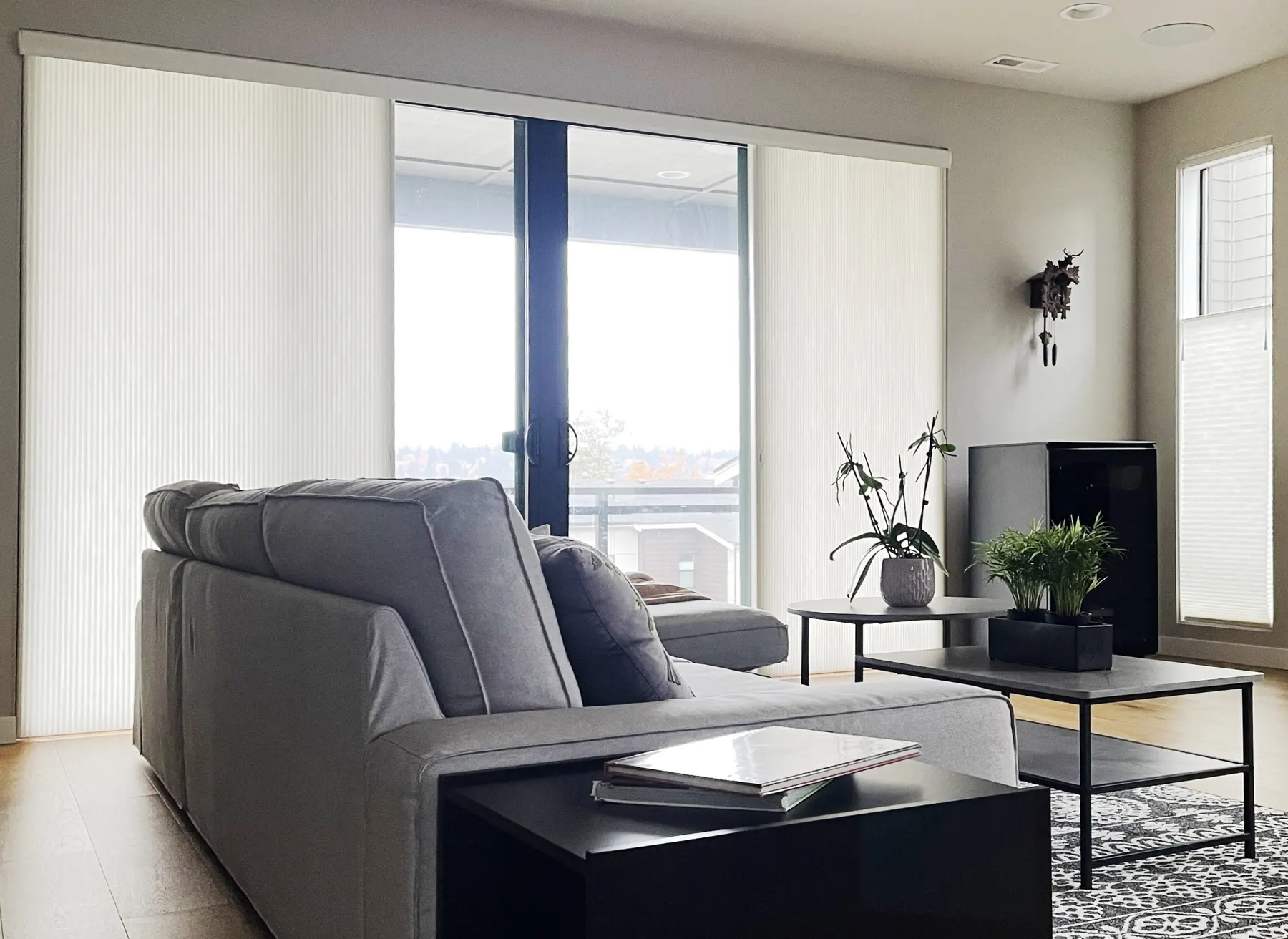
Vertical Honeycomb Shades
Hunter Douglas honeycomb shades with Vertiglide™ move from side to side, following the direction of the sliding door, making them ideal if you would like to open the shades partway to go in and out. When completely open, it has a minimal stack regardless of the size of the sliding door, so you do not lose a lot of your view from the sliding glass doors. The operation does not require the use of cords, providing safety for homes with young children and pets.
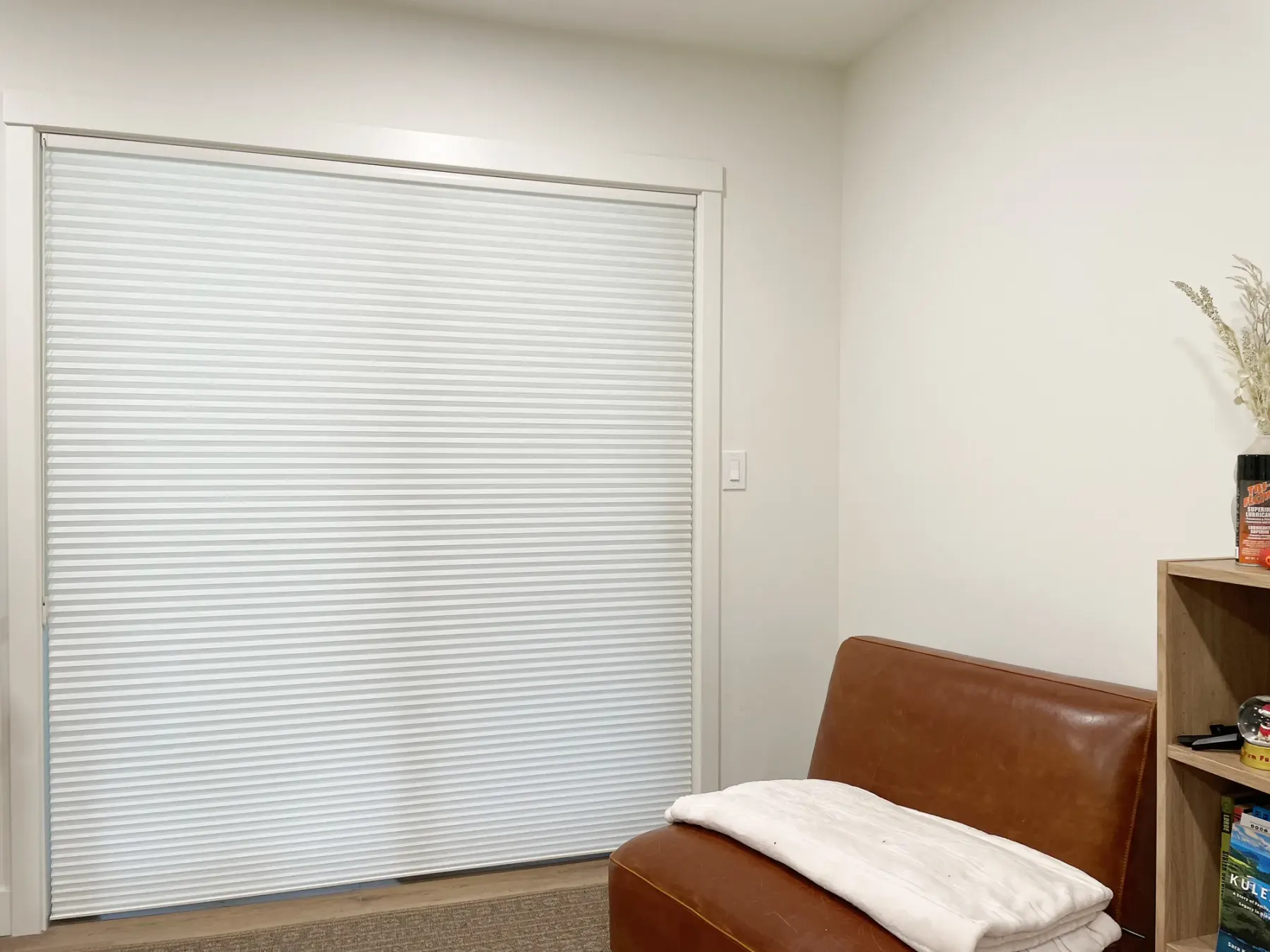
Horizontal Honeycomb Shades
Horizontal honeycomb shades are more cost-effective than vertical honeycomb shades and leave no side stack. However, they must be raised before someone can use the door, instead of following the direction of the sliding glass door.
Sliding Panels as an Alternative to Vertical Blinds
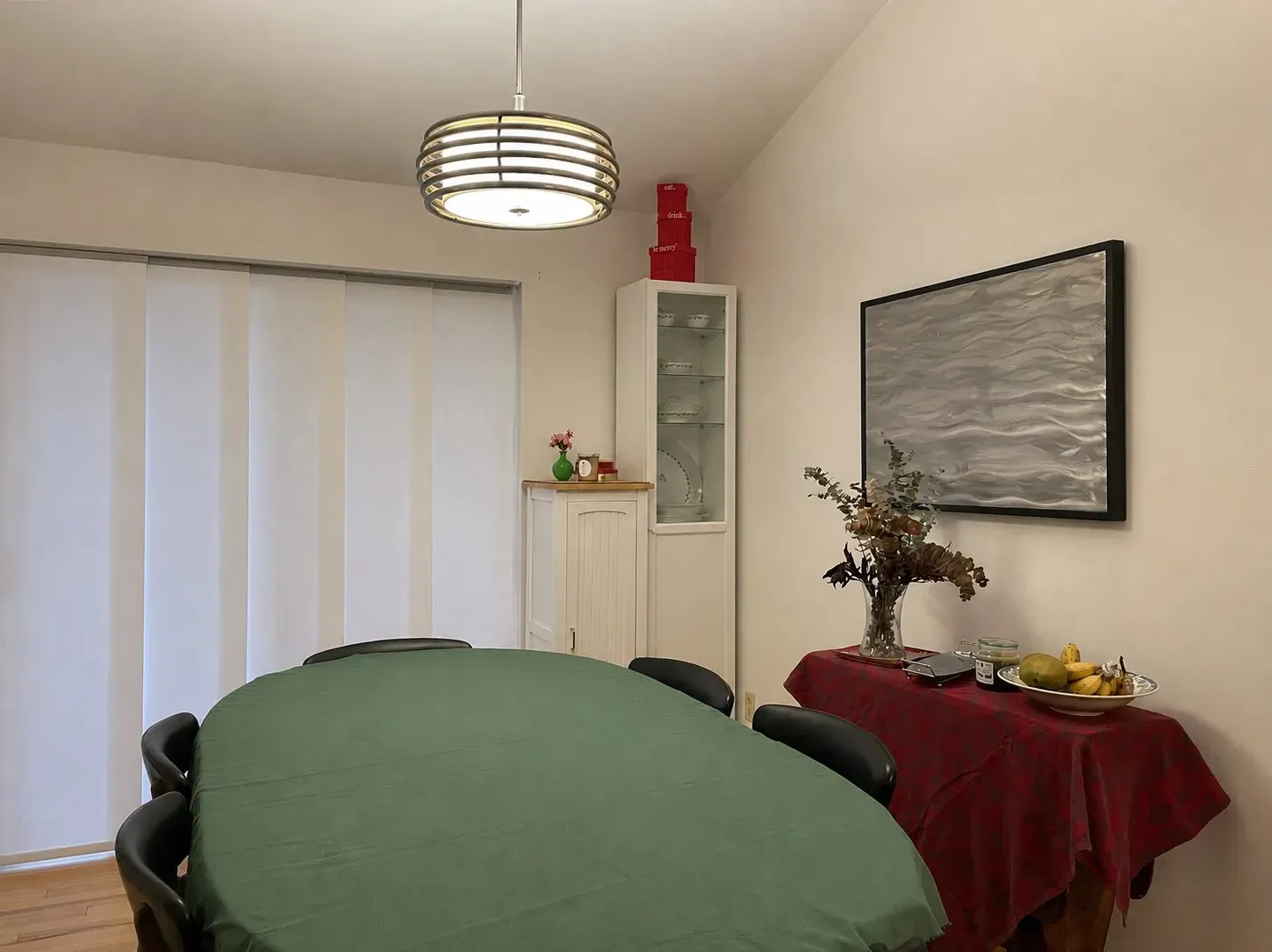
Sliding panels, panel tracks, or gliding window panels are a modern version of vertical blinds and consist of multiple wide stacking panels that overlap and slide along a track. They provide the side-to-side function of vertical blinds without numerous individual vanes, making it easy to use when going in and out while providing privacy. The panels may stack left, right, or split on both sides. They provide a sleek and modern look and can coordinate with roller or solar shades used on nearby windows.
Roller Shades for Sliding Patio Doors
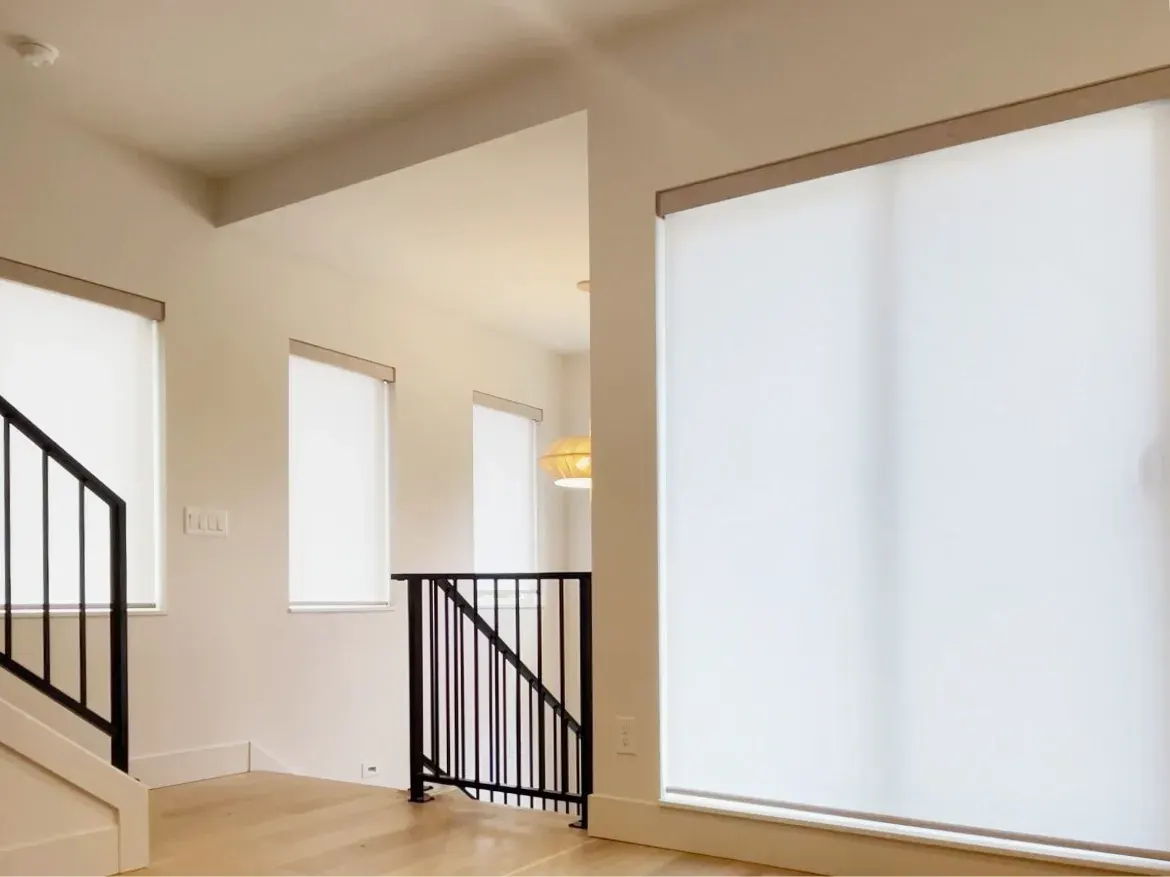
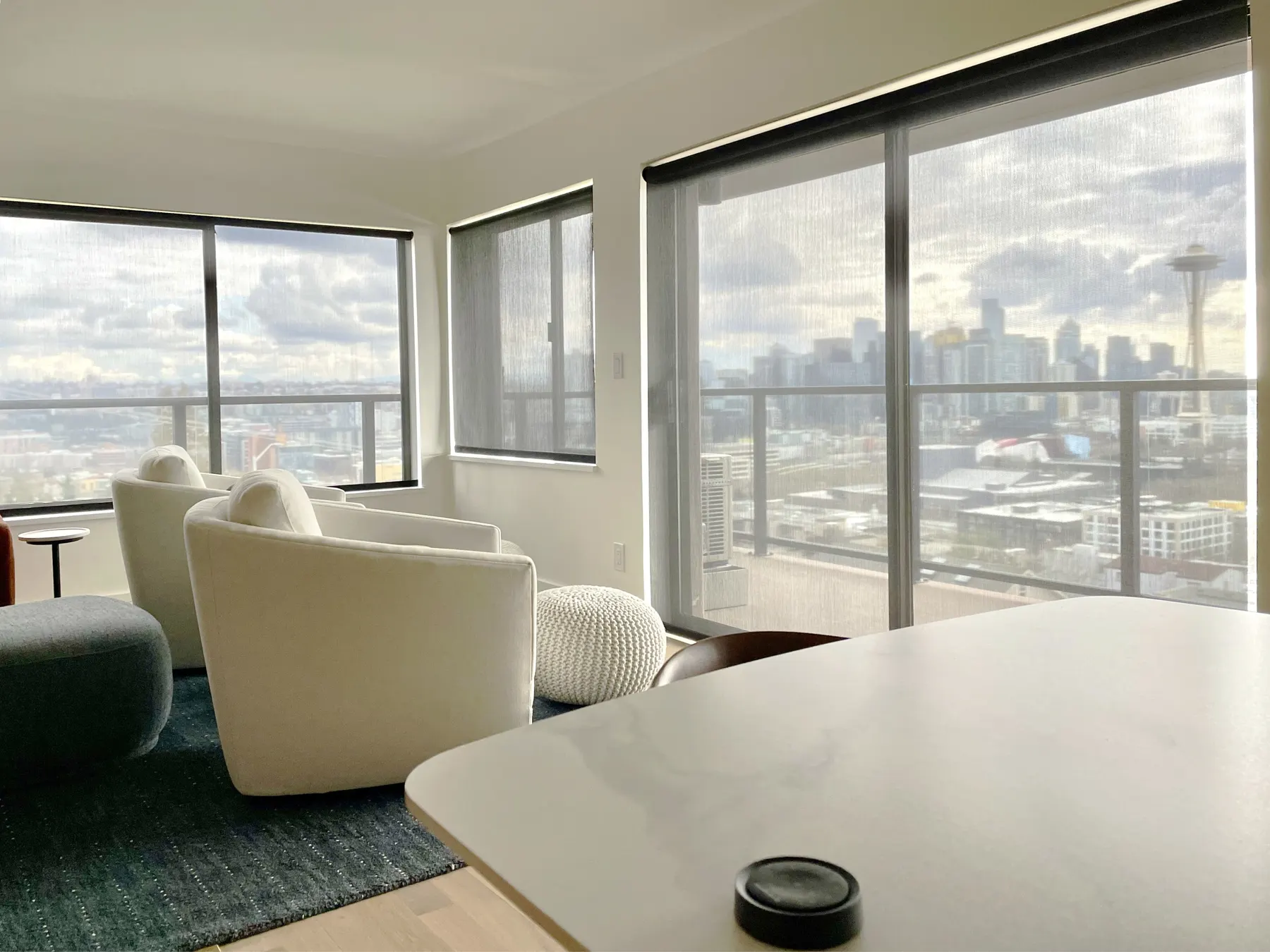
Roller shades are very popular in the Greater Seattle area due to their clean and streamlined appearance, as well as their ability to preserve as much of the window when raised completely, thereby allowing more light and view. Fabric options range from sheer to opaque, giving you control over privacy and light in the room. Partially raising the fabric is also beneficial for keeping your window treatments out of reach of young children and pets.
There are two roller shade materials to consider, fabric roller shades and solar screen shades.
Fabric Roller Shades
Roller fabrics range from sheer and light filtering to room darkening. Light filtering fabric softens incoming sunlight and adds privacy while still allowing a soft glow into the room. Room darkening fabric blocks most light and outside visibility, which works well for spaces where you want more privacy and control over glare, such as media rooms or bedrooms.
Solar Screen Shades
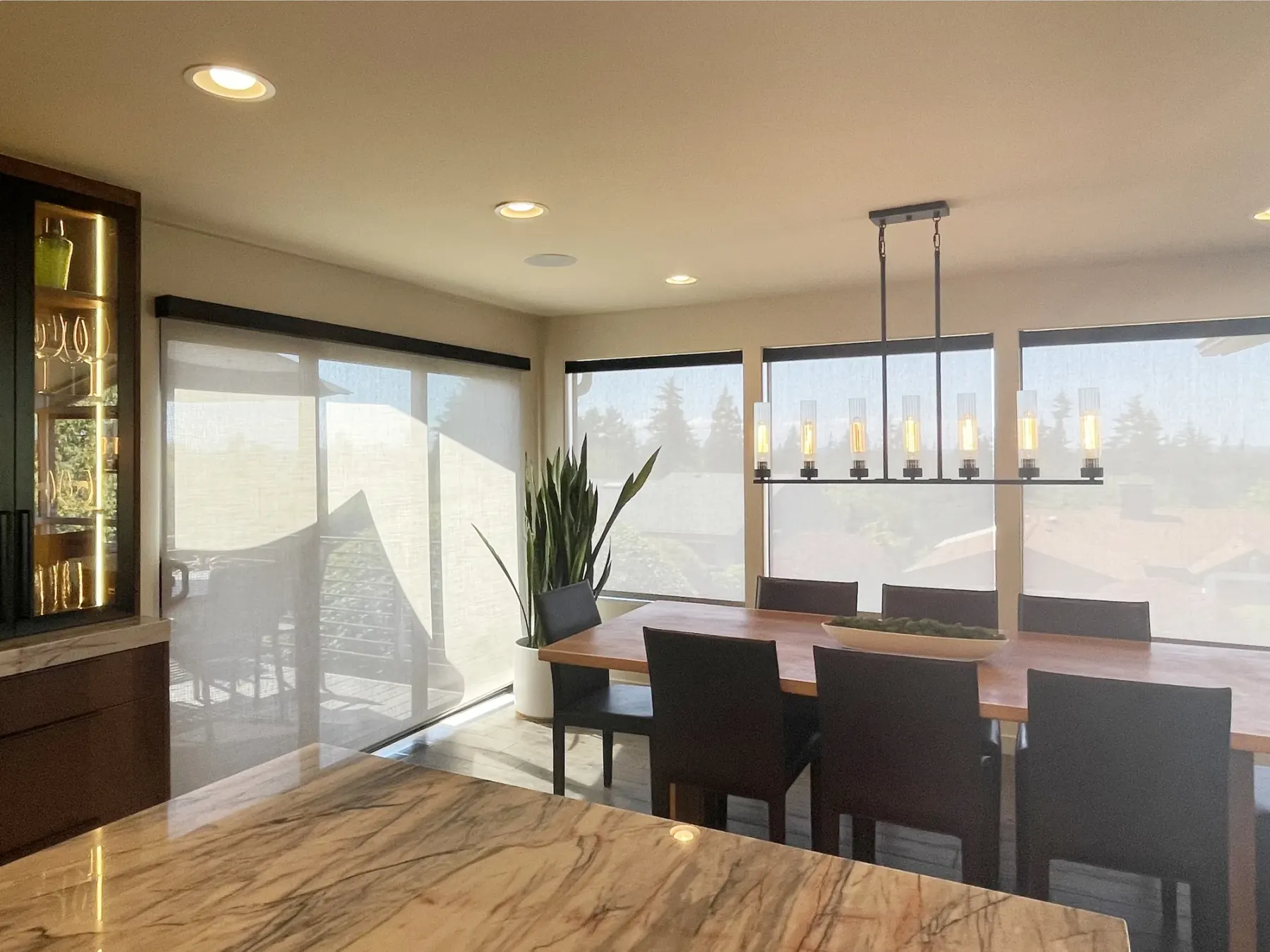
Solar shades are a strong option for sliding glass doors exposed to direct afternoon sun. The screen fabric reduces glare and UV exposure while preserving more of the outdoor view than an opaque roller shade.
A lower openness factor, such as 1%, uses a denser weave for greater glare and UV control. A higher openness factor provides a clearer view but allows more light through. Solar shades can provide daytime screening, but they do not offer reliable privacy at night when the lights are on. Solar shades are easier to clean than other fabrics, making them ideal for high-traffic doors in homes with kids or pets, such as in the kitchen, dining, or living room.
Roman Shades for Sliding Doors
Roman shades offer a classic and elegant appearance for sliding glass doors and are usually chosen for a consistent look with the other windows in the room.
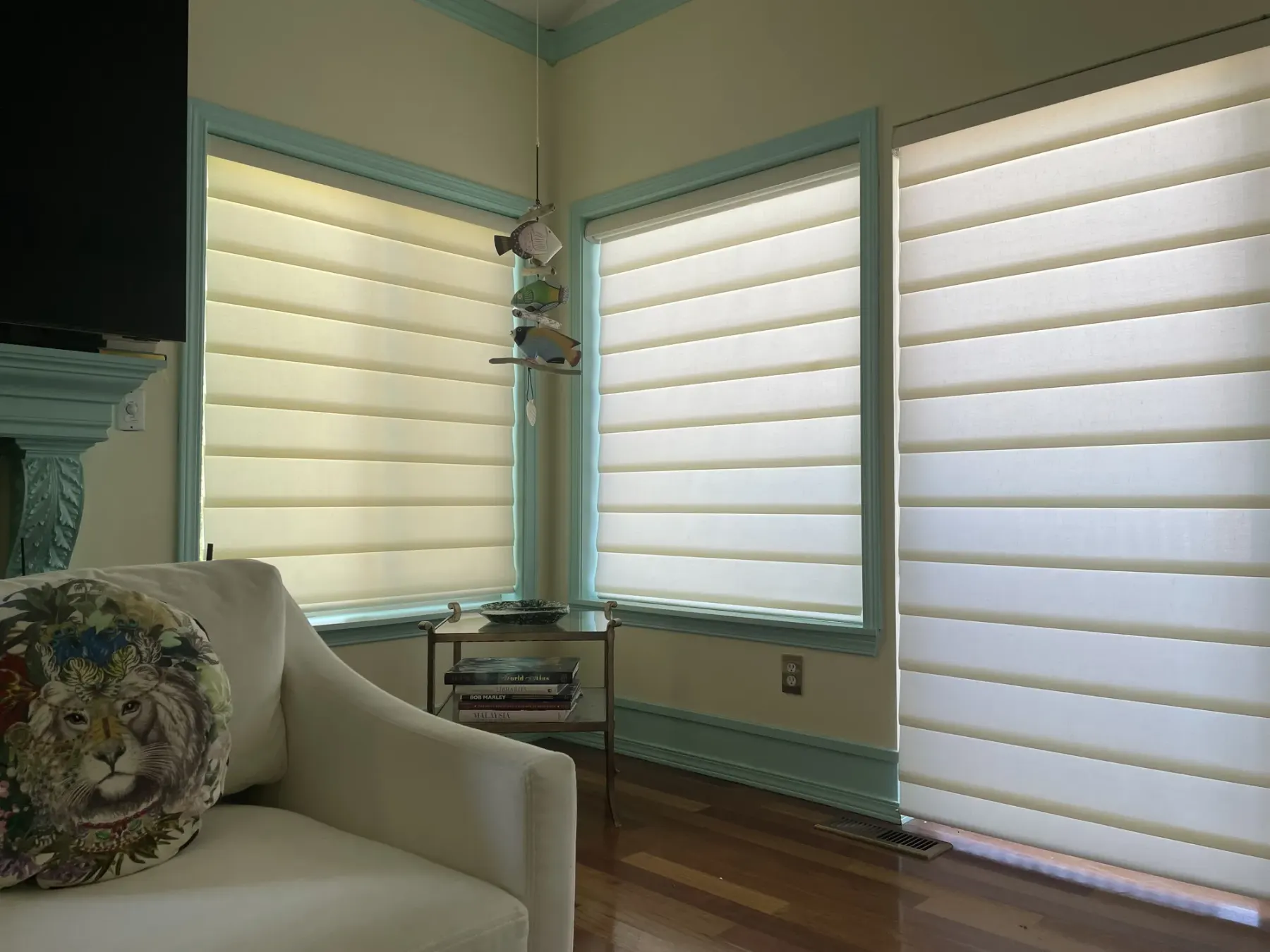
They consist of soft folds of fabric that fold or roll up when raised and hobble or lie flat when lowered. Like other horizontal treatments, they must be raised before the door can be used, and the stack of fabric at the top can pose an issue if the space above the door is limited. A rolled-up option like the Hunter Douglas Vignette® Rolling Modern Roman Shade is the more practical Roman shade style for a sliding glass door since the fabric rolls up onto the cassette and eliminates the fabric stack when raised.
Sheer Shades for Sliding Glass Doors
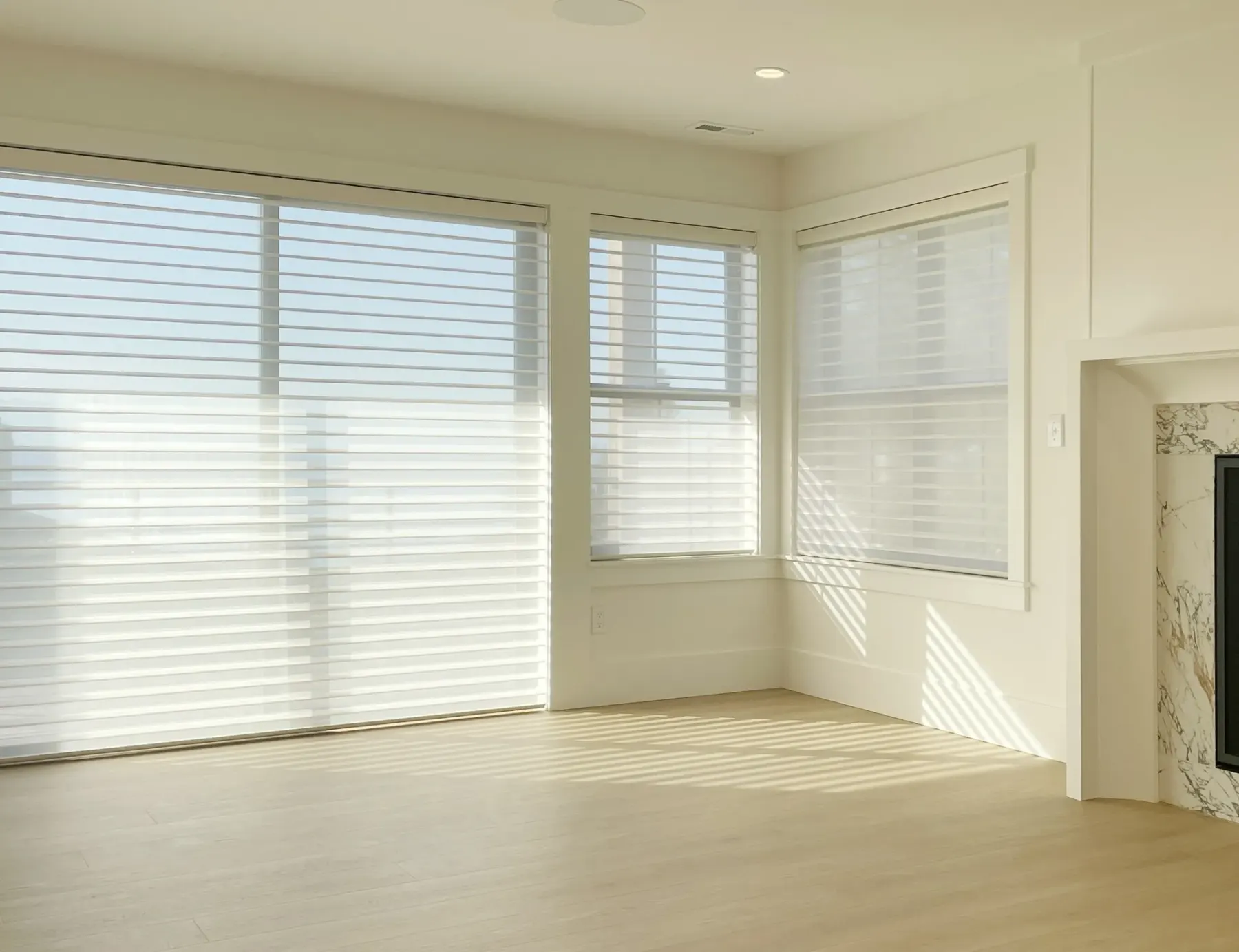
Sheer shades combine light-diffusing sheer fabric with adjustable fabric vanes.
The vanes can be tilted open to soften sunlight and preserve a filtered view, or closed for greater privacy or light control. This option works well when adjustable light control, view through, and a softer fabric appearance are priorities. Like the honeycomb shades, sheer shades come in two orientations.
Horizontal Sheer Shades
When fully raised, horizontal sheer shadings such as Silhouette® Sheer Shades leave the glass unobstructed for a clear outdoor view. Like other horizontal applications, they must be raised completely to go in and out of the door. This can make them less convenient on a frequently used door, but they work well when an unobstructed view when open or coordination with other horizontal sheer shades on nearby windows is a priority.
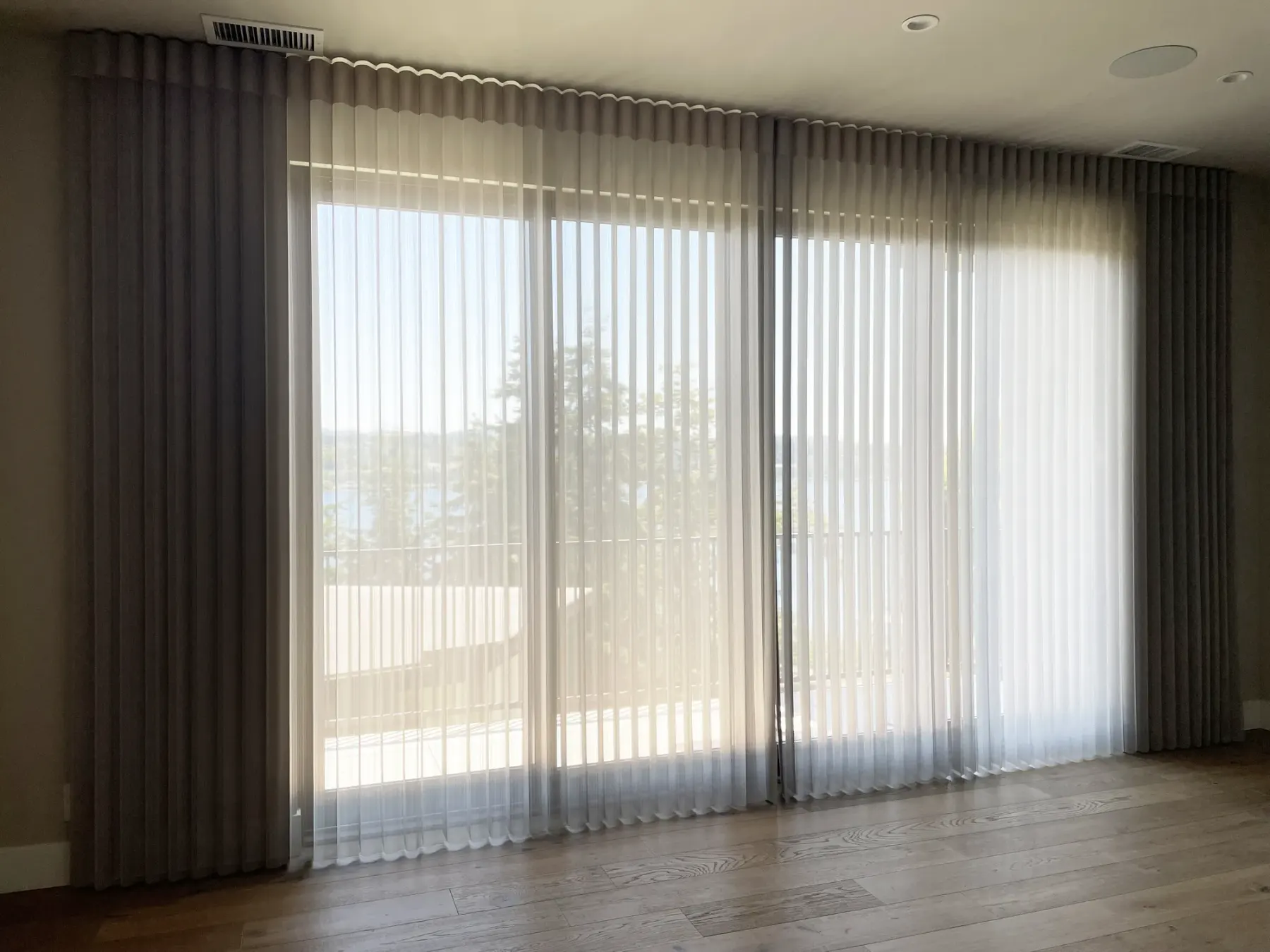
Vertical Sheer Shades
Vertical sheer shades, such as Hunter Douglas Luminette® Privacy Sheers, are a combination of soft fabric vanes and vertical sheer panels. The alternating vanes rotate to adjust privacy, light filtering or room darkening depending on the opacity, and traverse from side to side for door access. They coordinate well with horizontal sheer shades on adjacent windows. As these are more delicate and a premium option, they are not optimal for homes with young children or pets, especially if the door gets high use.
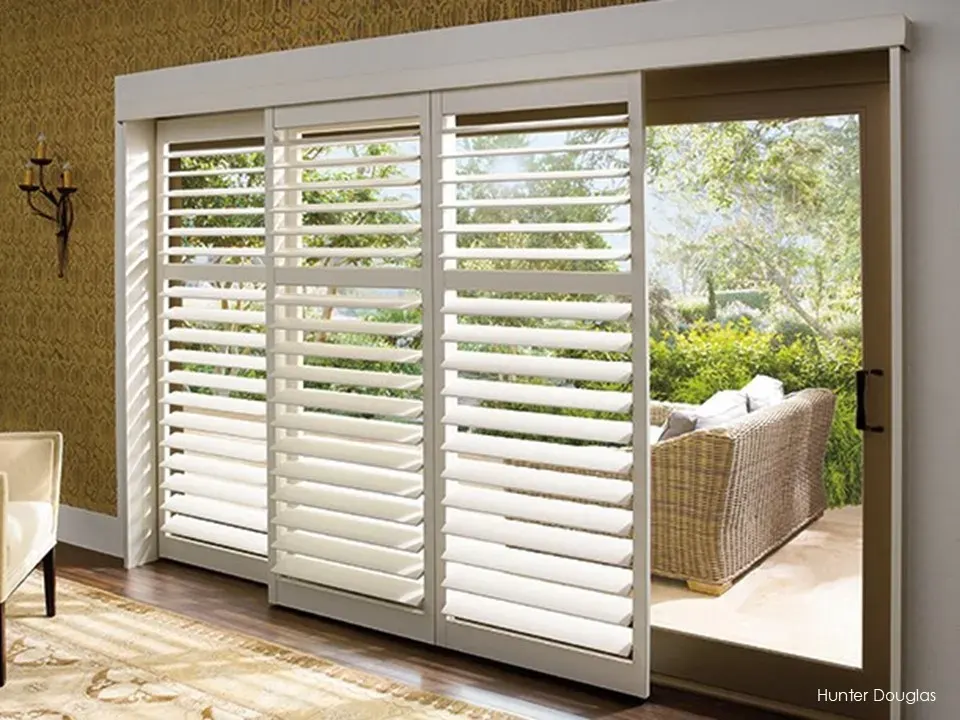
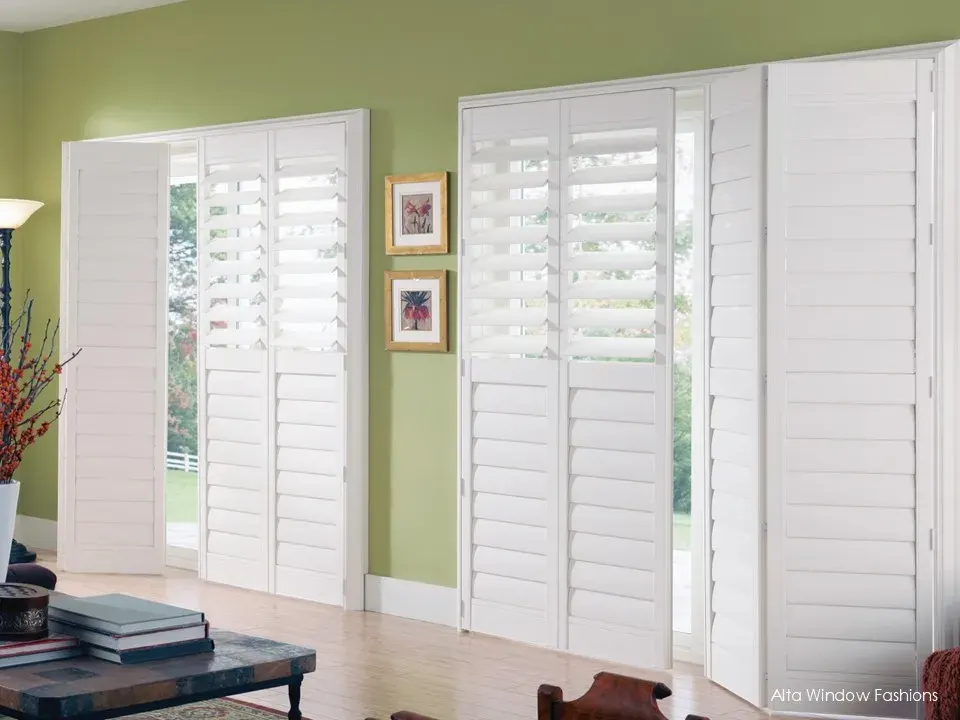
Shutters for Sliding Glass Doors
Made of wood, composite, or vinyl, shutters with adjustable louvers can either slide on the sides as bypass panels, or bifold panels that fold toward the side. Shutters are durable and can create a consistent architectural appearance when other windows in the room also have shutters. Shutters are an investment that will last for years to come with proper care. They are considered a permanent fixture and add lasting value to the home.
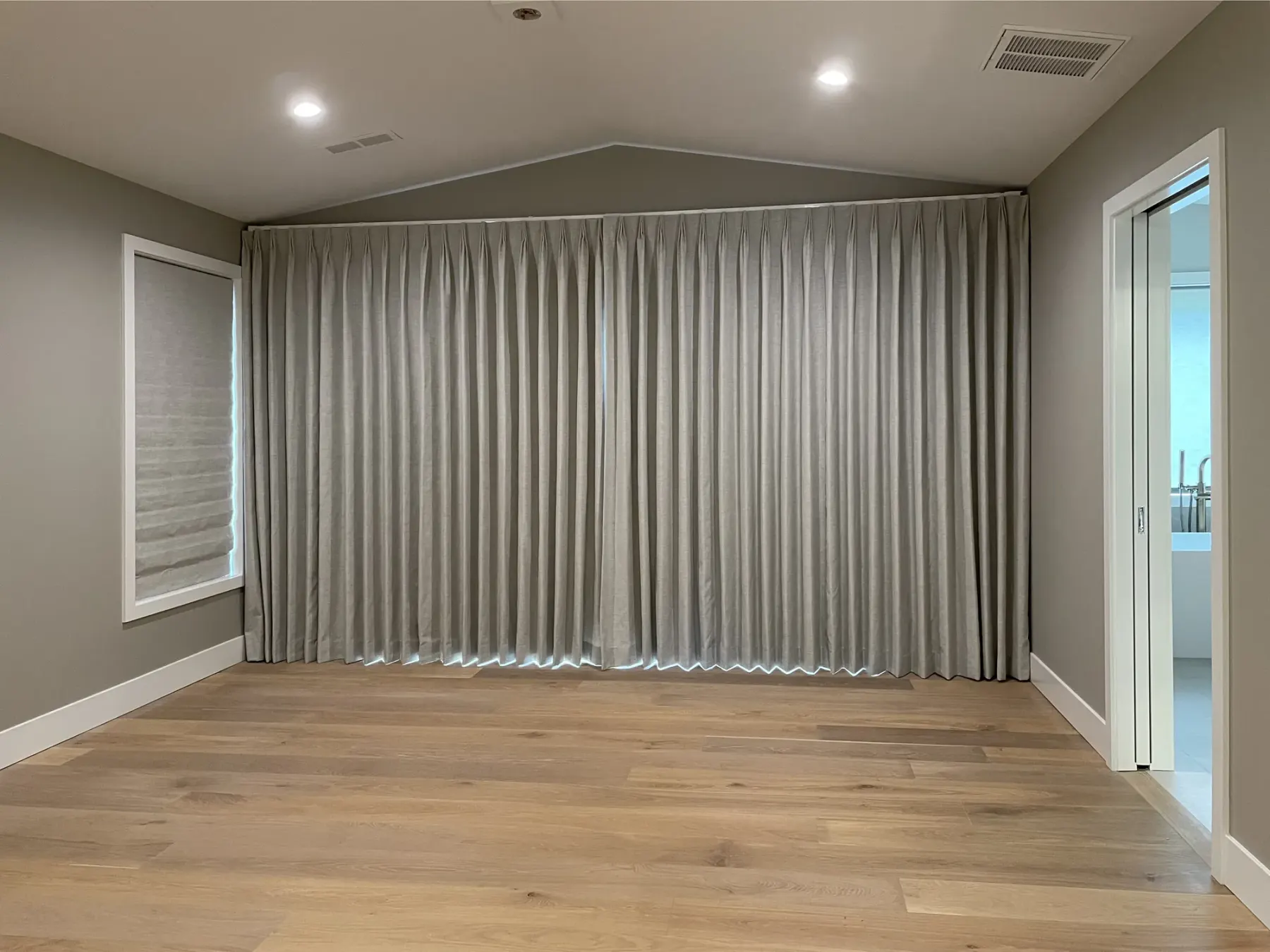
Custom Drapery
Custom drapery can provide full coverage and a softer finish around a large sliding door. It can be designed with a one-way draw that follows the sliding door opening or a split draw that opens from the center. Drapery offers a heavier, more traditional look, and thicker fabric stack when completely open. It works best if they are mainly opened or closed rather than operating them to control light and privacy throughout the day.
Motorized Blinds for Sliding Glass Doors
Motorization is available for several sliding door window treatments, but it is not always the most convenient choice. I generally recommend automation for horizontal applications such as roller, honeycomb, or Roman shades over sliding doors. These shades are usually wider and heavier than standard window shades, making them harder to raise and lower by hand. They are also often operated alongside other shades in the room, so motorization lets them move together on the same schedule. Automation is also worth considering when there is an obstruction close to the door and makes manual operation hard to reach, or when you want the shades to adjust automatically as light and heat change throughout the day.
For side-to-side treatments, I generally prefer manual operation. Vertical orientation is usually chosen for doors that get frequent use, whether for daily access or cross breeze, along with privacy and light control needs that shift throughout the day. In that situation, moving the window treatments by hand is usually faster and more intuitive than waiting on a motor. Automation may still be appropriate for accessibility needs, unusually large openings, or infrequently used doors where the covering is adjusted mainly for privacy and light control rather than regular access.
Case Study: Sliding Panels for a West-Facing Patio Door
Our clients have lived in their Seattle home for 8+ years with the same window coverings that were installed when they first moved in. The vertical blinds on the dining room sliding glass door were broken, with several vanes detached from the track. The replacement needed to address three practical concerns: strong western sun, daily use around dogs, and ease of use.
We installed sliding panels using 1% openness solar fabric. The tight weave reduced glare and UV exposure from the afternoon sun, the material we selected was easier to clean, and the panel construction was a more durable configuration than vertical blinds.
Our clients were overjoyed by the outcome. The sliding panels were simple to operate, addressed problems they had lived with for years, and better suited to how they live in the home. See more transformations like this in our project gallery.
Frequently Asked Questions About Window Coverings for Sliding Glass Doors
For frequently used sliding doors, a side-to-side shade is usually more practical because it can be opened only far enough to access the door handle and fit comfortably. Horizontal shades leave no side stack but must generally be raised before someone walks through.
An inside mount works when the opening has enough depth and the shade will clear the door handles. An outside mount may be necessary when the door depth is shallow or additional coverage is needed.
A honeycomb shade generally provides the strongest insulation among common sliding door shade options because its cellular construction traps air at the glass.
Choosing the Right Sliding Door Window Covering
The right covering for your sliding glass door comes down to how the door gets used day to day, not just how it looks. Match the orientation to your foot traffic, get the opacity right for your privacy needs, and account for how much stacking space you actually have.
Amazing Blinds by Armi provides in-home window covering consultations, professional measuring, and installation for sliding glass and patio doors throughout Greater Seattle and the Eastside. A design consultation allows the door dimensions, mounting conditions, privacy needs, and daily use to be evaluated before a product is selected.
If you're ready for window coverings for your sliding glass doors, explore our Seattle window covering services and Bellevue window covering services, or contact us or give us a call at 206-801-6010.
Explore Custom Blinds, Shades, Shutters, and Automation
Every home has a unique style, story, and set of needs.
Whether the priority is design, smart-home integration, energy efficiency, privacy, room darkening, ease of operation, or long-term durability, we offer personalized recommendations from a broad selection of window treatments.
We help you explore custom blinds, shades, shutters, and automation to create window covering solutions that complement your home, address your priorities, and align with your investment range.