
Window Coverings for Waterfront Homes in Redmond, Bellevue, Seattle
Written by: Armi Avila
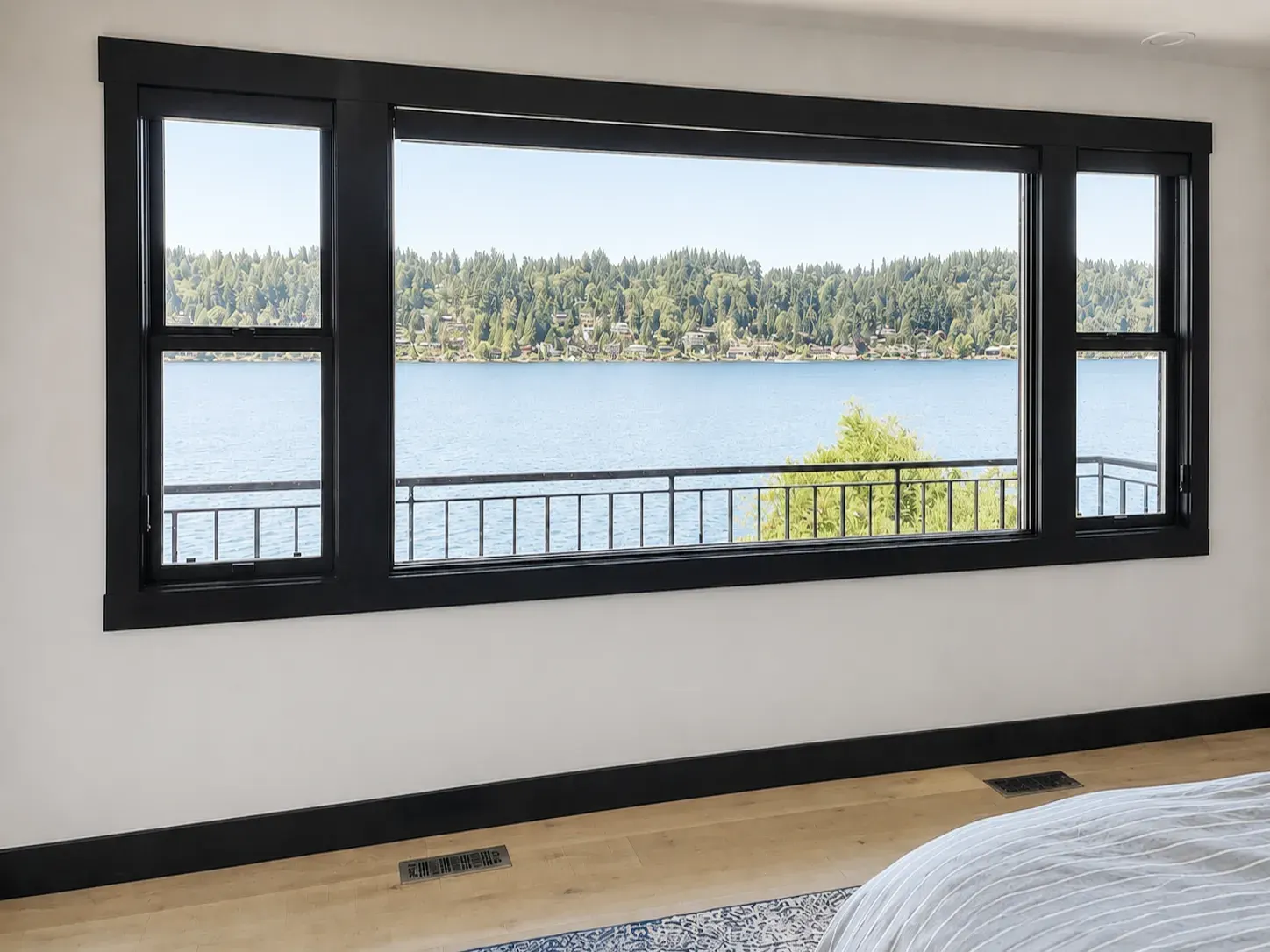
Waterfront properties present a unique combination of architectural design considerations and environmental exposure. Window coverings for these homes throughout the Seattle area must manage glare, block harmful UV rays, control heat gain, and protect interiors while preserving the views that make these homes special. Large windows and sliding glass doors are common because the view is often the focal point of the home, which adds another layer of complexity when selecting the right window covering solution.
While solar shades and sheer shades, often paired with automation, are two of the most effective solutions, other window treatment options can work depending on design preferences and the function of each room.
In this guide, we cover:
- What Waterfront Homes Actually Need: Glare Control Without Blocking the View
- Quick Comparison: Best Window Coverings for Waterfront Homes
- My Top Recommendations for Waterfront Homes in Detail
- How Window Coverings for Waterfront Homes Work Together
- Waterfront Case Study: Puget Sound Custom Build
- Frequently Asked Questions About Window Coverings for Waterfront Homes
- Final Guidance for Waterfront Homes
What Waterfront Homes Actually Need: Glare Control Without Blocking the View
Most waterfront clients prioritize view preservation over privacy. The main issue is glare reflecting off water, especially in south and west-facing rooms. The right solution manages light intelligently, as the wrong window covering will either filter the light but block the view, leave the glare unmanaged, or fail to integrate with the architecture of the home.
Prolonged sun exposure, including UV rays, visible light, and heat, can contribute to fading and discoloration. In waterfront homes, I commonly see:
- Faded hardwood floors
- Discolored cabinetry
- Artwork degradation
- Fabric fading on upholstery
Quick Comparison: Best Window Coverings for Waterfront Homes
| Window Treatment | Best For | Key Benefit | Potential Limitation |
|---|---|---|---|
| Solar Shades | Living rooms and offices with strong glare | Reduces glare while preserving views | Fixed level of light filtration |
| Silhouette® Sheer Shades | Great rooms needing flexible light control | Adjustable vanes diffuse sunlight | Higher investment |
| Duette® Honeycomb Shades | Bedrooms and high-sun exposure rooms | Excellent insulation and light control | Less outward visibility |
My Top Recommendations for Waterfront Homes in Detail
Based on actual installations along Lake Washington, Lake Sammamish, and the Puget Sound, these solutions consistently perform well in waterfront homes.
1. Solar Shades (Modern and Minimal)
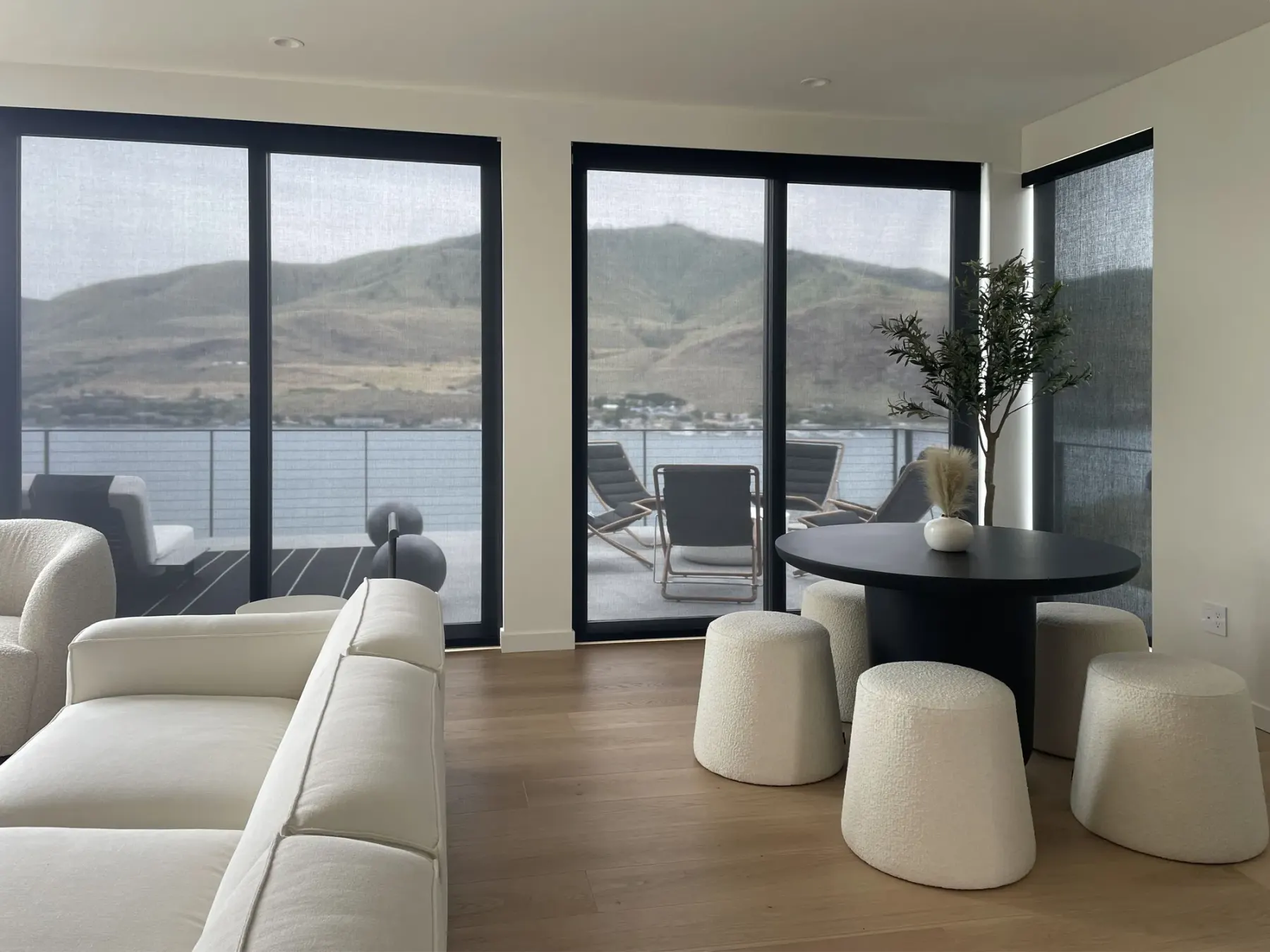
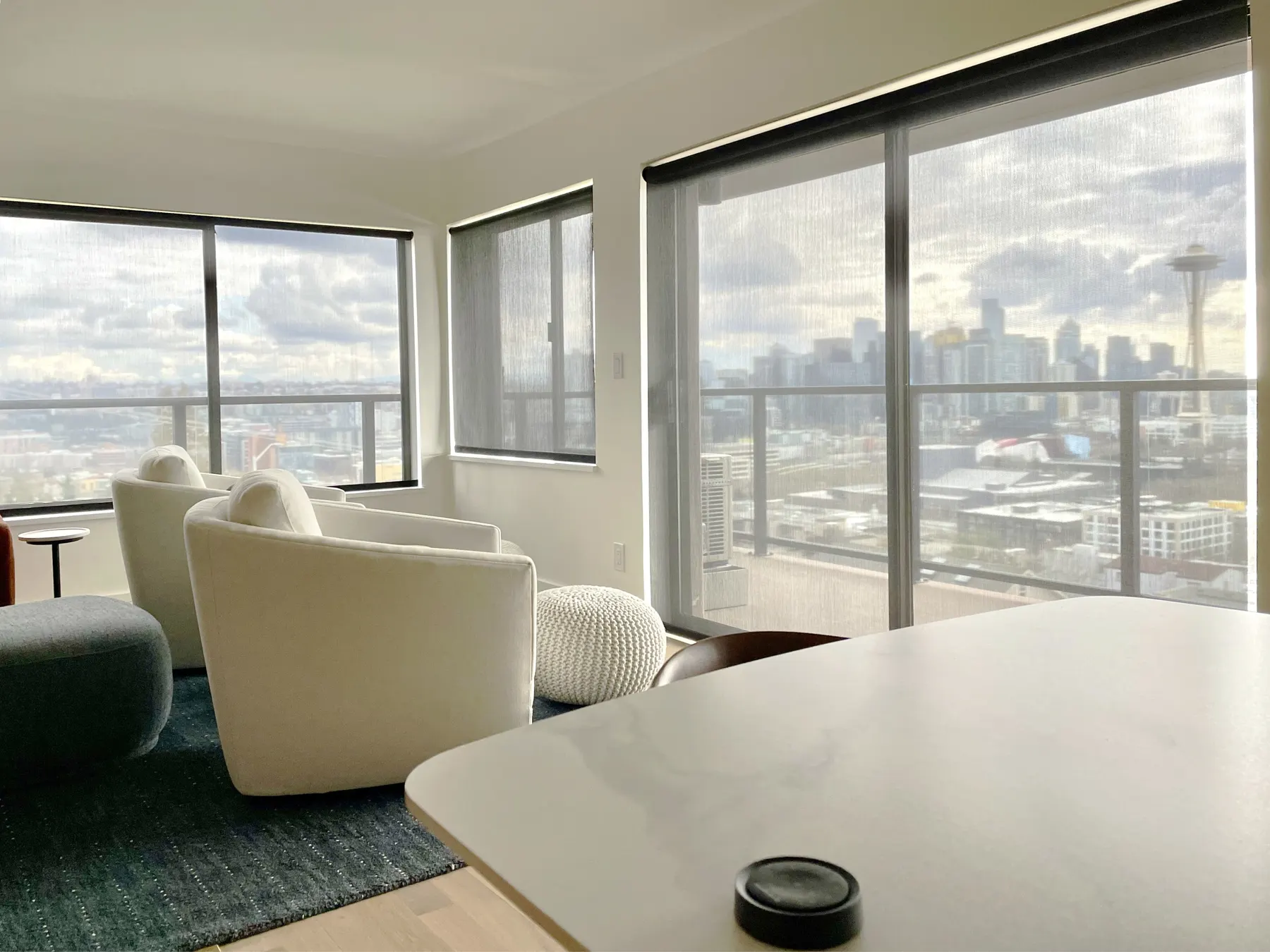
Solar shades are often the first recommendation for waterfront living spaces for a clean, contemporary look.
Why they work:
- Reduce glare significantly
- Block harmful UV rays
- Maintain a filtered view to the water
- Minimal visual obstruction due to a slim profile
The fabric's openness factor is critical. Too open and glare persists. Too tight and the view is restricted.
The drawback:
There is less flexibility in light filtration. The openness you select is fixed. There is no "middle setting." Choosing the correct opacity is critical.
2. Sheer Shades (Premium with Flexible Light Control)
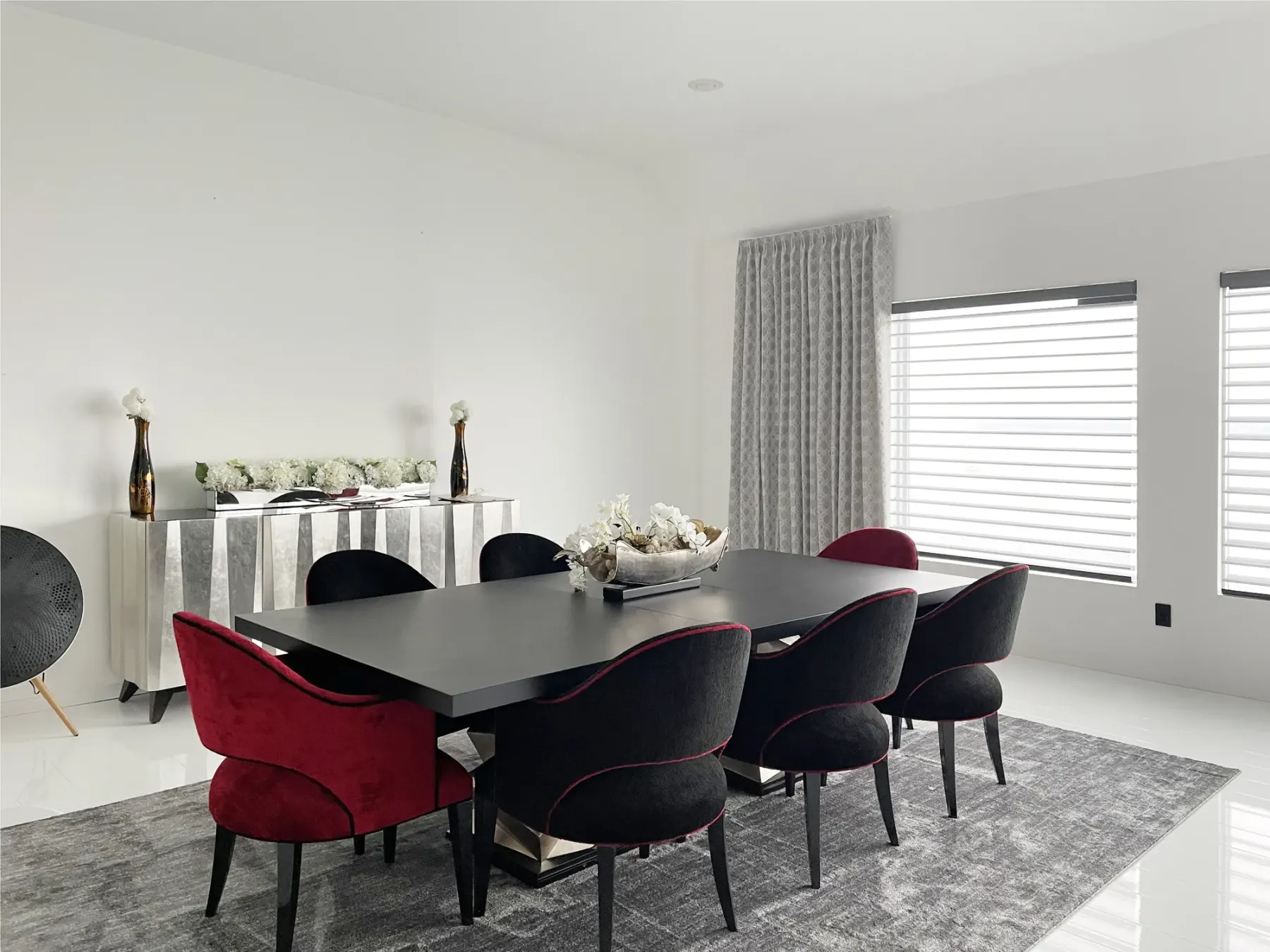
Sheer shades such as Hunter Douglas Silhouette® window shadings provide a more flexible solution for homeowners wanting both view and adjustability.
Benefits include:
- View through capability through the sheer fabric
- Soft diffusion of natural light
- Adjustable fabric vanes between sheers for increased UV protection or privacy
- A more elevated look than standard blinds or shades
According to Hunter Douglas Architectural , Silhouette® FR Window Shadings provide up to 88% UV protection with the vanes open and 99% with the vanes closed.
The drawback:
It is a premium option so the features must align with the goals.
3. Automation (Essential for Convenience)
In waterfront homes, automation is often less of a luxury and more of a practical solution.
Why automation matters:
- Large expanses of glass are impractical to operate manually
- Scheduled adjustments protect interiors during peak hours
- Consistent scene schedules reduce long-term floor and furniture fading
- Improves convenience in tall or hard to reach windows
Motorized shades can be programmed to lower automatically during high-glare afternoon exposure and retract to restore full water views.
In homes facing west over Puget Sound or south over Lake Washington, glare intensity changes throughout the day. Manual operation leads to inconsistent protection. Automated shades can be scheduled to adjust throughout the day, helping manage heat and UV exposure more consistently.
For clients building or remodeling, I evaluate:
- Hardwired, rechargeable, or battery operated
- Solar charging options
- Integration with smart home system
4. Hunter Douglas Duette® Honeycomb Shades with Top-Down Bottom-Up (Energy Efficiency and Light Zoning)
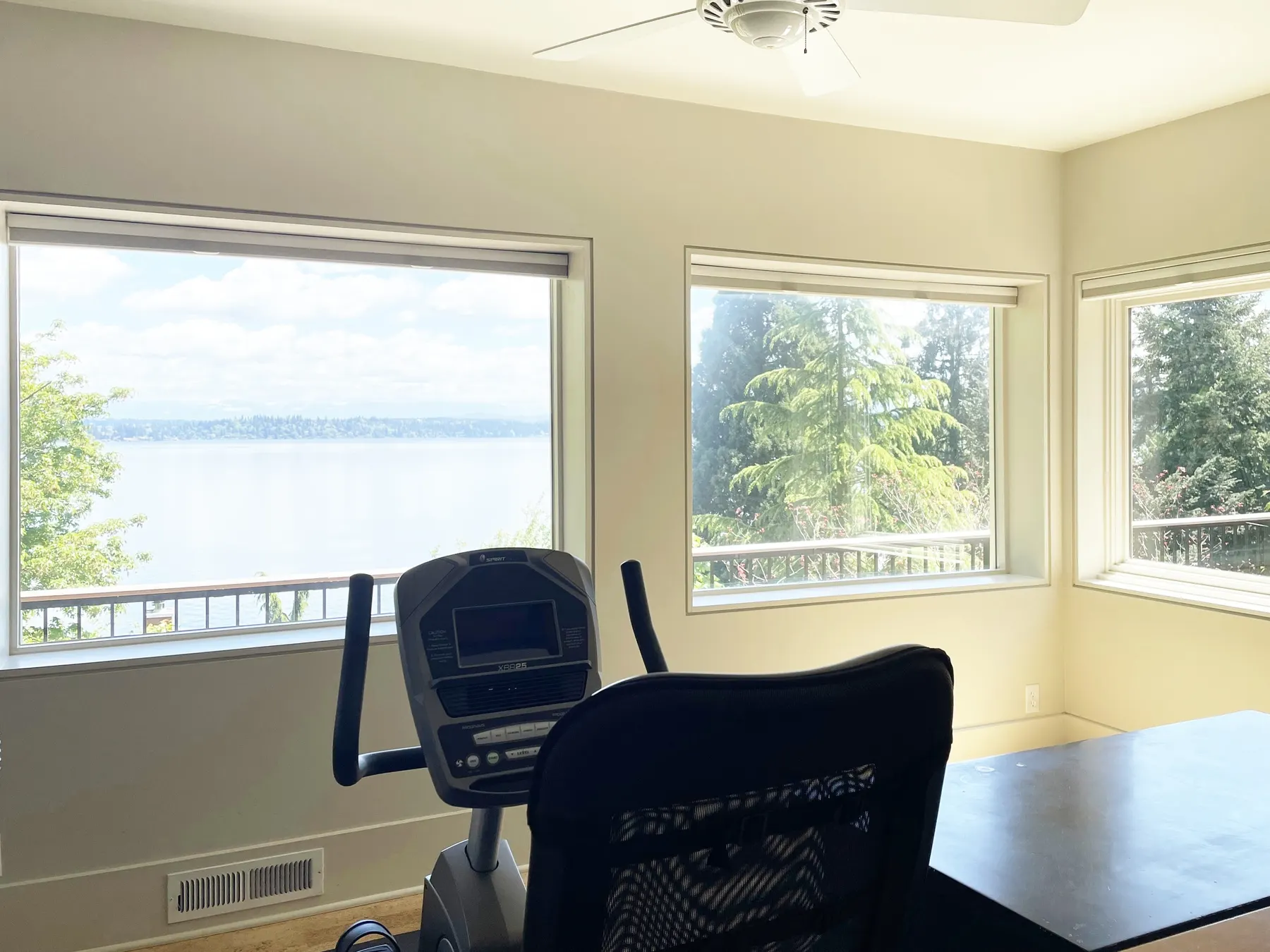
For rooms with higher solar exposure and require improved energy efficiency, I often recommend Hunter Douglas Duette® Architella® honeycomb shades with top-down bottom-up functionality where appropriate.
Why they work:
- Cellular construction traps air and improves insulation
- Reduces solar heat gain in south and west-facing rooms
- Provides flexible light control with the top-down bottom-up feature
- Minimal profile when shades are raised
Top-down bottom-up feature allows shade to be lowered from the top while keeping the bottom closed, or fabric can be anywhere in between. This allows natural daylight and partial water views while blocking glare where hits the window.
In waterfront homes, this energy efficient solution is useful in:
- Bedrooms facing sunrise and where privacy and light need balance
- Rooms that need additional temperature control
- Living spaces where view must be balanced with stronger glare control
Compared to solar shades, honeycomb shades provide better insulation but block the view when lowered. I usually recommend them where temperature control matters more than preserving the view. When raised, only a small fabric stack remains at the top of the window.
How Window Coverings for Waterfront Homes Work Together
Most homes may not need just one style throughout. A typical approach might look like:
- Solar shades or Silhouette® sheer shades in main living spaces
- Duette® honeycomb with top-down bottom-up in bedrooms
- Motorization for a fully integrated system
The correct combination depends on various factors including orientation, window size, and how each room is used.
Waterfront Case Study: Puget Sound Custom Build
In a recent waterfront project in Des Moines, WA, the primary goal was heat and sun control while maintaining the view and enhancing the interior aesthetic. Privacy was not a concern. The view was the feature. The living space featured a dramatic wall of windows with intense sun exposure.
We selected Hunter Douglas Silhouette® ClearView® sheer shades in a darker fabric for better outward visibility and to reduce glare. Every shade was motorized using PowerView® automation with a solar charger, allowing the use of sunlight rather than requiring frequent battery replacements.
To soften the architectural lines and frame the windows, we added stationary drapery panels on the sides without blocking the view.
The result:
- Controlled glare
- Reduced heat gain
- Preserved panoramic views
- A finished and refined aesthetic
Frequently Asked Questions About Window Coverings for Waterfront Homes
Waterfront homes often experience stronger UV exposure because sunlight reflects off the surface of the water and into the home. This reflected light increases overall solar exposure, especially in homes with large windows facing south or west.
Window orientation determines how much sunlight, glare, and heat a room receives throughout the day, which directly influences the type of window covering that performs best. East-facing bedrooms typically struggle with early sunrise glare, while south and west-facing living spaces face intense afternoon heat and reflection.
Yes. Custom window coverings are often worth it for waterfront homes because they can address glare, heat, UV exposure, and large windows while preserving the view. With properly selected window coverings, they protect floors, cabinetry, art, and furniture that are often worth far more than the shades themselves. In that context, the right solution is not an expense. It's an investment.
Final Guidance for Waterfront Homes
For homes along Lake Washington in Bellevue or Kirkland, Lake Sammamish in Issaquah or Redmond, and Puget Sound in Seattle or Shoreline, the core considerations remain:
- Intense glare from reflective water
- Heat control, UV protection
- Large windows and sliding glass doors
- Desire to preserve the view
When choosing the best blinds for a Redmond waterfront home or surrounding areas, consider four things:
1. Define the use of the room
2. Prioritize view preservation
3. Protect interiors from long-term UV damage
4. Automate when possible
Waterfront homes are designed around light; therefore, the window coverings must be equally intentional.
If you live in the Greater Seattle area and want guidance on selecting the best window coverings for your waterfront home, schedule a consultation or give us a call at 206-801-6010.
Explore Custom Blinds, Shades, Shutters, and Automation
Every home has a unique style, story, and set of needs.
Whether the priority is design, smart-home integration, energy efficiency, privacy, room darkening, ease of operation, or long-term durability, we offer personalized recommendations from a broad selection of window treatments.
We help you explore custom blinds, shades, shutters, and automation to create window covering solutions that complement your home, address your priorities, and align with your investment range.