
Blackout Shades in Seattle & Bellevue: A Homeowner's Guide
Written by: Armi Avila
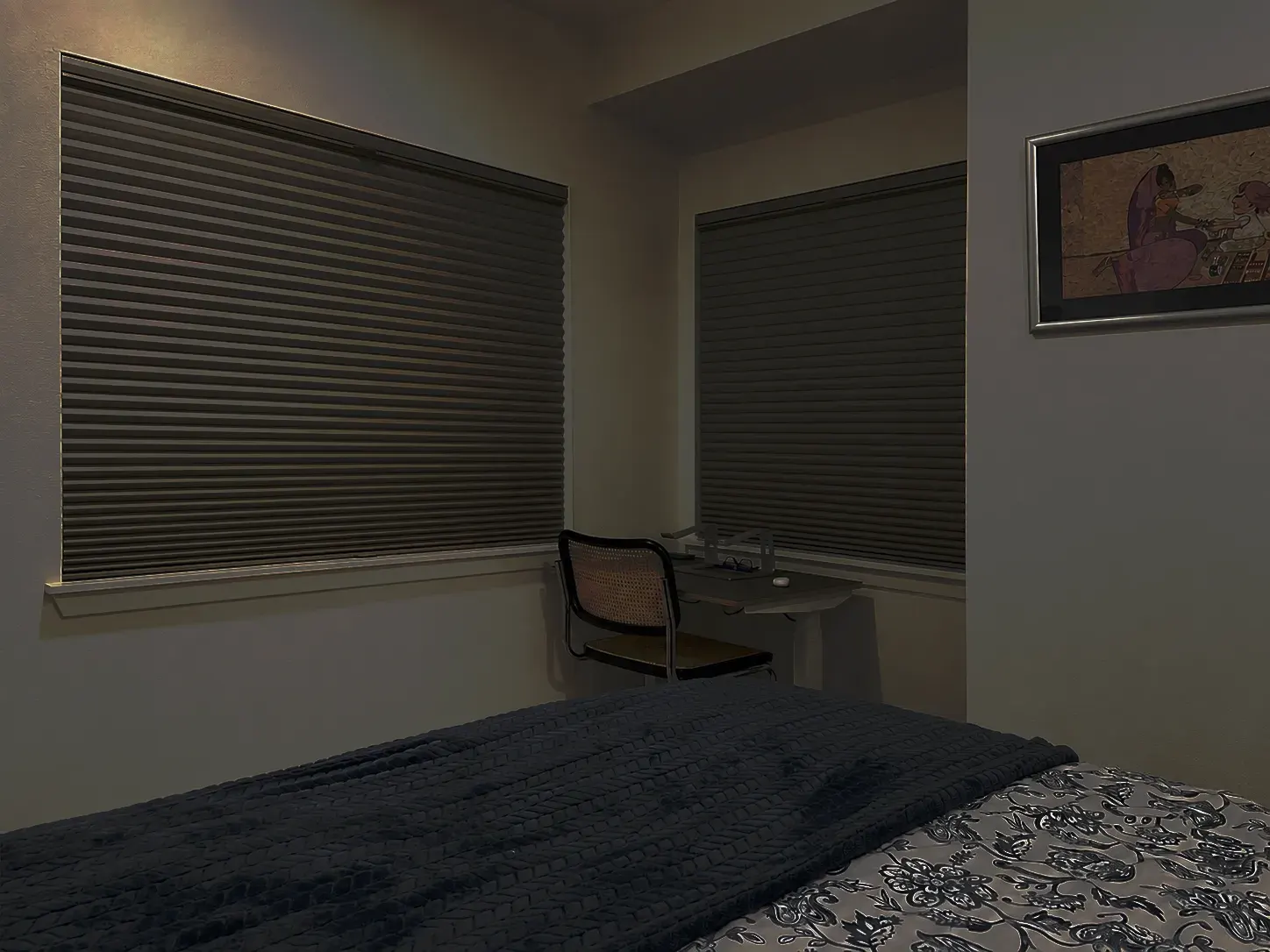
For Seattle and Bellevue homeowners, blackout window coverings are one of the most effective ways to improve privacy and reduce unwanted light in bedrooms, nurseries, media rooms, and other spaces where light control matters. Popular options include honeycomb shades, roller shades, roman shades, and custom drapery. Although the terms blackout, room darkening, and opaque are often used interchangeably, their purpose is consistent: to block or significantly reduce incoming light as much as possible.
How dark is "blackout"? Even the best blackout window coverings may allow small amounts of light around the edges. Later in this guide, we explain why this occurs and how it can be minimized.
In this guide, we cover:
- Benefits of Blackout Window Coverings
- Why Blackout Shades Are Popular in Seattle & Bellevue
- Best Blackout Window Coverings by Room
- How to Choose the Right Blackout Shades
- Can You Add Blackout to Existing Shades or Blinds?
- Challenges with Room Darkening
- How to Reduce Light Seepage Around Window Shades
- Additional Considerations
- Frequently Asked Questions About Blackout Window Coverings
- Conclusion
Benefits of Blackout Window Coverings
1. Better Sleep Quality
Blackout blinds reduce disturbances from streetlights, passing cars, and early sunrises, helping nurseries, shift workers, and light-sensitive sleepers get better rest. Learn more about bedroom window coverings for sleep, privacy, and light control.
2. Improved Energy Efficiency and Insulation
Quality blackout treatments, especially Hunter Douglas Duette® Architella® honeycomb shades, can improve energy efficiency by creating an insulating layer that helps reduce heat loss in winter and solar heat gain in summer. This can support more consistent indoor temperatures, lower heating and cooling costs, and greater year-round comfort.
3. Enhanced Privacy and Security
Opaque coverings prevent outside visibility, providing privacy and peace of mind. They also obscure whether someone is home, subtly enhancing security.
4. Optimal Light and Glare Control
Blackout shades provide optimal light and glare control in media rooms, home theaters, and offices by reducing incoming light, improving screen visibility, and making the space more functional.
5. Protects Interiors from UV Damage
Blackout fabrics help protect interiors from UV damage by reducing exposure that can fade hardwood floors, furniture, artwork, rugs, and upholstery. Even rooms that do not require complete darkness can benefit from added UV protection.
Why Blackout Shades Are Popular in Seattle & Bellevue
Blackout window coverings have seen a surge in demand across the Seattle region due to several local factors:
1. Extended Summer Daylight Hours
Greater Seattle experiences long daylight hours during summer, with sunsets as late as 9:00 PM. While this is ideal for outdoor activities, it can make winding down or putting children to bed on schedule challenging. Blackout shades help create a nighttime atmosphere even during daylight hours.
2. More Windows and Increased Urban Density
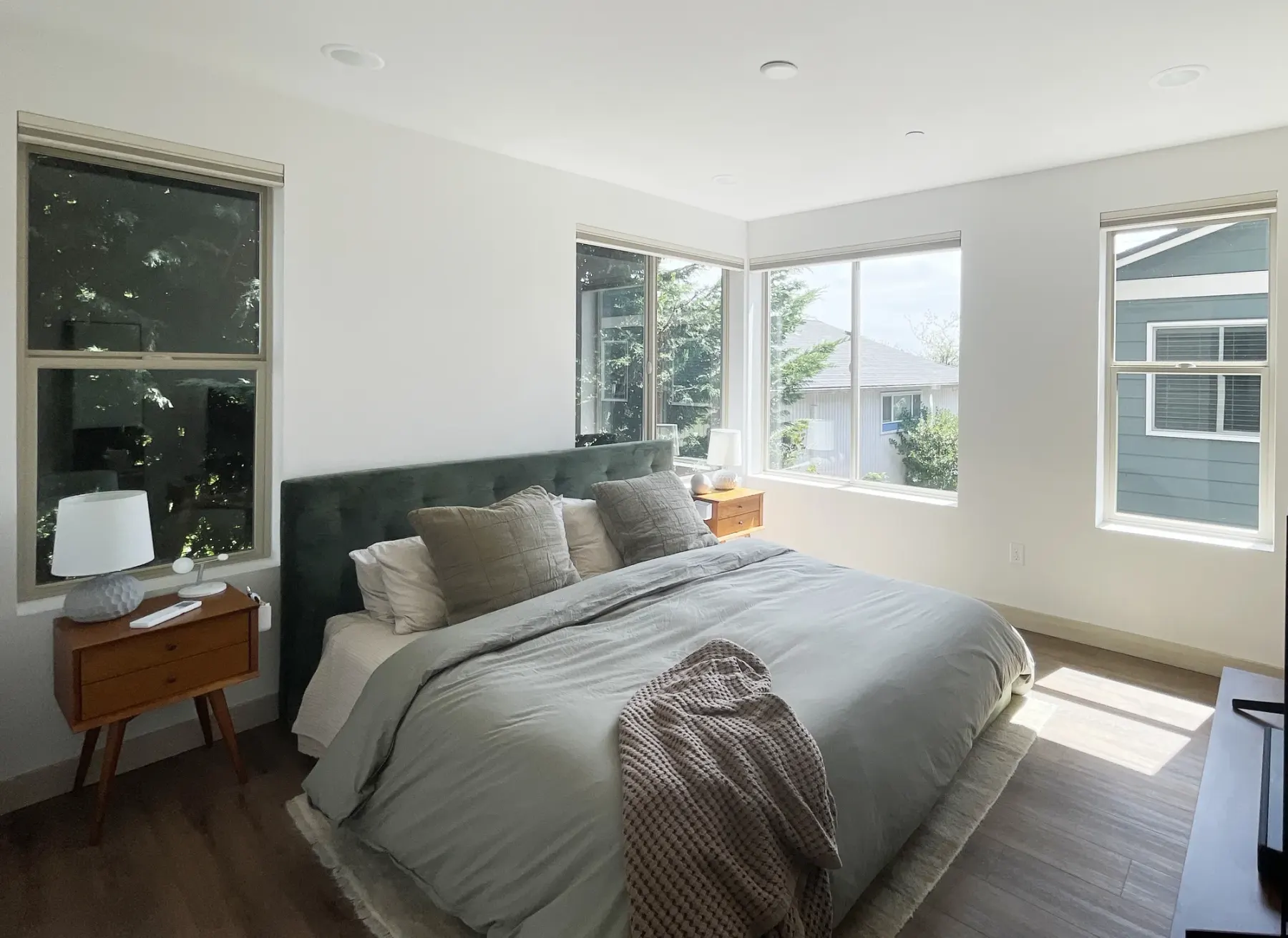
Newer homes are often designed with larger or multiple windows to bring in natural light. At the same time, neighborhoods have become denser, with homes built closer together. Many homeowners choose blackout shades when complete control over incoming light is top priority, and especially on windows facing the street or neighboring properties.
3. Focus on Energy Efficiency
Energy efficiency is a major priority for Seattle homeowners, especially in older homes or those with large or multiple windows. Blackout shades, particularly cellular or honeycomb styles, offer insulation benefits that help reduce energy loss in both summer and winter months.
4. Home Media Rooms and Remote Workspaces
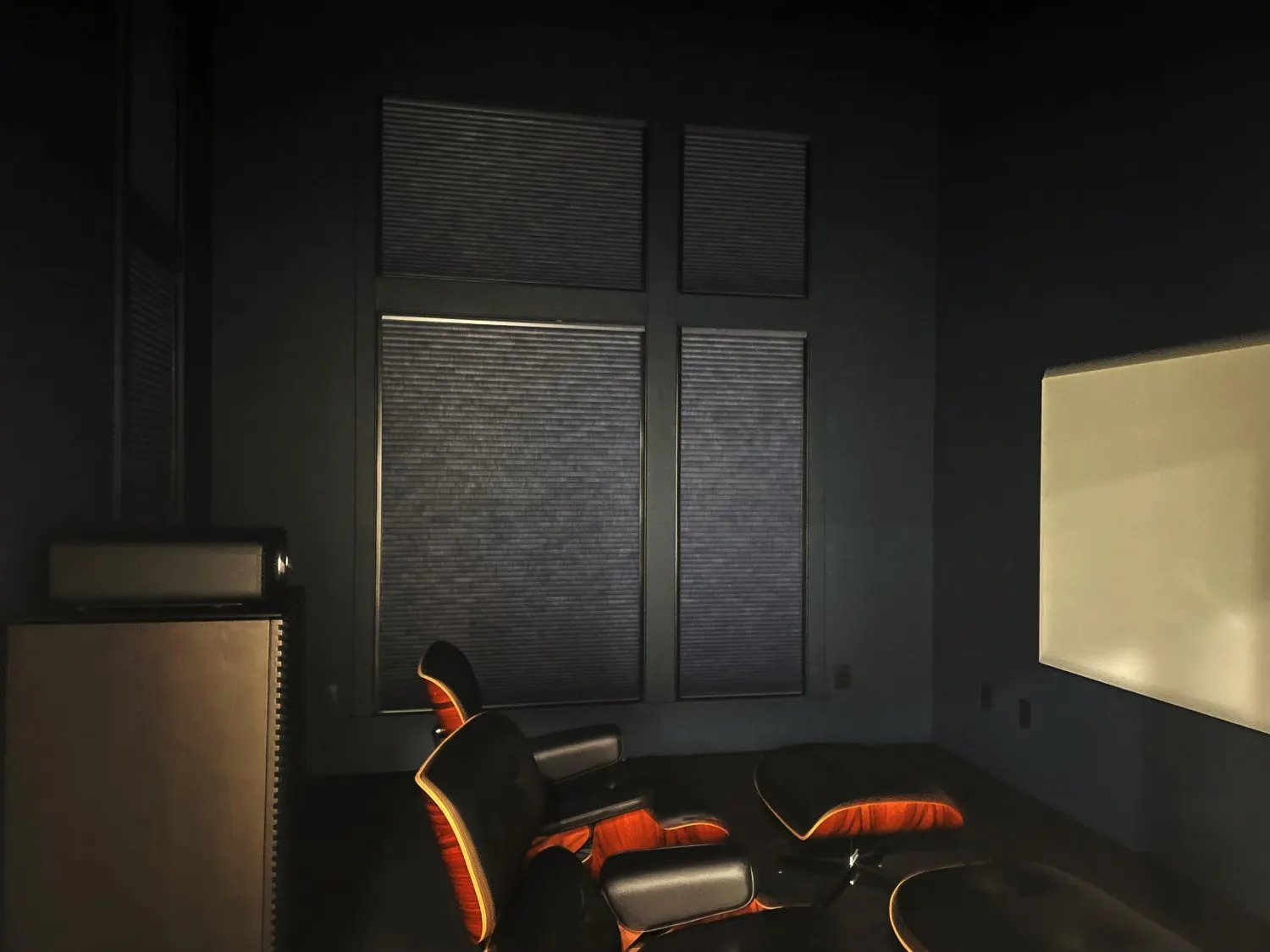
With more people working from home and creating home entertainment spaces, glare control is essential. Blackout window treatments help reduce screen glare and create a more conducive environment for movie watching or video conferencing.
5. Homes Designed Around Natural Light
Many newer homes throughout Bellevue, Kirkland, Sammamish, Mercer Island, and Seattle neighborhoods feature expansive windows to maximize daylight and outdoor views. While these windows create bright, inviting spaces, they can also make bedrooms, nurseries, and media rooms difficult to darken without carefully selected blackout window coverings.
Best Blackout Window Coverings by Room
The best blackout window covering depends on how the room is used and the level of light control needed. The following recommendations provide a practical starting point for common spaces in the home.
| Room | Typical Priority | Recommendation |
|---|---|---|
| Bedroom | Better sleep | Blackout honeycomb, Roman shades, drapery |
| Nursery | Naps and nighttime sleep | Blackout shades with cordless or motorized operation |
| Media room | Glare reduction | Blackout roller, honeycomb shades, drapery |
| Home office | Screen glare | Roller shades |
| Living spaces | Flexible light control | Dual shades or shades with top-down/bottom-up |
| Bathroom | Privacy, bedroom light control | Light-filtering or blackout shades, depending on exposure |
How to Choose the Right Blackout Shades
Choosing the right blackout window covering begins by identifying how the room will be used, then considering the window itself and your expectations for darkness.
Evaluate the Window
Start by evaluating the window's depth, frame construction, size, shape, and orientation, since each can affect blackout performance. Large picture windows, sliding glass doors, skylights, and shallow window frames may require different products than a standard bedroom window.
Set Realistic Expectations
Set realistic expectations if your goal is complete darkness, because blackout fabric is only one part of the solution. Product design, mounting style, and installation details often influence the final result.
Choosing the right blackout window covering is rarely about selecting the "best" product. It's about matching the room, window, and your expectations for darkness, privacy, insulation, and everyday use.
Can You Add Blackout to Existing Shades or Blinds?
Many homeowners purchase a home with existing blinds or shades that provide privacy but not enough darkness, or their needs change over time. Depending on the existing product, you may not need to replace everything. Adding a second treatment or layering window coverings can often provide an effective solution while benefiting from the existing light filtering window coverings.
Possible solutions include:
- Adding blackout drapery over existing shades
- Installing a second blackout shade behind or in front of the existing treatment
- Replacing only the rooms where blackout is most important
Real Examples of Adding Blackout to Existing Window Coverings
Kirkland Condominium: Solar Shades with Roman Shades
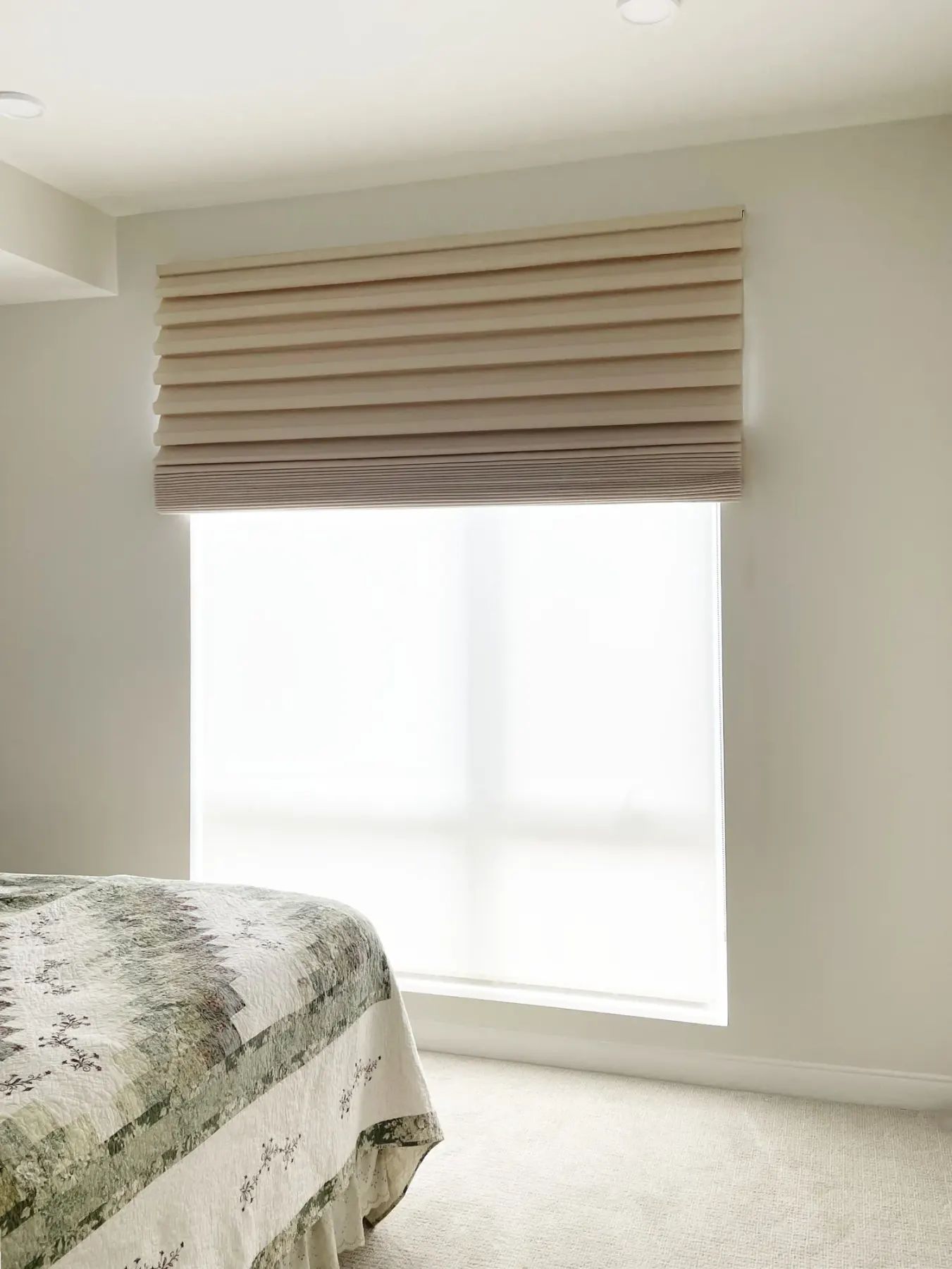
The homeowners were moving into a new condominium with solar shades installed in the bedrooms. While the shades preserved the view during the day, they provided little nighttime privacy and allowed too much light into the rooms. We added custom blackout Roman shades in Kirkland in front of the solar shades, creating a darker, more private bedroom while complementing the home's interior design.
Woodinville Home: Layering for Flexible Light Control
Motorized Silhouette® shades were originally installed in a stairway to soften natural light while maintaining the outdoor view. As the homeowners' needs changed, they wanted to block more light during certain times of the day. Rather than removing the existing shades, we added motorized blackout roller shades in Woodinville in front of the Silhouette shades. The layered solution allows each window covering to perform a different function, providing filtered daylight when desired and room darkening when needed.
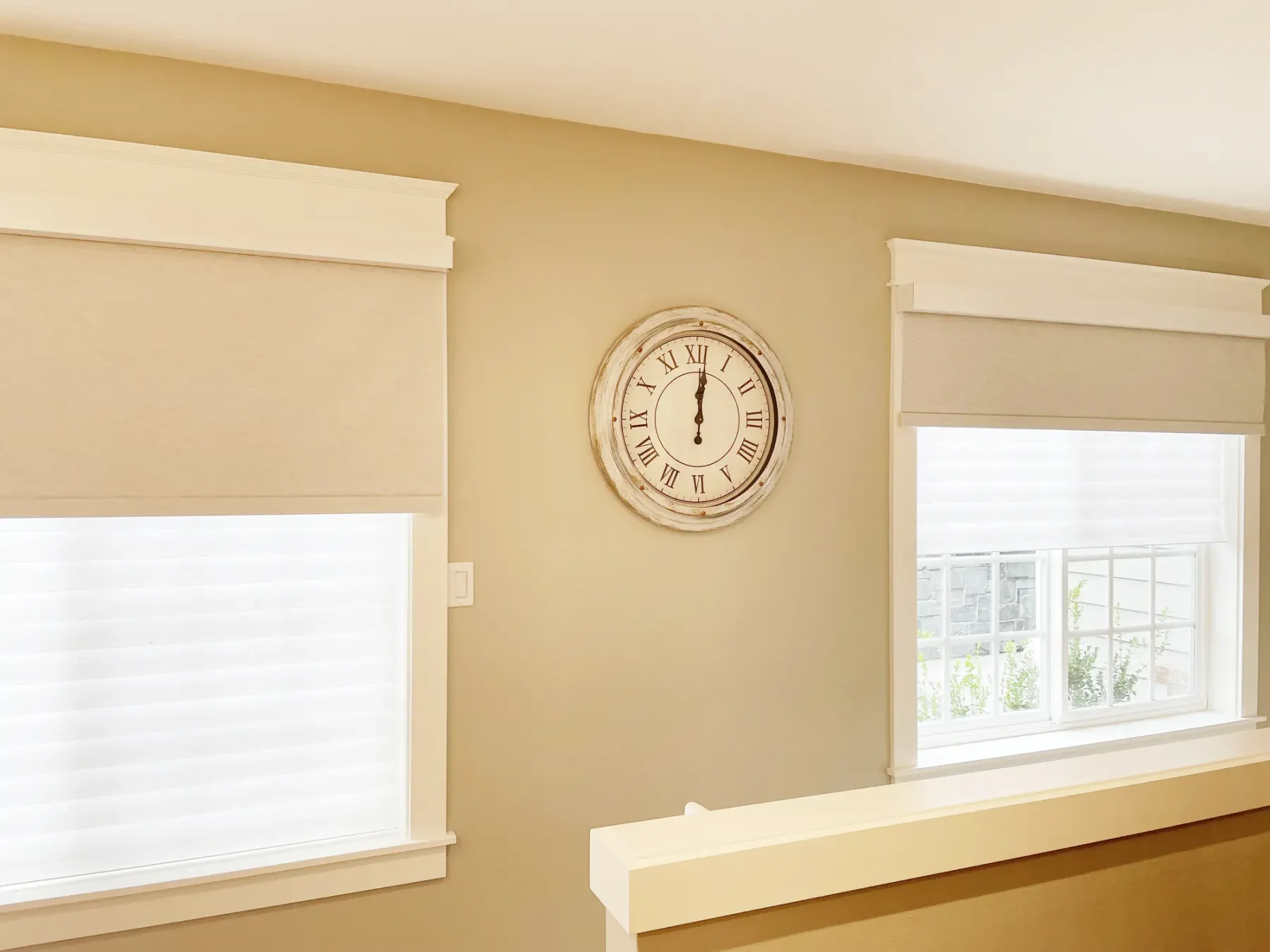
Seattle Townhome: Keeping Existing Roller Shades
The bedroom had light-filtering roller shades, but more heat and glare control was needed. Instead of replacing them, we installed blackout honeycomb shades behind the existing rollers. This approach greatly improved room-darkening performance while preserving the original appearance and adding the insulation benefits of cellular shades.
Challenges with Room Darkening
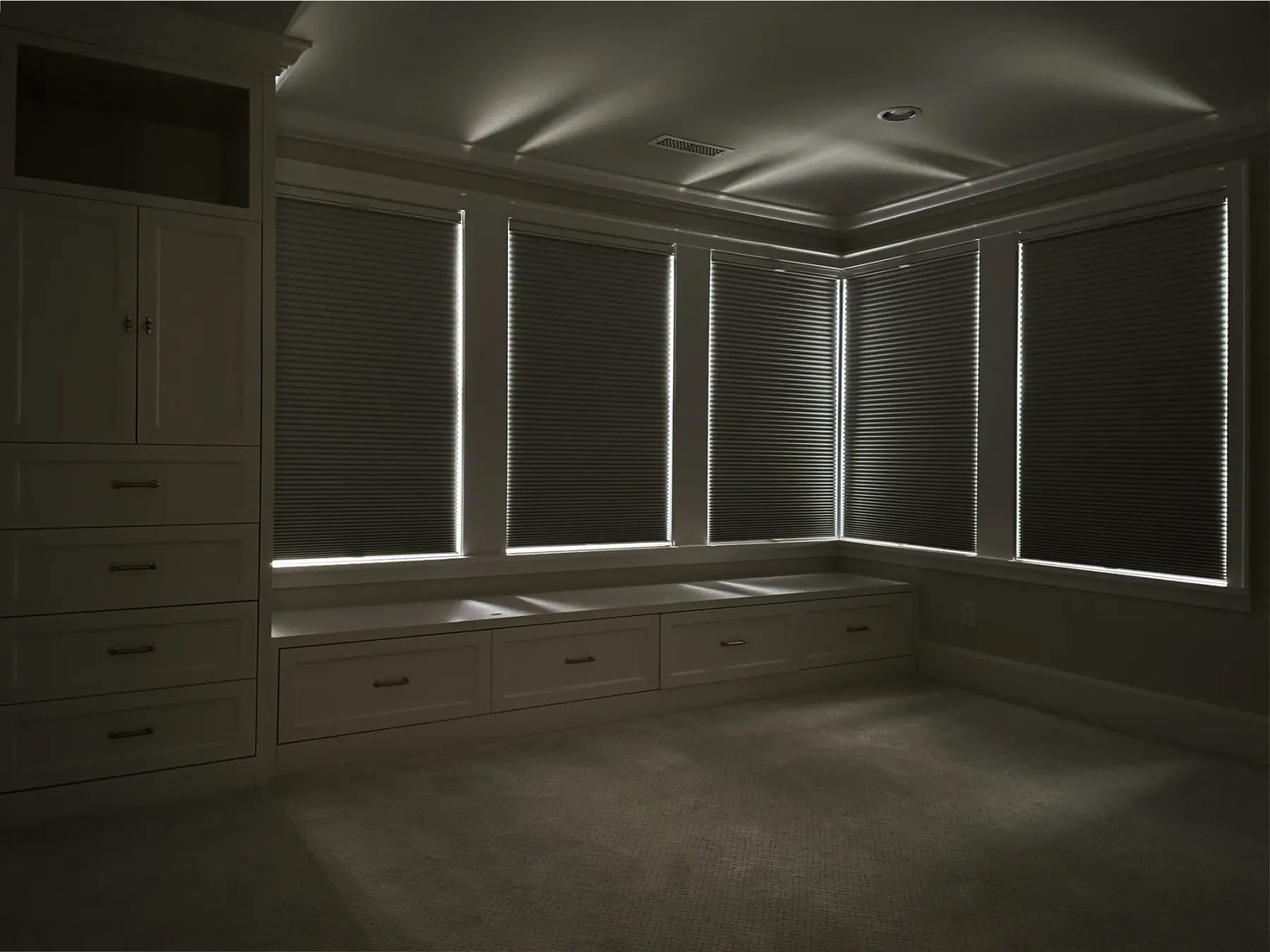
Although blackout fabrics are designed to block nearly all incoming light, achieving complete darkness with an operable window covering is rarely possible. Window coverings require operating clearances around the edges so they can raise and lower smoothly, and fabrics are usually narrower than the headrail.
These gaps allow light to enter around the sides, top, and bottom of the shade. Because blackout fabrics block incoming light, the perimeter light appears brighter by comparison, a phenomenon commonly called the halo effect. This is especially apparent with room darkening fabrics due to the contrast of light. Even with perimeter light, blackout shades typically provide sufficient room darkening for most applications.
Other factors affecting blackout effectiveness include:
- Window construction, squareness, and frame depth
- Number of windows in the room
- External light sources such as streetlights
- Room orientation (i.e. east-facing rooms get strong morning sun)
- Window size and shape limitations
Despite these challenges, proper product selection and expert installation can significantly improve room darkening and help you achieve the best possible blackout performance for your windows.
How to Reduce Light Seepage Around Window Shades
Most of the time, blackout shades alone are sufficient for effective room darkening. If additional light blockage is needed, the halo effect can be reduced. The best approach depends on the window construction, mounting depth, product type, and size of the window or door being covered.
Choose a Shade with Narrower Side Gaps
Blackout cellular shades generally have narrower gaps than roller shades, which can help reduce light along the sides of the window.
Add Side Channels
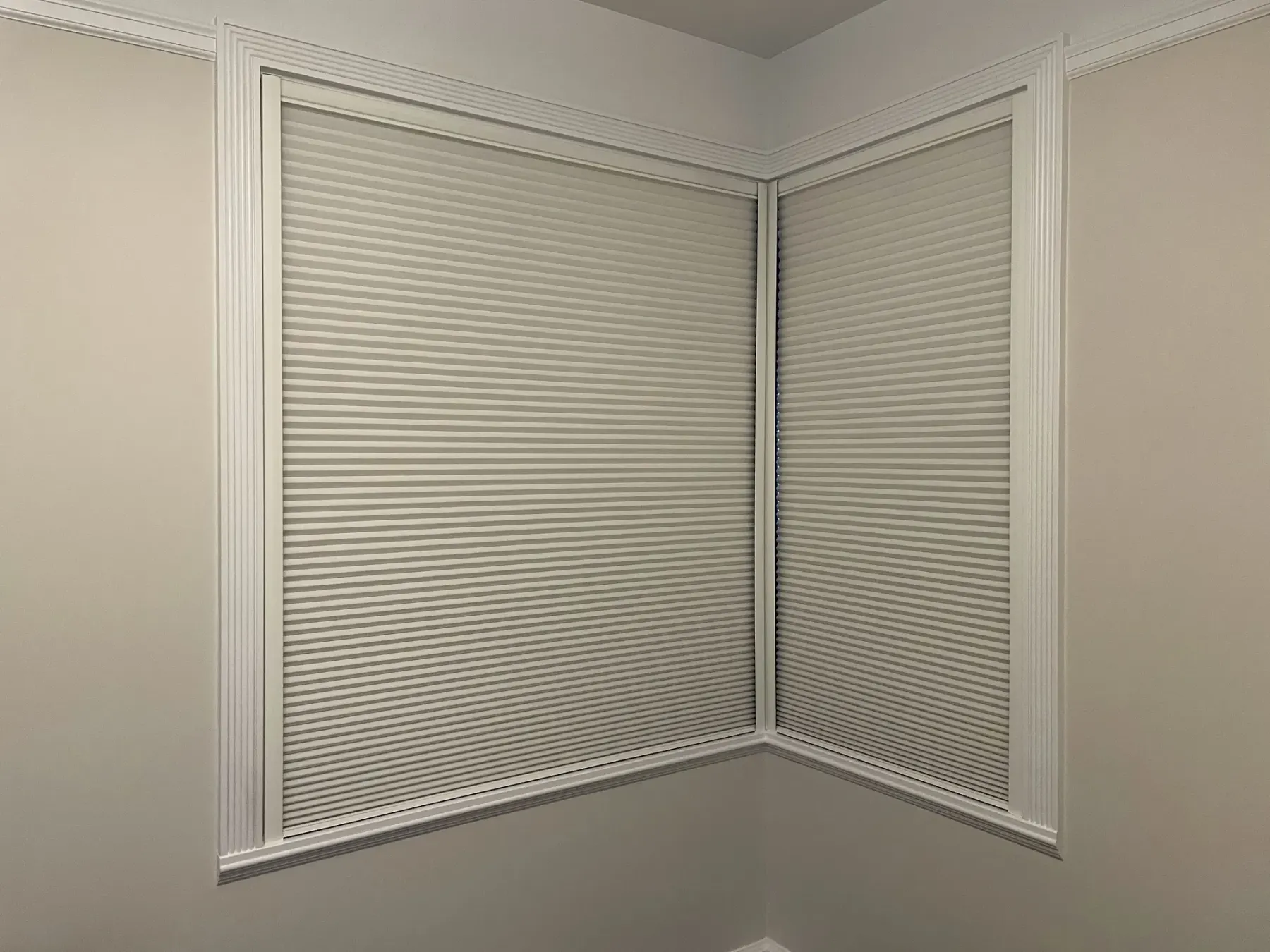
Side channels, such as Hunter Douglas LightLock®, cover the gaps between the shade and the window frame. These are available in blackout honeycomb and roller shades.
Consider an Outside Mount
An outside-mounted shade extends beyond the window opening and may cover more of the surrounding area than an inside-mounted shade. With adequate overlap, it can reduce edge light, although some light leakage may still occur depending on the product and amount of overlap.
Layering with Drapery
Custom drapery can overlap the sides and top of a blackout shade, helping conceal gaps on the sides while adding softness, insulation, and decorative interest.
Address Light at the Top and Bottom
Some operating systems, shade covers such as cassettes, fascias, and valances help conceal light entering at the top or bottom of the shade better.
Complete darkness is difficult to achieve with a standard operable shade, but thoughtful product selection and installation can significantly reduce light seepage. Homeowners who are especially sensitive to light or need to sleep during the day may benefit from combining blackout fabric with side channels, overlapping drapery, or both.
Additional Considerations
To make the most of your blackout window coverings, here are some tips and considerations:
1. Automation
Motorized blackout shades make it easy to schedule shades to close before bedtime, open gradually in the morning, or operate hard-to-reach windows with a remote, app, or voice assistant.
2. Preventing Moisture Buildup
It's important to raise your room darkening shades occasionally to allow air circulation and prevent condensation or mold from forming, and to preserve the longevity of your shades.
3. Top-Down/Bottom-Up Functionality
This option is ideal when you need daytime privacy without completely blocking natural light, making it especially useful for street-facing bedrooms, bathrooms, and homes with nearby neighbors.
4. Blackout for Bathrooms
Consider blackout shades in bathrooms if you are especially sensitive to light, leave the bathroom door open at night, or want to reduce light entering an adjoining bedroom.
Frequently Asked Questions About Blackout Window Coverings
Because blackout shades use a continuous piece of fabric rather than adjustable slats, they provide significantly better room-darkening performance than traditional blinds.
Vertiglide® honeycomb shades are a practical blackout option for sliding glass doors because they operate side to side, have a slim stack when open, and create a streamlined appearance. Blackout drapery is another option when there is enough wall space for the panels to stack. Read our sliding glass door guide for more window covering ideas.
Roller shades offer a clean, contemporary appearance with a minimal stack when raised. Cellular (honeycomb) shades have less light seepage while also providing superior insulation.
Not entirely. Blackout fabric itself blocks nearly all light, but gaps along the frame are common with any operable shade. Features like LightLock® side channels and layering significantly reduce these gaps.
Conclusion
Choosing blackout window coverings involves more than selecting a blackout fabric. The room, window construction, mounting style, and installation all influence the final result. A personalized consultation helps ensure the right balance of privacy, light control, energy efficiency, and design for your home.
Contact Amazing Blinds by Armi today to schedule a consultation and discover how custom blackout solutions can transform your living space.
Explore Custom Blinds, Shades, Shutters, and Automation
Every home has a unique style, story, and set of needs.
Whether the priority is design, smart-home integration, energy efficiency, privacy, room darkening, ease of operation, or long-term durability, we offer personalized recommendations from a broad selection of window treatments.
We help you explore custom blinds, shades, shutters, and automation to create window covering solutions that complement your home, address your priorities, and align with your investment range.