
Ultimate Guide to Window Covering Styles for Greater Seattle Homes
Written by: Armi Avila
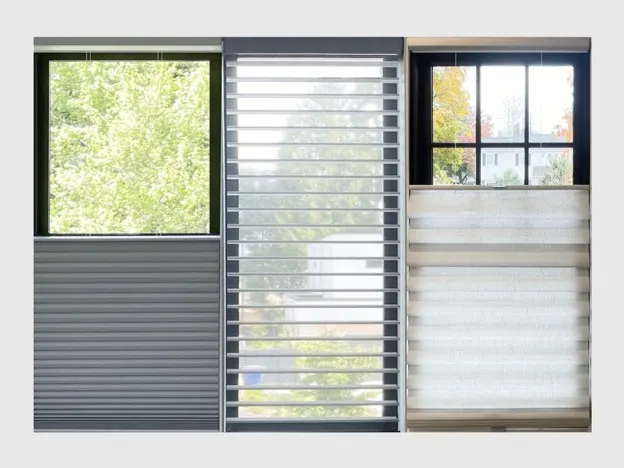
Choosing window coverings becomes easier when you understand the goals for each space, fabric opacity, style, and function. Blinds, shades, shutters, and drapery differ in how they manage privacy, natural light, views, glare, insulation, maintenance, and daily use.
For Greater Seattle and Eastside homes, the right choice depends on the room, window size and exposure, privacy needs, desired view, and how frequently the blinds and shades will be operated.
This guide compares the primary window covering styles, explains shade opacity levels, and organizes recommendations by goals and rooms so you can narrow your options before exploring individual products in greater detail.
In this guide, we cover:
- How to Choose Window Coverings
- Types of Blinds and Shades
- Compare Window Coverings by Priority
- Choosing Window Coverings Room by Room
- Frequently Asked Questions About Blinds and Shades
How to Choose Window Coverings
Before exploring window covering options, start by identifying your goals, understanding the available opacity levels for privacy and light control, and considering which styles provide the appearance and function your space requires.
Identify Goals for Each Room
- Privacy: Consider how visible the room is from neighboring homes, streets, walkways, or outdoor living areas during the day and at night.
- Light control: Decide whether you want to preserve natural light, soften glare, darken the room, or have the flexibility to do more than one.
- View: Determine whether maintaining an outdoor view is important when the window covering is lowered.
- Insulation: Consider drafts, summer heat, winter weather, and whether the room has large expanses of windows.
- Maintenance: Account for dust, moisture, cooking residue, pets, and how easily the material can be cleaned.
Understand Window Shade Opacities
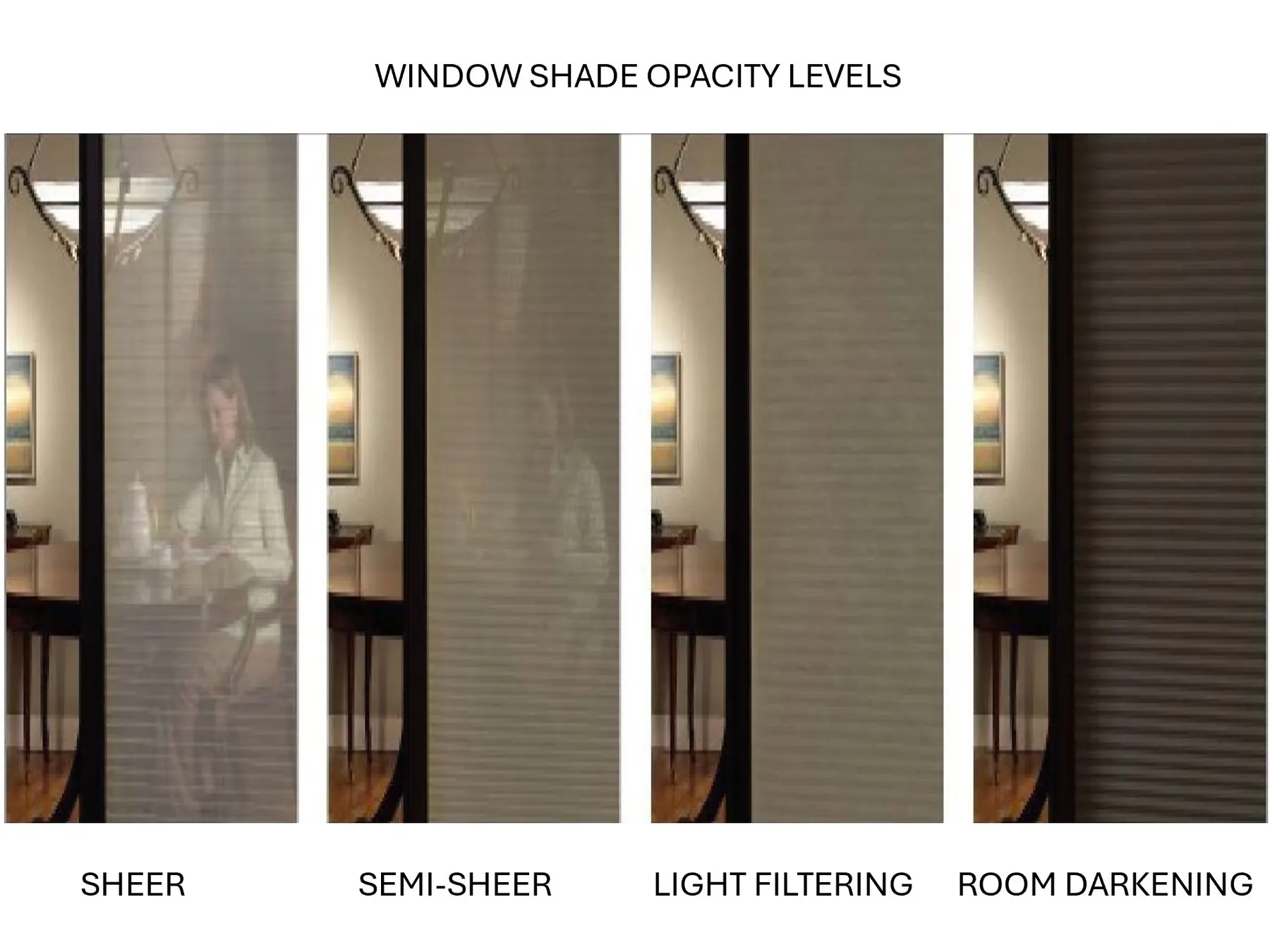
Window shade opacity refers to how much light passes through a fabric.
| Opacity | Natural Light | Privacy | Best Suited For |
|---|---|---|---|
| Sheer | Allows the most light | Little privacy, especially at night | View rooms where privacy is not a priority |
| Semi-sheer | Allows substantial filtered light | Some daytime screening; limited nighttime privacy | Rooms that benefit from softened light and partial view |
| Light-filtering / semi-opaque | Diffuses light without fully darkening the room | Good privacy; some silhouette depending on lighting conditions | Living rooms, offices, and bathrooms depending on exposure |
| Room-darkening / opaque | Blocks most incoming light through the fabric | Strong privacy | Bedrooms, nurseries, and media rooms |
Consider Style and Everyday Function
Lastly, evaluate how the window covering needs to look, fit, and function within the room.
- Style, Color, and Material: The home's architecture, furnishings, color palette, and desired level of visual softness or contrast.
- Daily Use: How often the covering and window will be operated and who will use them.
- Safety and Convenience: The presence of children or pets, ease of operating multiple, oversized, or hard-to-reach window coverings.
Types of Blinds and Shades
The window covering comparison table summarizes how the styles differ. The detailed window covering list addresses product variations, privacy limitations, and other factors that may influence which options work for a particular window.
Window Covering Styles Comparison Table
| Style | Defining Feature | Advantages | View When Lowered | Insulation | Maintenance |
|---|---|---|---|---|---|
| Honeycomb shades | Cellular construction that traps air | Insulation, privacy, bedrooms, specialty windows | Limited | High | Easy |
| Roller and solar shades | Single fabric panel that rolls into a compact profile | Clean design, glare and solar control | Solar fabrics preserve more view | Low to moderate | Easy |
| Roman shades | Fabric folds that add softness similar to drapery | Decorative rooms, bedrooms, layered designs | Limited | Moderate; improved with liners | Moderate |
| Sheer shades | Fabric vanes suspended between sheer layers | Soft light, adjustable view, refined interiors | High when vanes are open | Low to moderate | Moderate |
| Layered shades | Alternating sheer and solid fabric bands | Adjustable alignment | Good when sheer bands align | Low | Easy |
| Woven wood shades | Natural woven grasses, reeds, bamboo, or wood | Organic texture and warmth | Varies by weave and liner | Moderate with liner | High |
| Wood or faux wood blinds | Horizontal slats that tilt | Precise light control and traditional styling | Good between tilted slats | Low to moderate | Moderate |
| Plantation shutters | Hinged panels with adjustable louvers | Durability, built-in appearance, precise tilt control | Good through open louvers | Moderate | Easy |
| Custom drapery | Fabric panels that frame or cover the window | Softness, layering, large windows, decorative impact | Varies by fabric and position | Moderate to high with lining | Moderate |
Understanding Each Window Covering Style
Honeycomb or Cellular Shades
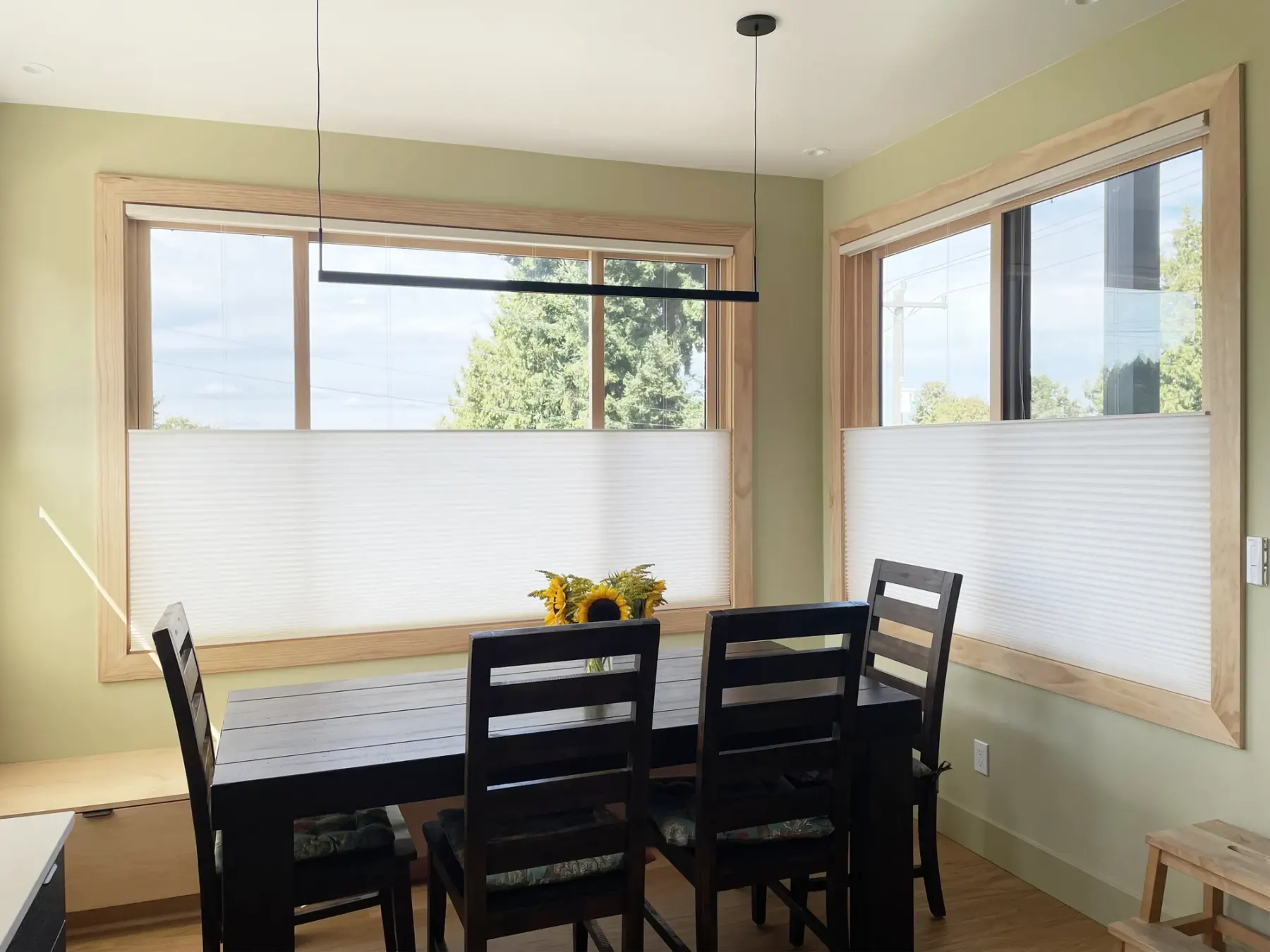
Most honeycomb shades fabrics block the outward view when lowered. Cell construction and opacity affect a honeycomb shade's insulation and light control. Available configurations include top-down/bottom-up shades, dual fabric, specialty shapes, skylight systems, sidelights, angle top windows, and vertical applications for sliding glass doors.
Roller and Solar Shades
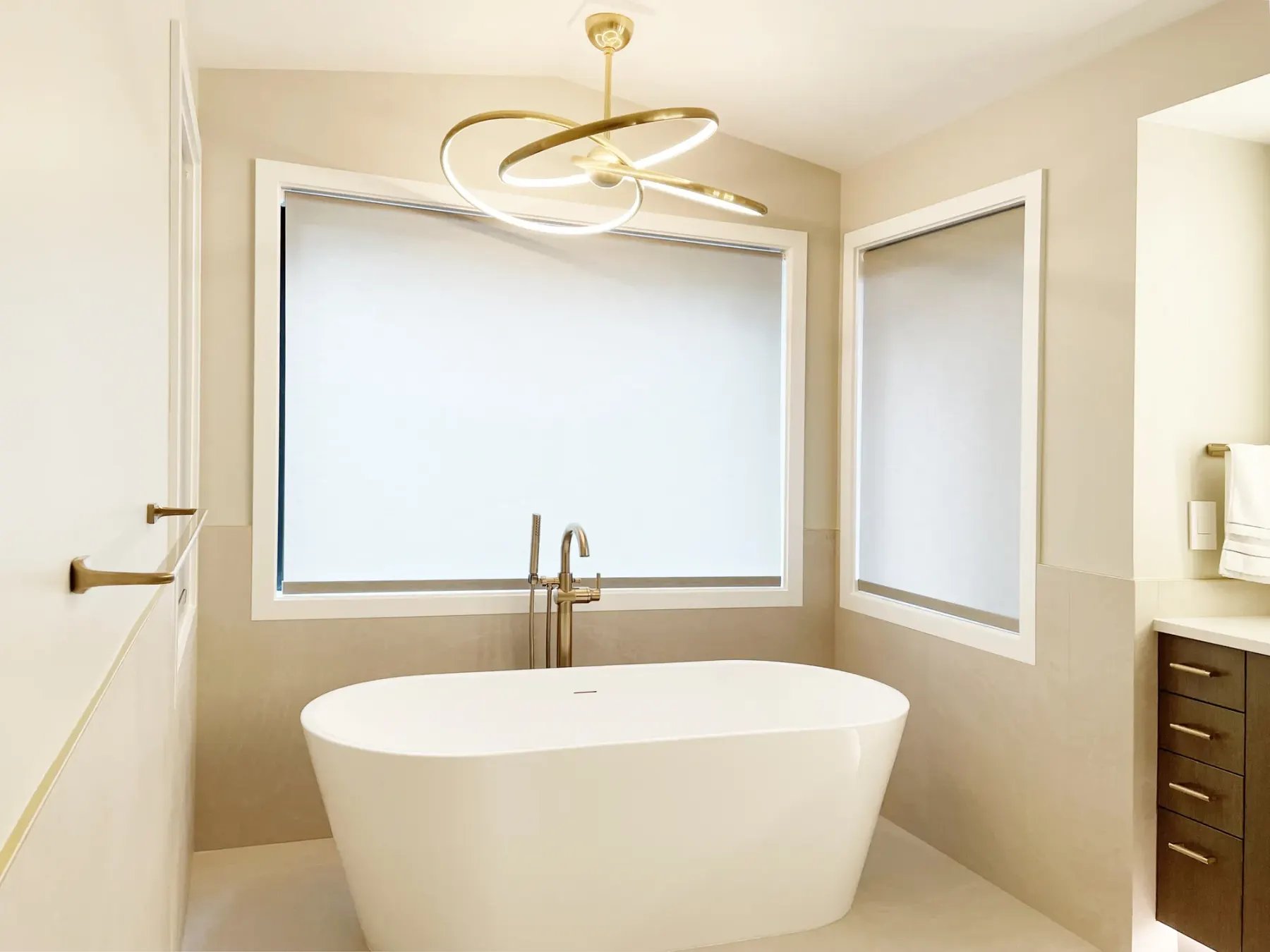
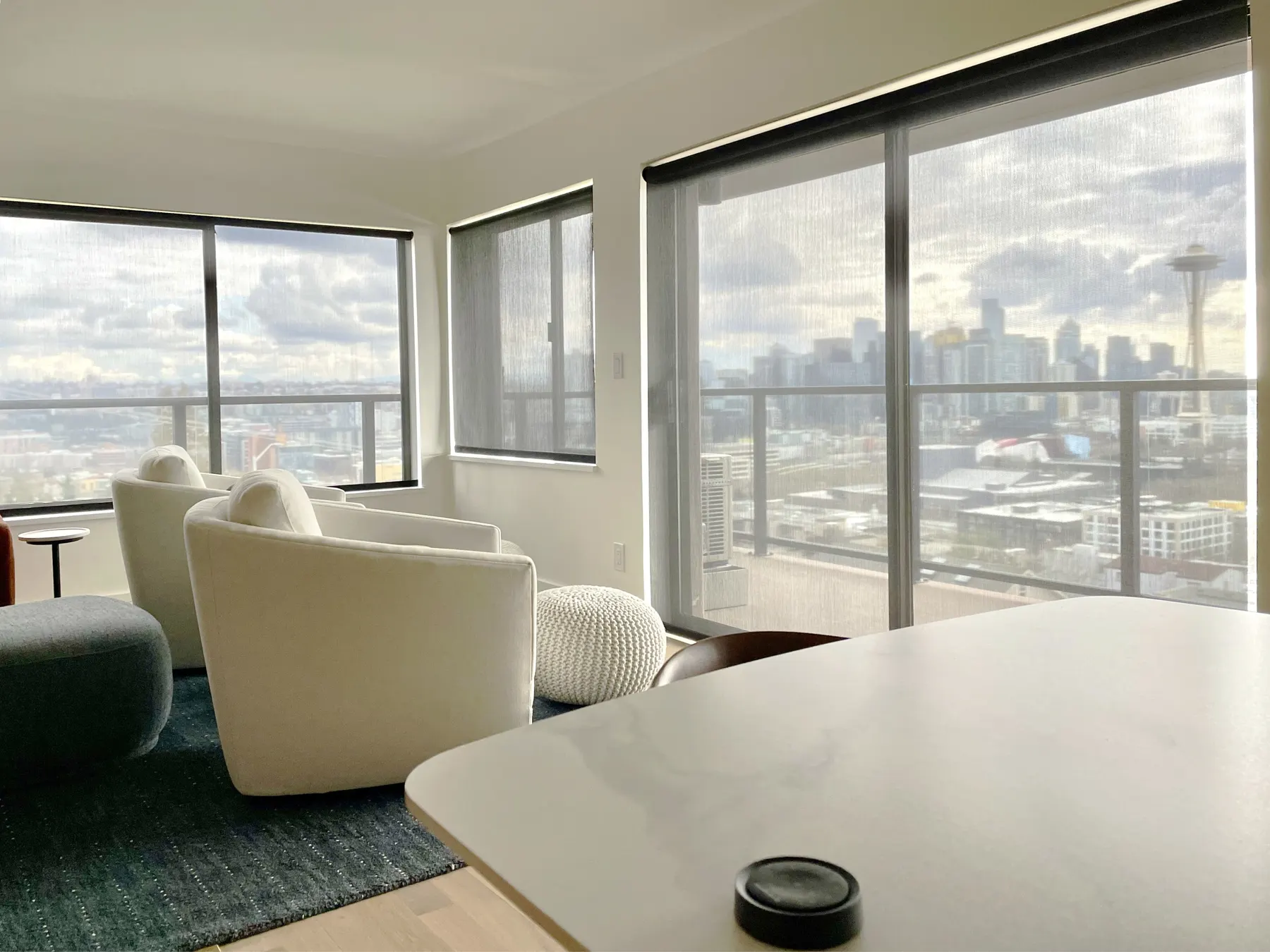
Solar fabrics used in roller and solar shades are available in different openness levels: more open fabrics generally preserve a clearer outward view, while tighter weaves provide greater glare and UV protection. Solar shades provide limited nighttime privacy when interior lights are on. Light-filtering and room-darkening roller shade fabrics provide more privacy but eliminate the view when lowered. The fabric is narrower than the hardware with more side gaps that may be more noticeable with room-darkening fabric.
Roman Shades
Roman shades are available in top-down/bottom-up operation for flexible privacy. The fabric stack when raised can cover part of the window particularly on shorter windows. Large dimensions and heavier materials may also restrict available operating systems or increase the effort required for manual use.
Sheer Shades
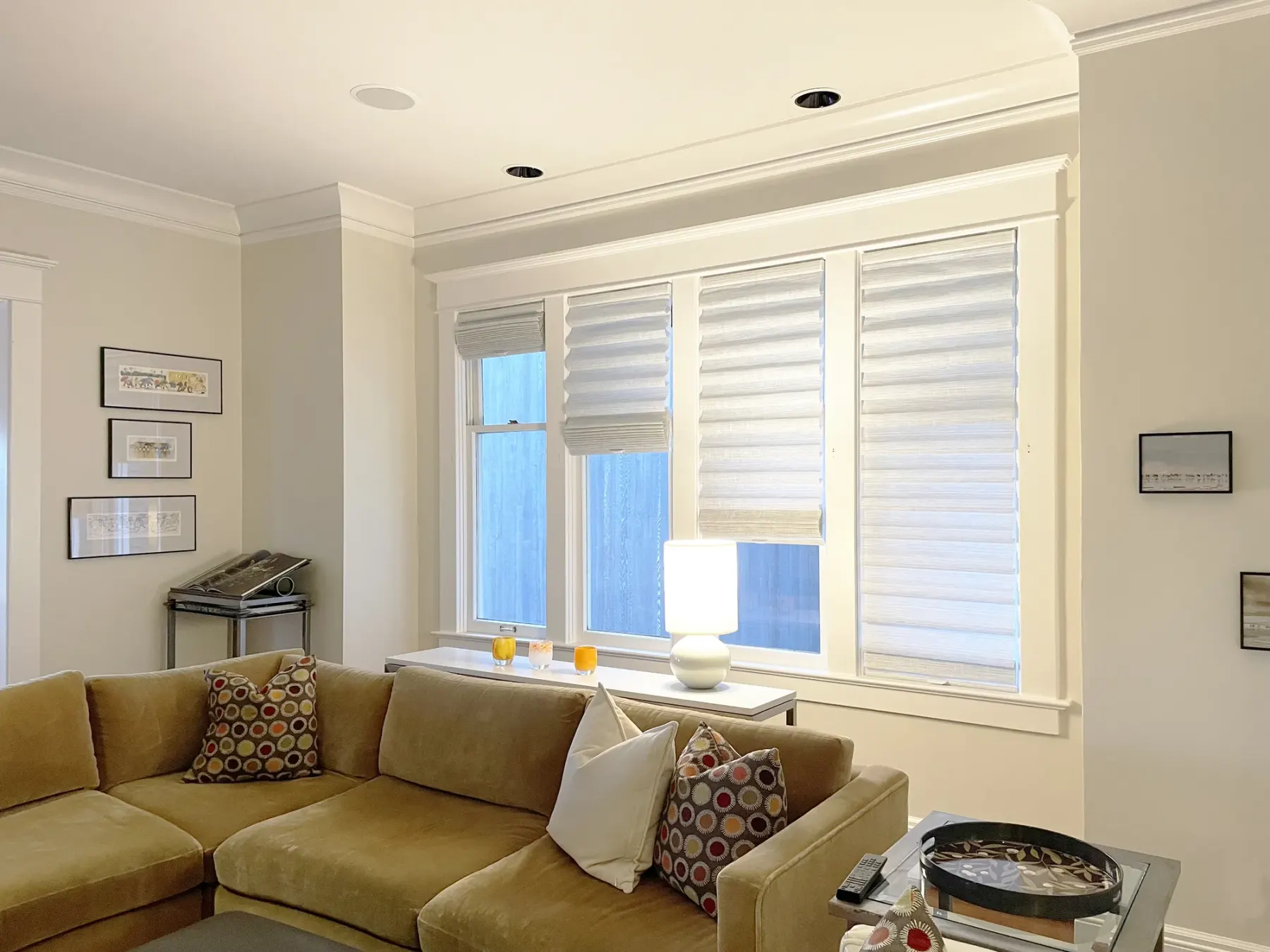
Privacy and view change as the sheer shades fabric vanes rotate. The sheer shade's open vanes provide the greatest outward visibility, while closed vanes increase coverage. Sheer shades are not the best option when blackout is the primary requirement. Their strength is flexible daylight management rather than maximum insulation or darkness.
Layered Shades
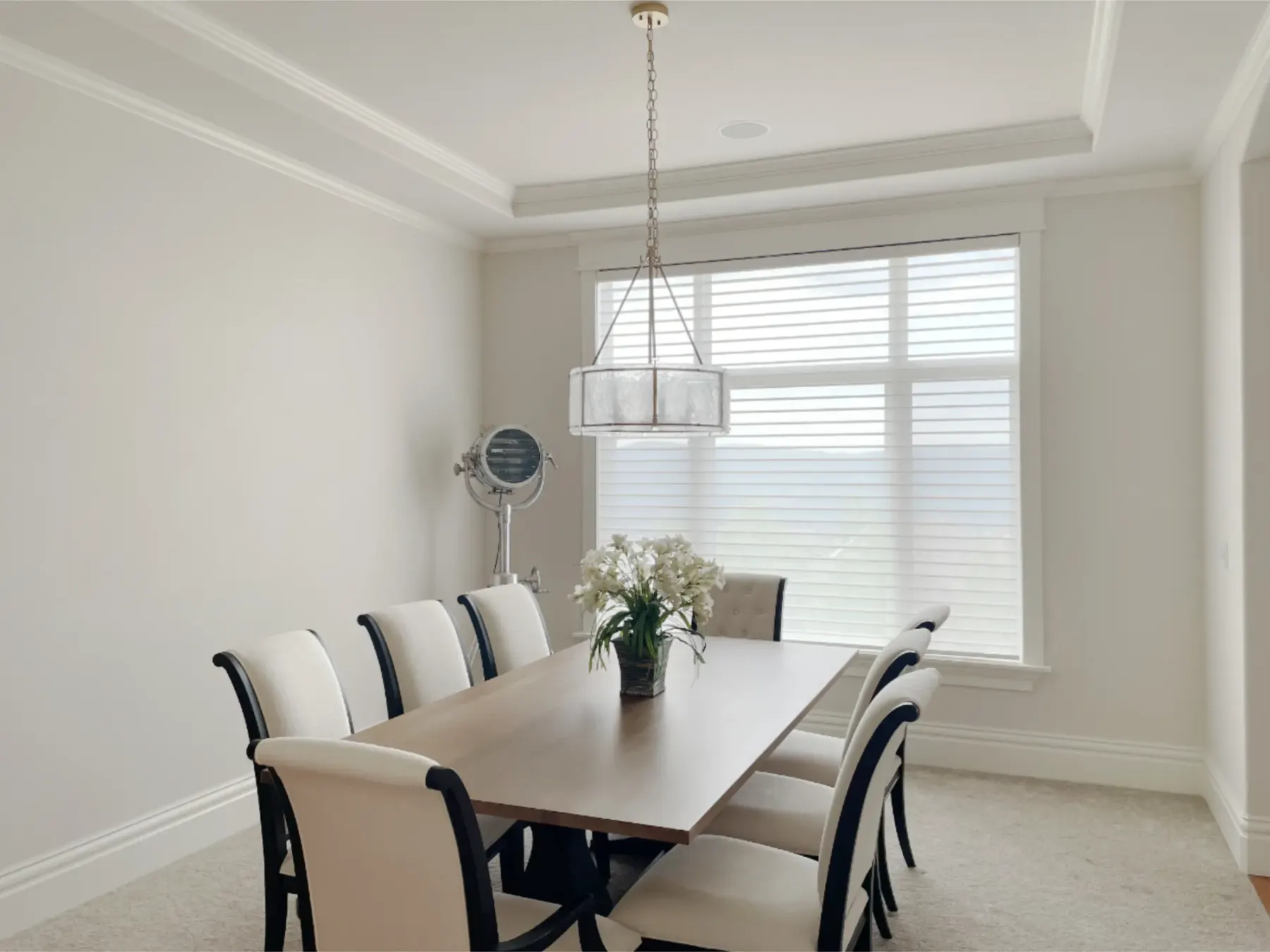
The position of alternating bands determines the visibility and privacy with layered shades. Overlapping the solid bands increases privacy but does not necessarily create complete darkness. The sheer sections can also allow nighttime visibility when interior lights are on. Strong horizontal bands may not work with lines and patterns in the room.
Woven Wood Shades
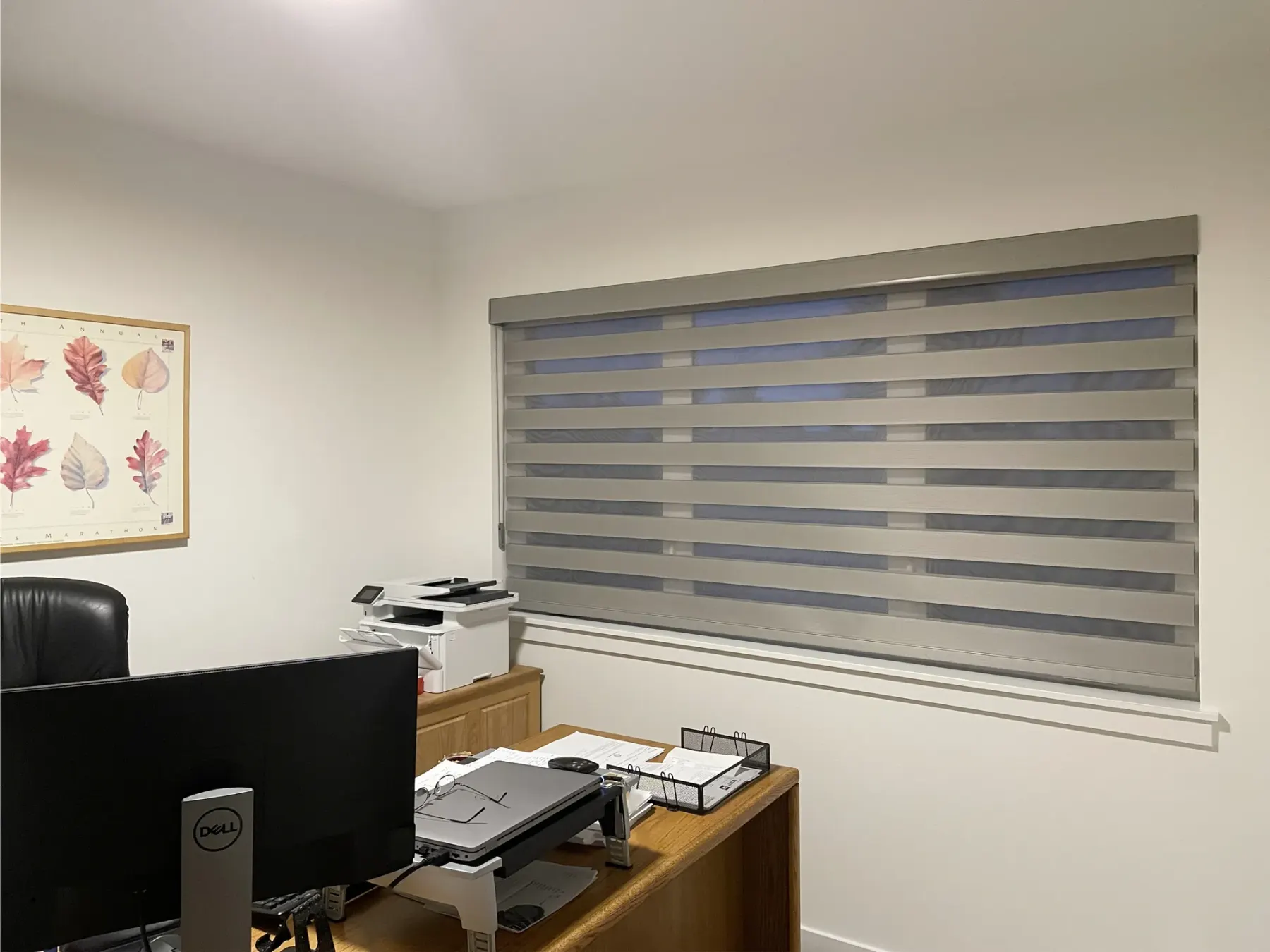
The natural materials used in woven wood shades vary in color, thickness, texture, and weave. Minor irregularities are part of the finished product rather than manufacturing defects. A privacy or room-darkening liner may be added when the unlined material does not provide sufficient privacy.
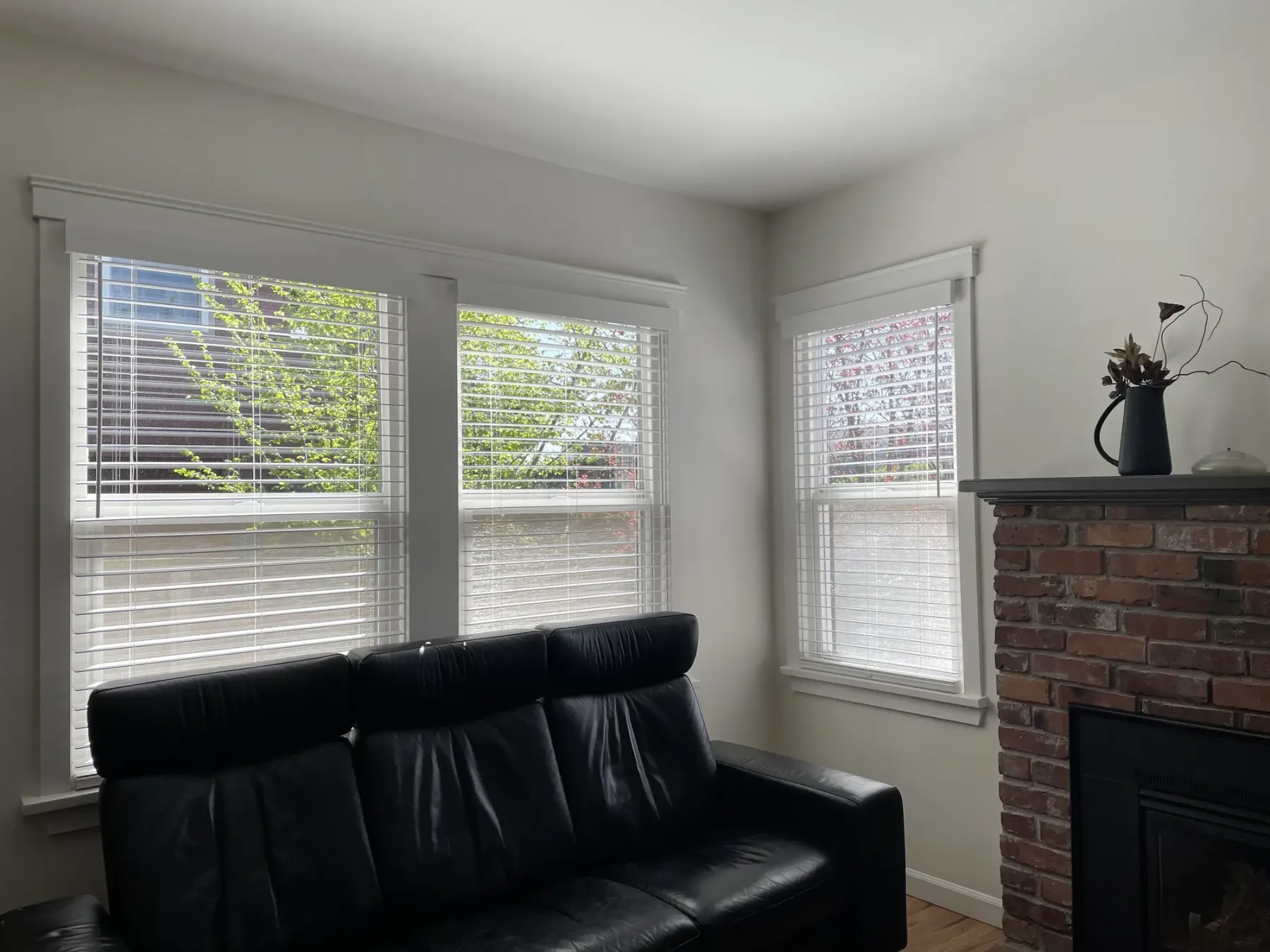
Horizontal Blinds
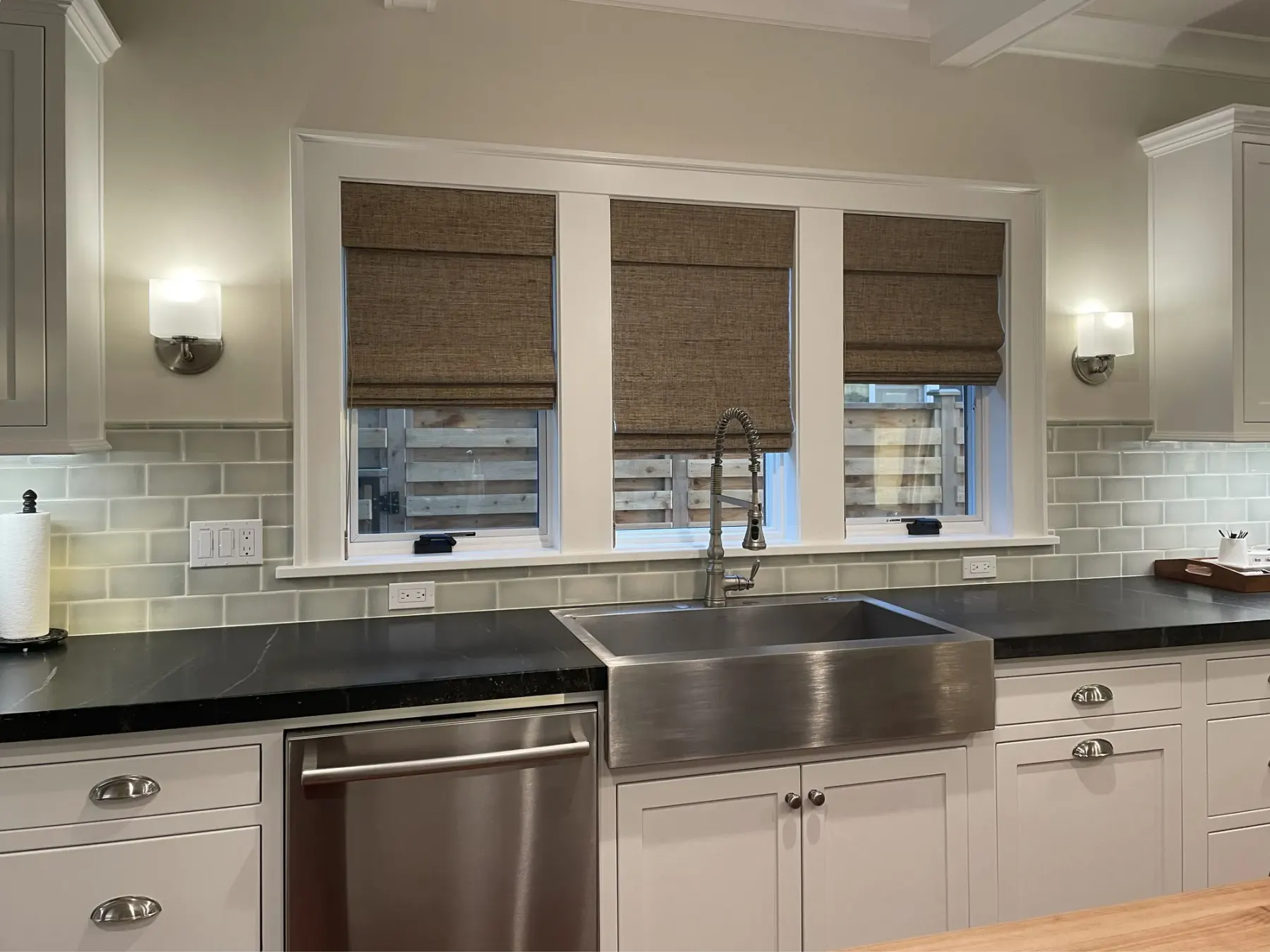
Horizontal blinds like wood and faux wood blinds perform differently. Wood offers natural grain and a lighter weight than faux wood, while faux wood provides greater moisture resistance. Raising blinds frequently may be cumbersome and not recommended for longevity. Closed slats reduce light rather than producing true blackout conditions.
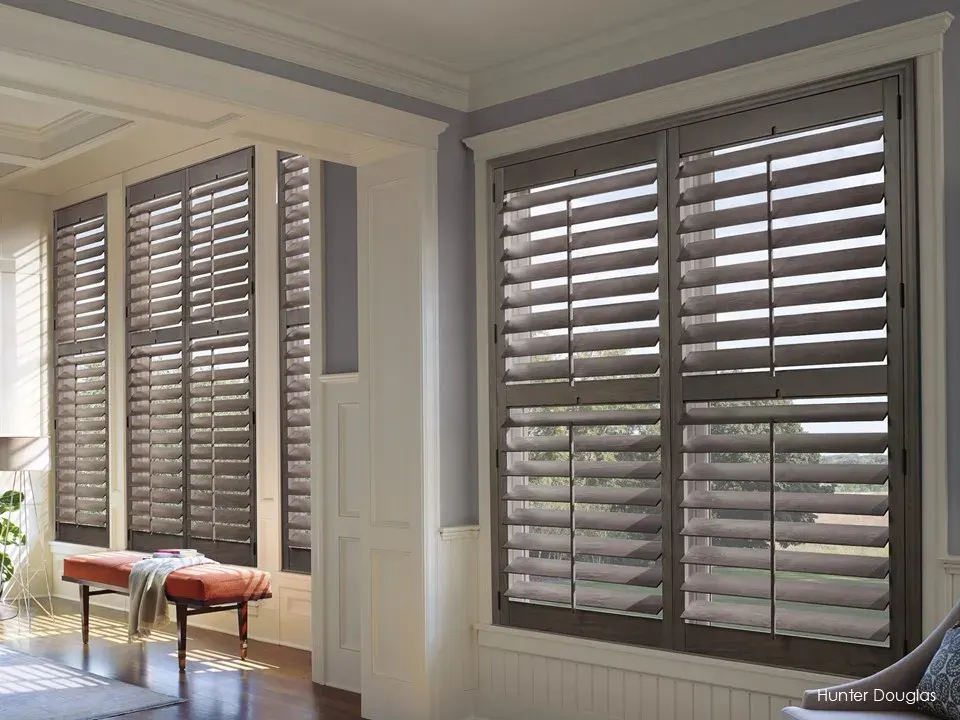
Plantation Shutters
Larger louvers generally provide more view-through on plantation shutters. Shutter panels need clearance to open fully. Window handles, deep trim, furniture, faucets, and nearby walls can interfere with their movement. Because the frame remains permanently visible, shutters should also be evaluated as an architectural addition.
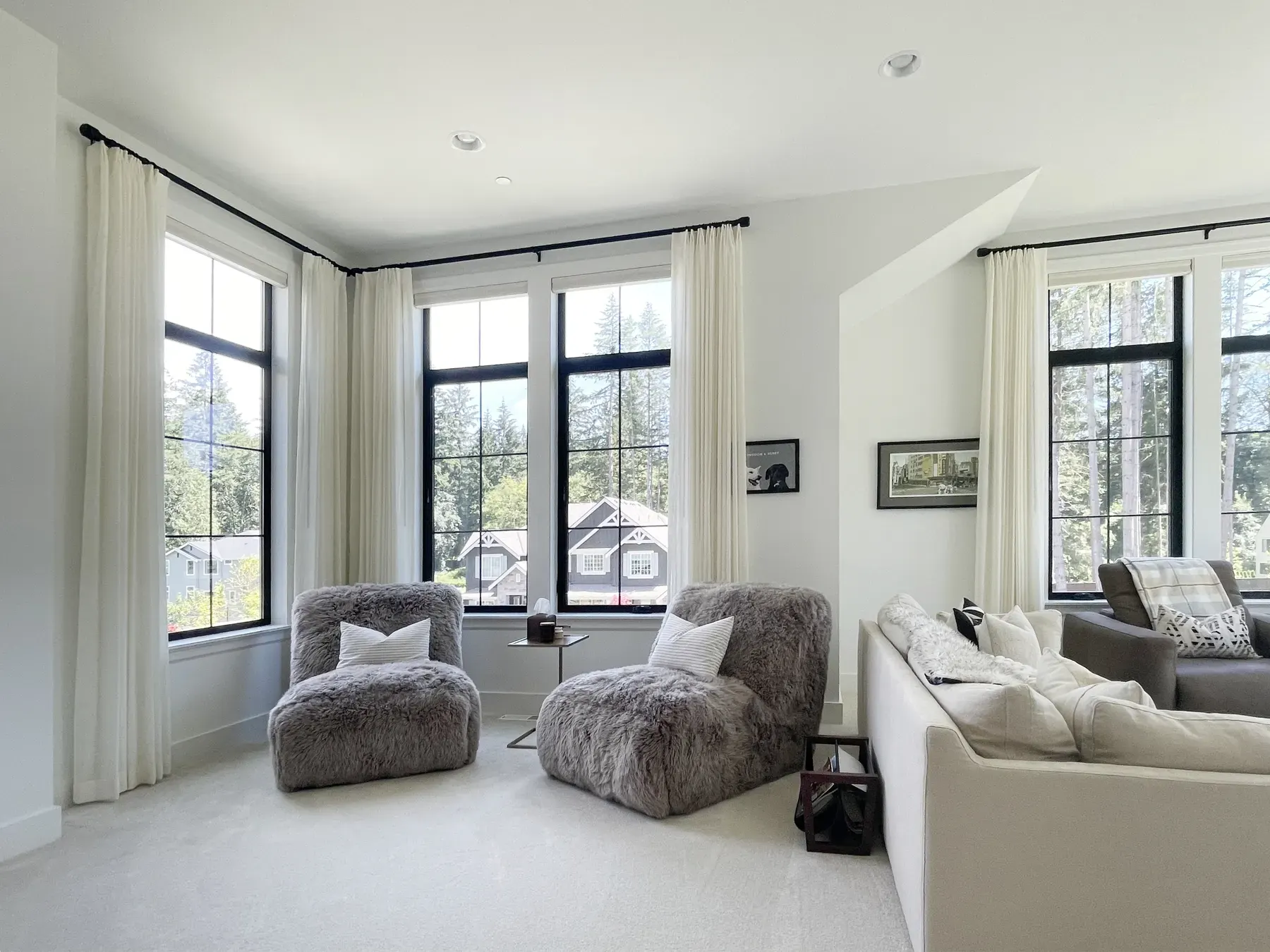
Custom Drapery
Stationary panels of custom drapery can frame a window without providing coverage, while operable panels require adequate wall width for fabric to stack when open. Insufficient stacking space can obstruct glass, views, or access to a sliding door. For frequently operated or wide treatments, hardware selection and motorization can materially affect ease of use.
Compare Window Coverings by Priority
The right window covering depends on what you need it to accomplish. This comparison organizes blinds, shades, shutters, and drapery by common priorities, including privacy, light control, room darkening, energy efficiency, view preservation, easy maintenance, and coverage for large windows or sliding glass doors.
| Your Priority | Window Coverings to Consider | Why |
|---|---|---|
| Maximum insulation | Honeycomb shades; lined or interlined drapery | Cellular air pockets and insulating fabric layers can reduce heat transfer |
| Preserving an outdoor view | Solar shades; sheer shades | These products can manage light while maintaining varying degrees of view |
| Strong privacy | Opaque honeycomb shades; Roman shades; shutters; drapery | Solid materials or lined fabrics provide more complete coverage |
| Natural texture | Woven wood shades; textured Roman shades | Natural fibers and visible weaves add warmth and dimension |
| Precise tilt control | Wood or faux wood blinds; shutters; sheer shadings | Adjustable slats, louvers, or vanes redirect light without fully raising the treatment |
| Minimal appearance | Roller shades; honeycomb shades | Both can maintain a clean profile with minimal stack when raised |
| Large windows | Roller shades; honeycomb shades; motorized products | These options can be engineered for broader openings and frequent operation |
| Sliding glass doors | Vertical honeycomb shades; vertical sheers; drapery | For side-to-side operation |
| Smart-home convenience | Motorized shades | Automated operation supports schedules, scenes, remote control, and accessibility |
For more details on covering large windows, sliding glass doors, or adding smart-home automation to your blinds and shades, see the guides linked above for room-specific product recommendations and installation considerations.
Choosing Window Coverings Room by Room
The table identifies common priorities and suitable window covering options for each room, but the final selection should also account for window size, mounting conditions, and household needs.
| Room | Primary Priorities | Recommended Window Coverings |
|---|---|---|
| Living Room | Balance natural light, privacy, views, and style | Roller shades, Roman shades, sheer shades, shutters, motorized window coverings |
| Dining Room | Privacy, light control, decorative | Roman shades, roller shades, sheer shades, shutters |
| Bedroom | Privacy, room darkening, insulation, better sleep | Honeycomb shades, Roman shades, motorized window coverings |
| Kitchen | Easy cleaning, moisture resistance, glare control | Roller shades, motorized shades |
| Bathroom | Privacy while preserving natural light, moisture resistance | Top-down/bottom-up honeycomb shades, faux wood blinds, shutters |
| Media Room | Room darkening, glare reduction, insulation | Honeycomb shades, roller shades |
| Home Office | Glare control, comfortable natural light, convenience | Shutters, roller shades, top-down/bottom-up honeycomb shades, motorized window coverings |
Frequently Asked Questions About Blinds and Shades
Blinds use individual rigid slats that tilt to control light and privacy. Shades use a continuous fabric or woven material that raises, lowers, rolls, folds, or traverses. Blinds typically offer precise tilt control and easy wipe-down cleaning, while shades provide more fabric choices, opacity levels, insulation options, and decorative styles.
A window covering alone cannot provide dependable one-way visibility both day and night. During the day, when it is brighter outside than inside, solar shades, sheer shades, and some open-weave fabrics can preserve outward view while limiting visibility from outside. At night, interior lighting reverses that effect and people outside may be able to see in. For reliable privacy, layer a daytime-view product with an opaque shade, lined drapery, or another treatment that closes after dark. Top-down/bottom-up honeycomb shades are another option because they can cover the lower part of the window while leaving the upper portion open for daylight and sky views.
Current window covering trends favor clean profiles, natural texture, layered fabrics, cordless operation, and motorization. Roller and solar shades remain popular for minimalist interiors, while woven wood shades and textured fabrics add warmth. Motorized systems are increasingly selected for large, high, or frequently used windows because they improve access and allow scheduled control of light, glare, privacy, and heat. Rather than following a trend alone, choose a product that suits the architecture and daily use of the room.
Custom window covering prices vary according to product type, window size, material, brand, opacity, operating system, installation requirements, and specialty features. Faux wood blinds for standard windows are generally more economical than shutters, premium fabric shades, specialty shapes, or motorized products. A practical approach is to prioritize higher-investment products in frequently used or visually important rooms and select simpler options in secondary spaces.
They do not need to be identical, but they should feel coordinated. Repeating a consistent color family, headrail finish, fabric tone, or level of formality can create continuity while allowing each room to use the product that functions best. From the exterior, street-facing windows may benefit from similar backing colors or a consistent appearance.
Shutters, faux wood blinds, and many roller shades are among the easiest window coverings to maintain because their surfaces can usually be dusted or wiped. Fabric shades, woven woods, sheer shadings, and drapery require care appropriate to the material and may need vacuuming with a brush attachment or professional cleaning. In kitchens, bathrooms, and high-traffic areas, cleanability should be considered before choosing a delicate textile.
Schedule a Window Covering Consultation
A well-planned window covering selection balances privacy, light, view, insulation, maintenance, and everyday use with the architecture and furnishings of the home.
Amazing Blinds by Armi provides personalized design guidance, professional measurement, installation, and ongoing support throughout Greater Seattle and the Eastside. Schedule a consultation or give us a call at 206-801-6010 to compare products, fabrics, opacity levels, and functional options for your home.
Explore Custom Blinds, Shades, Shutters, and Automation
Every home has a unique style, story, and set of needs.
Whether the priority is design, smart-home integration, energy efficiency, privacy, room darkening, ease of operation, or long-term durability, we offer personalized recommendations from a broad selection of window treatments.
We help you explore custom blinds, shades, shutters, and automation to create window covering solutions that complement your home, address your priorities, and align with your investment range.