
Kitchen Window Coverings from Easy Cleaning to Light Control
Written by: Armi Avila
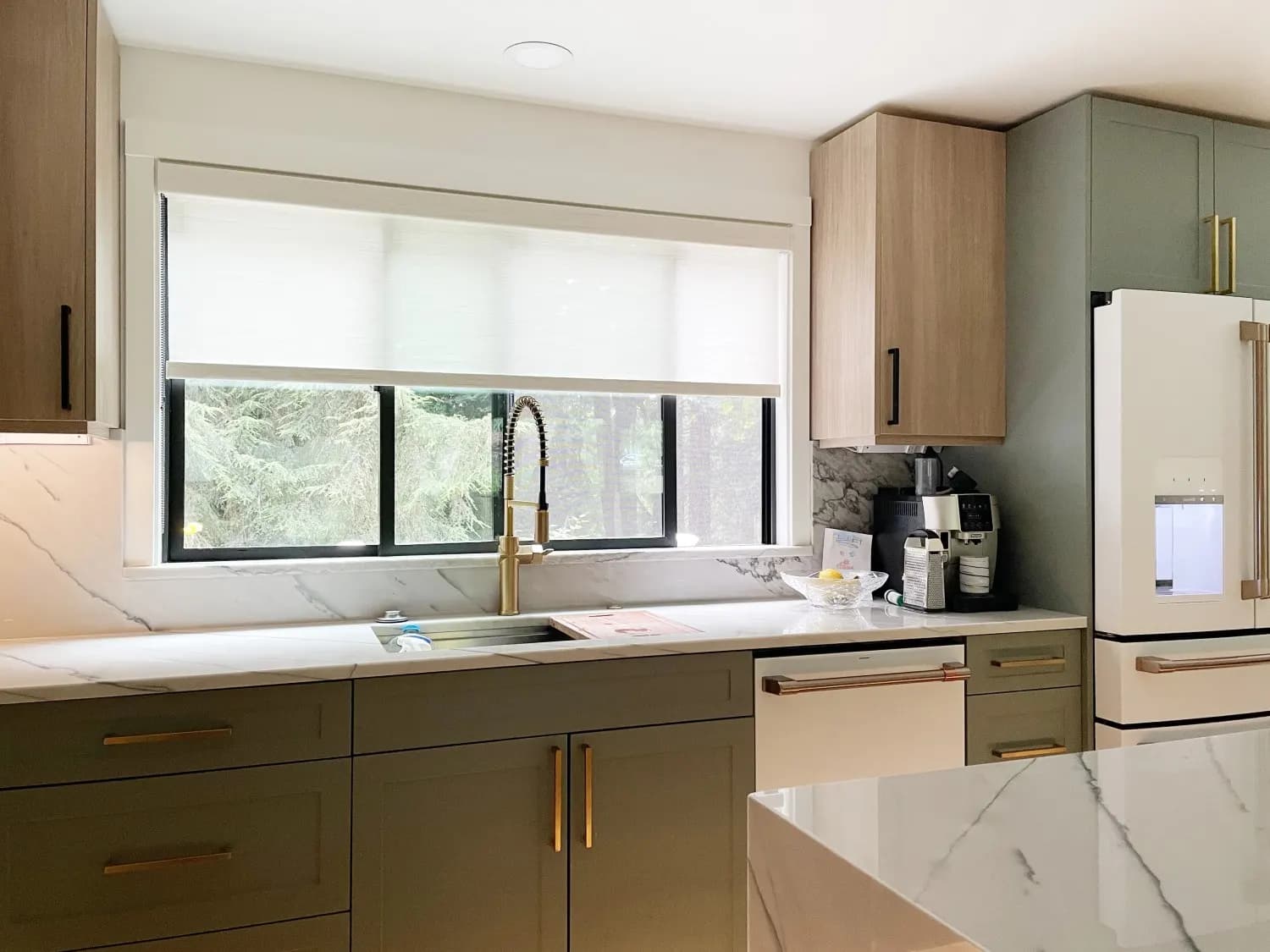
The best window coverings for the kitchen depend on the window’s location, how you use the space, and your priorities. For many kitchens I design in the Seattle area, solar shades are one of the best options because they are easy to clean, lightweight, preserve the view, reduce glare, and work especially well over kitchen sinks. However, honeycomb shades, Roman shades, sheer shades, and other custom window treatments may be a better choice depending on the kitchen layout and overall design, as well as the homeowner’s goals and lifestyle.
Inside this guide, we cover:
- Why Kitchen Window Coverings Are Different Than Other Rooms
- How to Choose the Best Kitchen Window Coverings for Your Home
- What Homeowners Usually Want From Their Kitchen Window Coverings
- My Most Recommended Kitchen Window Coverings
- Products I Don't Typically Recommend for Kitchens (and When I Still Do)
- Kitchen Case Studies Across the Seattle Area
- Frequently Asked Questions About Window Coverings for Kitchens
- Final Thoughts
Why Kitchen Window Coverings Are Different Than Other Rooms
Every room has different priorities. Bedrooms focus on sleep. Bathrooms focus on privacy.
Living rooms often focus on appearance. On the other hand, kitchens require balancing everyday function with environmental conditions.
Most Seattle-area homeowners I work with want to keep their kitchen bright because sometimes those windows are their only source of natural light. At the same time, many kitchens face neighboring homes or the street, creating privacy concerns at night. Others deal with strong afternoon sun, and glare becomes an issue. Lastly, unlike other rooms, kitchens also introduce grease, steam, moisture, food splatter, and require more frequent cleaning. These factors affect which window coverings will perform well and remain easy to maintain over time.
Whether the kitchen has a window above the sink, French doors, a sliding glass door, or is part of an open concept layout, the same questions apply. How easy is it to clean? How often will it be operated? How much privacy is needed? How should it coordinate with nearby rooms?
This is why I don't automatically recommend using the same window treatments as the adjacent dining room or family room. While consistency is important, kitchens have different functional requirements that often determine which product is the best fit.
How to Choose the Best Kitchen Window Coverings for Your Home
One of the biggest misconceptions is that selecting kitchen window coverings starts with choosing a style. It doesn't. It starts with the location of the window in relation to the sink and stove, which are usually the biggest factors for cleanability, along with how the kitchen connects to adjacent rooms.
For example:
- Is the window directly in front of the kitchen sink or stove?
- Is there a sliding glass door or French door connecting the kitchen to the backyard?
- Is it part of an open floor plan with the dining and living rooms?
From there, we discuss how homeowners use the space, along with their lifestyle, design preferences, and long-term goals. Those conversations often have just as much influence on the final recommendation as the window itself.
What Homeowners Usually Want From Their Kitchen Window Coverings
Although every project is unique, the priorities I hear most often include:
- Privacy from nearby homes or the street
- Glare reduction while still letting natural light
- Low maintenance
- Maintaining the outdoor view
- A finished, custom appearance
- Easy operation
Kitchen window coverings are expected to do a lot, and the solution is not always the one homeowners first expect. Finding the right balance between function, lifestyle, and design is where custom guidance becomes valuable.
My Most Recommended Kitchen Window Coverings
Solar Shades
If I had to choose one product I recommend most often for kitchens, it would be solar shades. They address many of the priorities homeowners care about most for kitchens.
Benefits include:
- Easy to wipe clean
- Reduce glare
- Maintain natural light
- Preserve the view outside
- Easy to raise up and down
- Available with motorization
Many people assume solar shades are plain and too commercial looking. A lot of homeowners still picture the old vinyl roller shades that snapped up unexpectedly or were difficult to operate.
Modern solar shades are a completely different product. Today's fabrics come in a variety of textures and colors that create a more refined appearance, and operating systems are smoother, more reliable, and easier to use.
For homeowners who enjoy cooking, solar shades are often one of the easiest products to maintain because they can be wiped clean, unlike many fabric window treatments.
If you prefer keeping your shades open most of the day, solar shades are lightweight, easy to raise and lower, and have a slimmer profile when fully raised.
Motorized Shades
Automation has become one of the most requested upgrades for kitchens. Kitchen windows are often located behind sinks, counters, or breakfast nooks where reaching the shade can become inconvenient over time. With PowerView® Automation, homeowners can raise or lower their shades using a remote, smartphone, or scheduled scenes throughout the day.
Top-Down/Bottom-Up Shades
When privacy is the primary concern, and homeowners still want natural light and view at the top, top-down/bottom-up shades are an excellent option. Instead of covering the entire window, the top can be lowered while keeping the bottom closed for privacy. This works especially well in Seattle neighborhoods where homes are built close together.
I typically recommend top-down/bottom-up shades when the window isn't directly over a sink or next to cooking areas. While both solar and fabric shades are exposed to kitchen elements like moisture, grease, splashes, and food residue, solar shades are wipeable and easier to maintain. Fabric shades are not wipeable, so they require more care.
There are a few exceptions when fabric top-down/bottom-up shades such as honeycomb or roman may still work even in front of the sink. For instance, if the homeowner does not cook a lot of greasy food, or if they are willing to raise the shades during heavy washing or cooking, the compromise is often worth it because they gain the privacy, natural light, and softer appearance they're looking for.
Products I Don't Typically Recommend for Kitchens (and When I Still Do)
One thing I've learned over the years is that there is rarely a “never” in window coverings.
Some products are not my go-to for kitchens because they are not wipeable, are less practical near sinks or cooking areas or heavier to operate in hard-to-reach locations. At the same time, they may still make sense when the homeowner has specific preferences, the overall design calls for them, or they offer a function the space needs. My role is to explain what works best, where the compromises are, and when the trade-off makes sense.
Roman Shades
Roman shades add warmth, texture, and softness that many homeowners love, particularly in traditional or transitional homes.
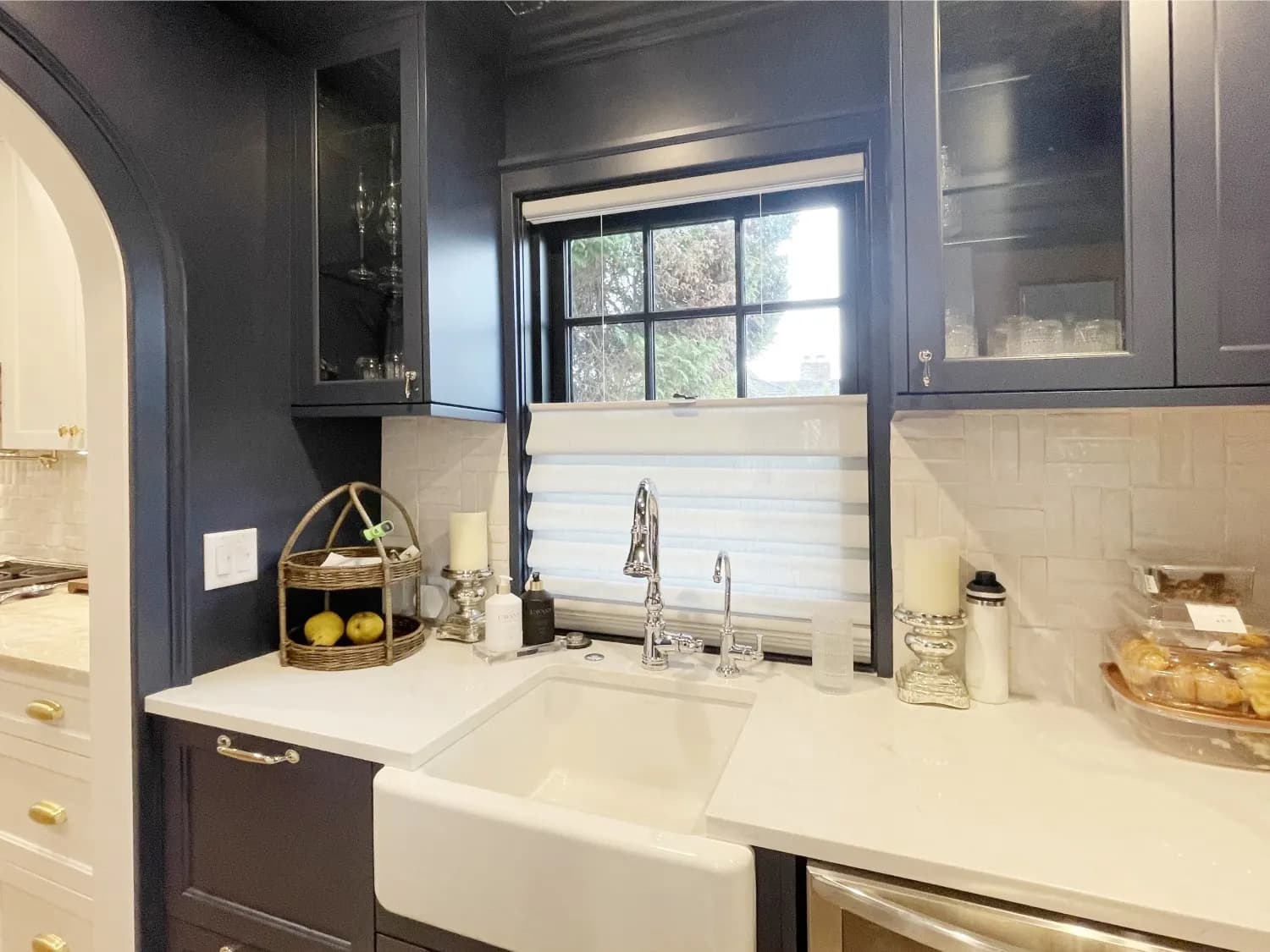
In a newly remodeled home in the Laurelhurst neighborhood of Seattle, the overall goals for the main living areas were an elevated, soft, and cohesive look, top-down/bottom-up functionality, and consistency throughout the space. We installed Hunter Douglas Vignette® Modern Roman Shades with top-down/bottom-up in the main living areas, including a window in front of the kitchen sink where only light prep work is done.
Sheer Shades
Sheer shades create beautiful, filtered natural light and have an elegant appearance. They also offer the flexibility of tilting fabric vanes for better light and privacy control.
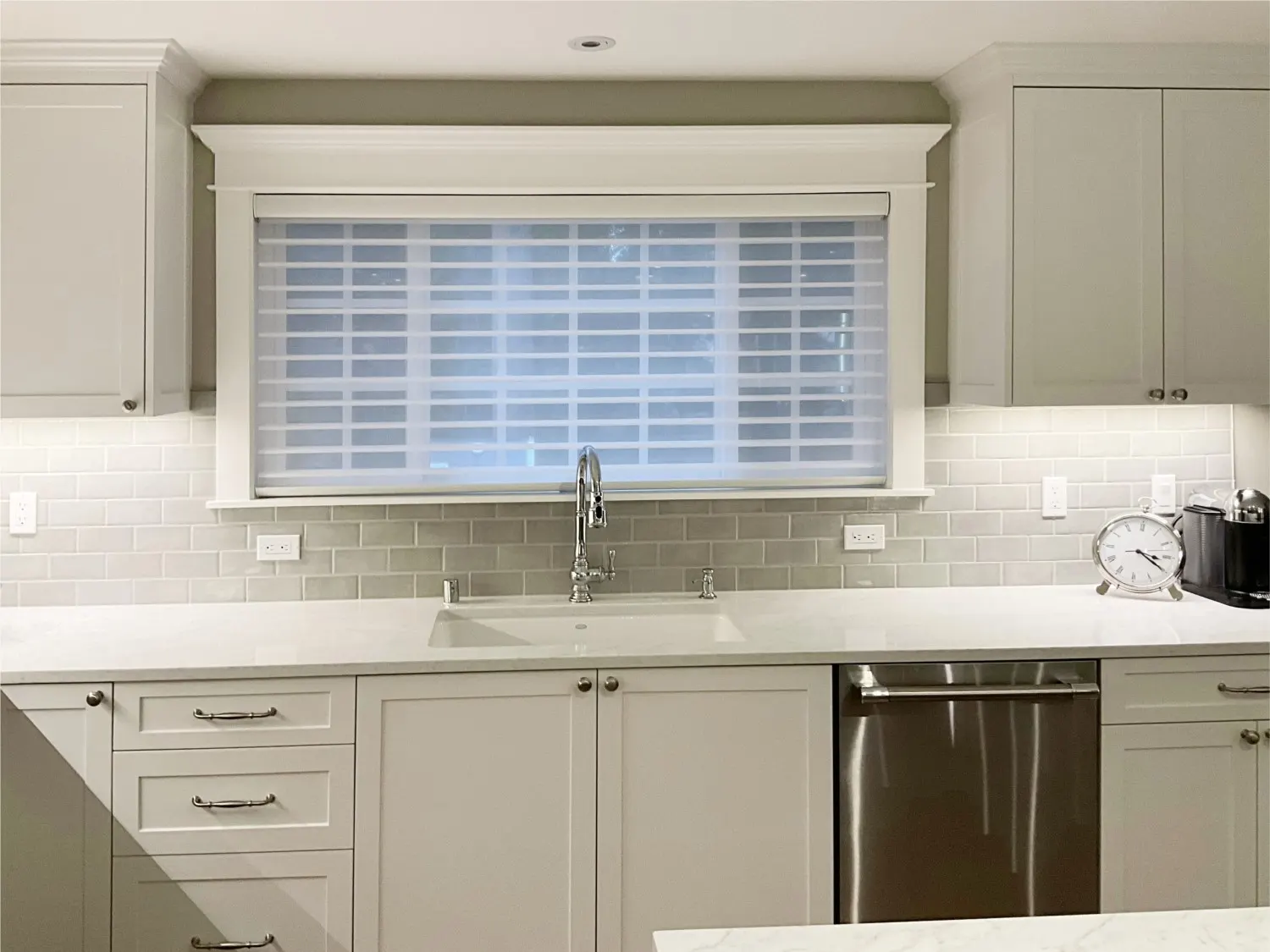
A long-time client moved into a remodeled Woodinville home. I had worked with her multiple times in the past, and her previous home had Hunter Douglas Silhouette® window shadings. She wanted the same elegant look and functionality in her new home. We installed Silhouette® shades throughout, including the kitchen, which worked well in this case because of how they use the space.
Honeycomb Shades
Honeycomb shades offer superior insulation and top-down/bottom-up functionality.
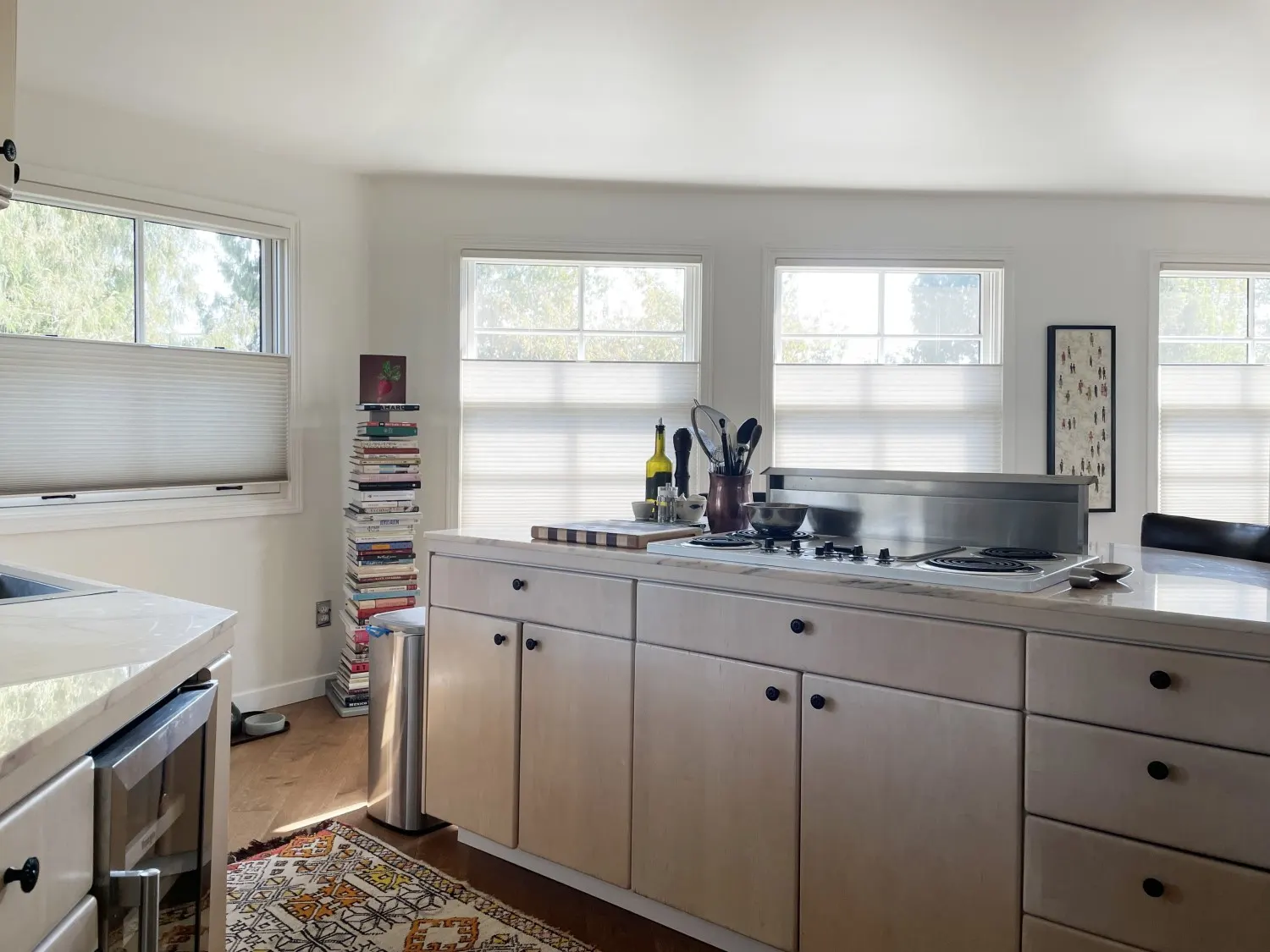
Our clients moved into a townhome in Seattle’s Eastlake neighborhood, where the top floor had multiple windows and doors and became warm during the day. The homeowners’ priorities were insulation, privacy, and preserving the view. Honeycomb shades with top-down/bottom-up were the best fit for the entire top floor, including the kitchen windows, which were away from both the sink and stove.
Woven Wood Shades
Woven wood shades add texture and warmth, but generally higher maintenance and harder to clean. However, they can work in the kitchen when texture and warmth are higher priority.
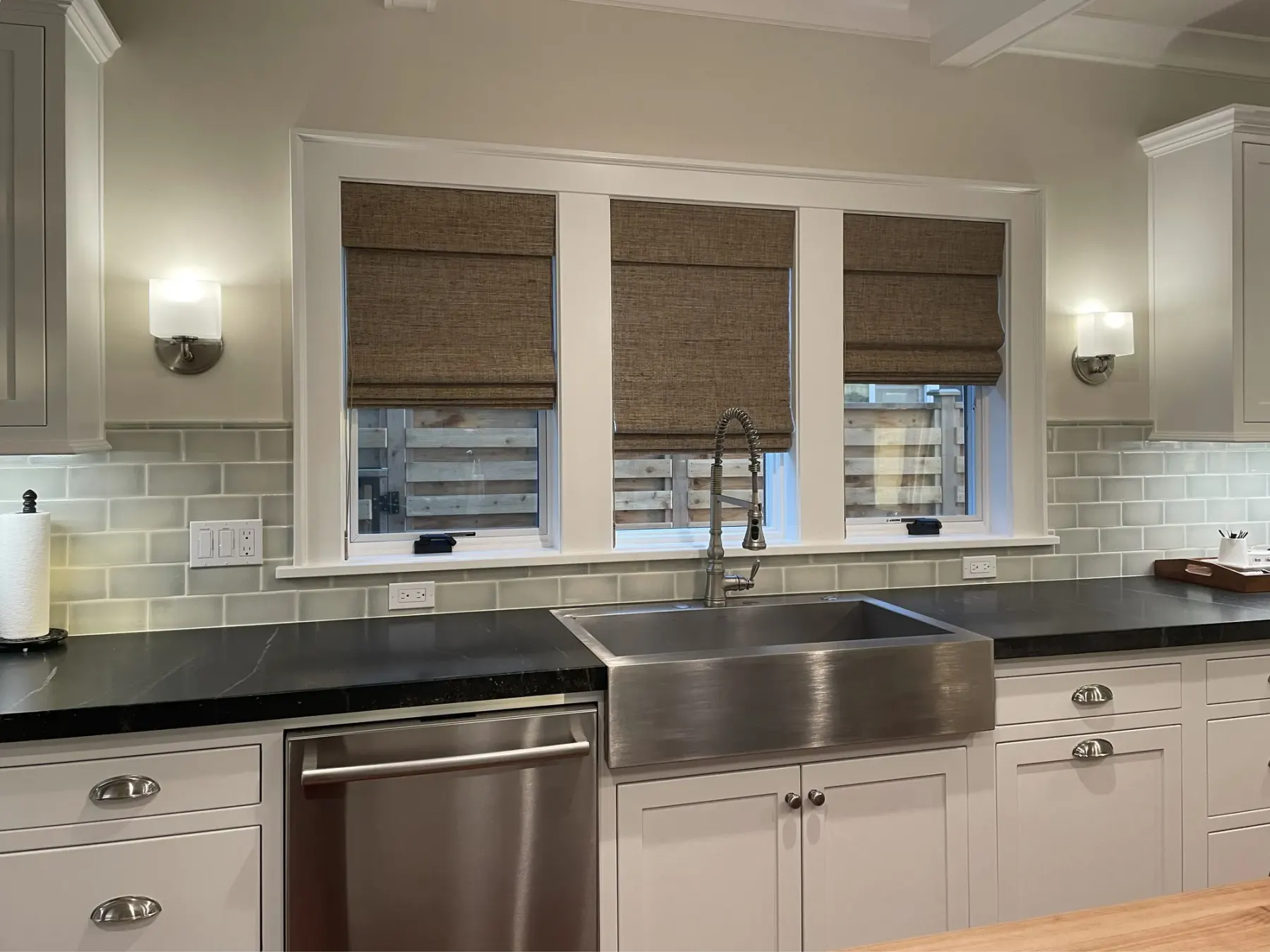
In a Shoreline kitchen, we installed woven wood shades on three windows above the sink because the client loved the texture and planned to keep them raised most of the time. In that case, the maintenance trade-off made sense for the look they wanted.
Wood Blinds
Wood blinds are a good choice when you want light and privacy control with adjustable slats. However, moisture and occasional splashes can affect the finish over time, and it is hard to clean in between slats. Wider blinds are also heavy to lift, especially above a kitchen sink where operation is already less convenient. They also leave a thick stack when raised.
If a homeowner prefers the look and function of horizontal blinds, faux wood blinds are often a more practical alternative for kitchens.
Kitchen Case Studies Across the Seattle Area
Bellevue Kitchen and Dining Remodel
One of the more recent kitchen projects was a Bellevue remodel. The kitchen and dining room needed to feel connected while providing glare control, preserving the view, and complementing the clean, modern design of the newly remodeled space.
The homeowners have existing sheer Roman shades and initially wanted to update the space with same product. I recommended considering motorized solar shades. At first, they were hesitant. They were worried that solar shades would feel too plain and lack the warmth they were used to. We explored textured solar fabrics that complemented the new kitchen and dining rooms, then paired the shades with black fascia to reinforce the clean, modern aesthetic.
Motorization was not initially on their wish list, but after discussing how frequently the shades would be operated and the convenience it would provide, they decided to include PowerView® Automation.
In the end, the homeowners gained more than what they were originally looking for: a more open view when the shades were raised and convenient daily operation.
Seattle Craftsman
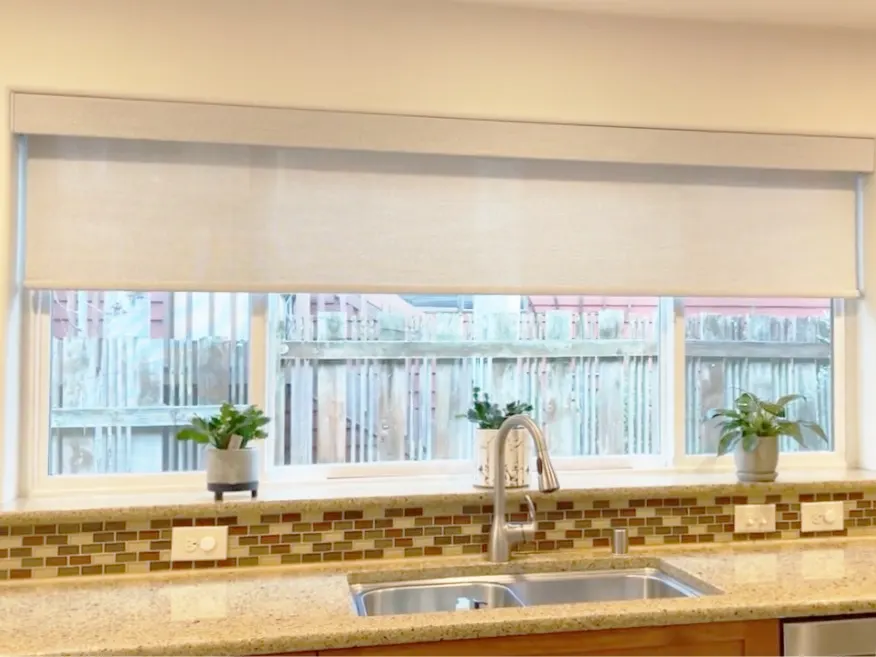
For a retired couple living in a Craftsman home in Seattle’s Ballard neighborhood, the existing manual honeycomb shades in a large, recessed kitchen window above the sink had become hard to operate. We replaced them with motorized solar shades, making daily operation significantly easier while improving glare control and privacy from the next-door neighbor.
Shoreline Whole House Remodel
This newly remodeled Shoreline home featured an open floor plan. The living room had a sliding glass door and multiple windows. The dining room adjacent to it also had a sliding glass door, which was next to a small kitchen window.
Their overall goals were ease of use and maintaining the view while filtering the sun, but the privacy needs were different across the windows. The main question was whether one product should be used throughout since all three rooms were open to one another, especially with two sliding glass doors in the space.
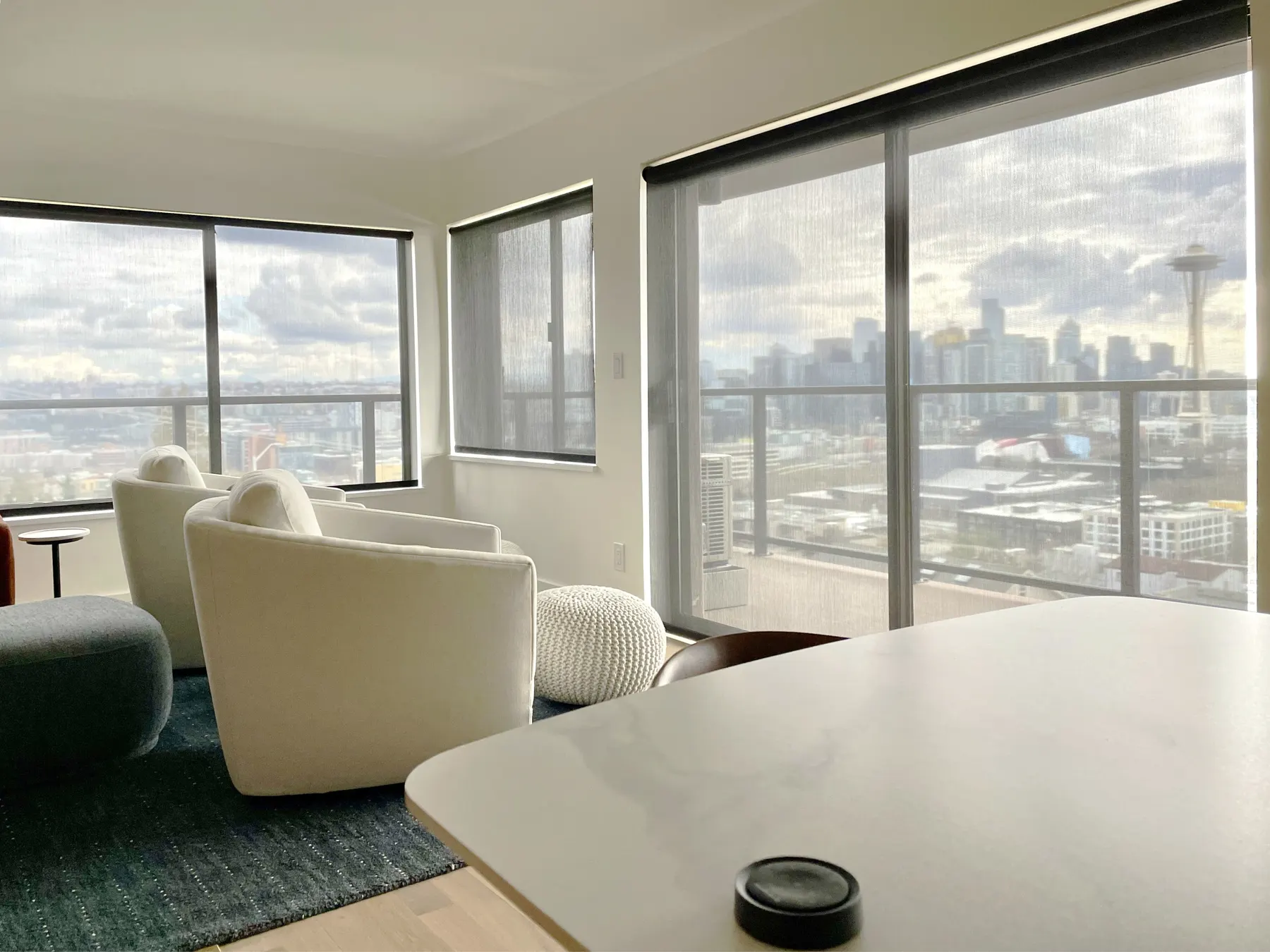
Based on their goals, lifestyle, and window locations, we installed motorized Silhouette® sheer shades in the living room including the sliding glass door. We selected a manual solar shade for the kitchen window because it would rarely be adjusted. For the adjacent large sliding glass door, we installed a motorized solar shade due to its size, weight, and daily use.
This is a good example that different products can still work well together. Sometimes automation is not necessary everywhere, and matching every room exactly is not always required. Choosing where each product provides the greatest value is key.
Frequently Asked Questions About Window Coverings for Kitchens
Not necessarily. For kitchens, I focus on function rather than consistency, and creating a coordinated look if consistency is not possible. Different window coverings can work well together when the colors, textures, and overall style are thoughtfully selected.
Keep shades raised during heavy cooking or washing whenever possible. Solar shades are usually the most practical near the sink because they are wipeable, while fabric shades like honeycomb, Roman, sheer, and woven woods require more care. Always follow the manufacturer’s cleaning instructions for the specific product and fabric.
Choose the right product for the window location. For active kitchens or windows directly over a sink, solar shades are usually a safer choice. If you prefer fabric, woven wood, Roman, honeycomb, or sheer shades, raise them during heavy cooking or washing and avoid placing them where grease, steam, or splashes are constant.
Final Thoughts
The best kitchen window coverings are not always the same products used in the surrounding rooms but the ones that fit the way you live. Every kitchen is different, and the right solution balances maintenance, functionality, aesthetics, and long-term satisfaction.
Ready to find the right kitchen window coverings? If you just finished remodel, moving into a new home, or replacing outdated window coverings, I would be happy to help. Every recommendation is tailored to your home's layout, how you use your kitchen, and the look you want to achieve.
Schedule a consultation today to explore the best kitchen window treatments for your Seattle-area home, or give us a call at 206-801-6010.
Explore Custom Blinds, Shades, Shutters, and Automation
Every home has a unique style, story, and set of needs.
Whether the priority is design, smart-home integration, energy efficiency, privacy, room darkening, ease of operation, or long-term durability, we offer personalized recommendations from a broad selection of window treatments.
We help you explore custom blinds, shades, shutters, and automation to create window covering solutions that complement your home, address your priorities, and align with your investment range.